Discovering an unfamiliar vehicle left on your private property can be more than just an eyesore; it can be a significant headache, bringing with it potential liability and frustration. Whether it’s an old car in your parking lot, a forgotten truck at your business, or even an unidentifiable motorhome on your land, addressing it promptly and legally is essential. This is where an effective abandoned vehicle notice template becomes an invaluable tool in your arsenal, helping you navigate the sometimes murky waters of property rights and vehicle removal.
Dealing with abandoned property requires a clear, legal approach to protect yourself from any future claims or complications. Simply towing a vehicle without proper procedure can lead to legal battles, fines, and unnecessary stress. Property owners, businesses, and even homeowners associations need a standardized method to inform the presumed owner of the vehicle about its status and the steps they need to take.
This article will guide you through the importance of using a well-structured notice, what elements it must contain, and how to properly issue it, ensuring you can resolve your abandoned vehicle situation efficiently and in full compliance with the law. By understanding these steps, you’ll be well-equipped to handle such situations with confidence and peace of mind.
Understanding the Legalities and Necessity of an Abandoned Vehicle Notice
When a vehicle is left unattended on private property for an extended period, it quickly transforms from an inconvenience into a potential legal quagmire. The first crucial step in resolving this issue is understanding that you cannot simply dispose of or tow the vehicle without following specific legal protocols. Issuing an abandoned vehicle notice is not just a polite gesture; it’s a fundamental legal requirement in most jurisdictions designed to give the vehicle’s owner due process and protect you, the property owner, from accusations of illegal towing or conversion.
Without a properly issued notice, you could face legal challenges, including lawsuits for damages, wrongful towing charges, or even theft. The notice serves as documented proof that you attempted to contact the owner and provided them with a reasonable opportunity to retrieve their property. It clearly establishes your intent to have the vehicle removed and outlines the consequences if it remains, shifting the burden of responsibility to the vehicle owner.
What exactly qualifies a vehicle as "abandoned" can vary by local statute, but generally, it involves a vehicle left on private property for a specified period (e.g., 24, 48, or 72 hours) without the owner’s permission or intent to return. The condition of the vehicle, such as flat tires, expired tags, or accumulated debris, can also be contributing factors, signaling neglect. It’s always wise to check your local city ordinances or state laws regarding the definition of an abandoned vehicle, as these details directly impact the legitimacy of your notice.
Key Elements to Include in Your Notice
- **Date of Notice:** Clearly state when the notice was prepared and issued.
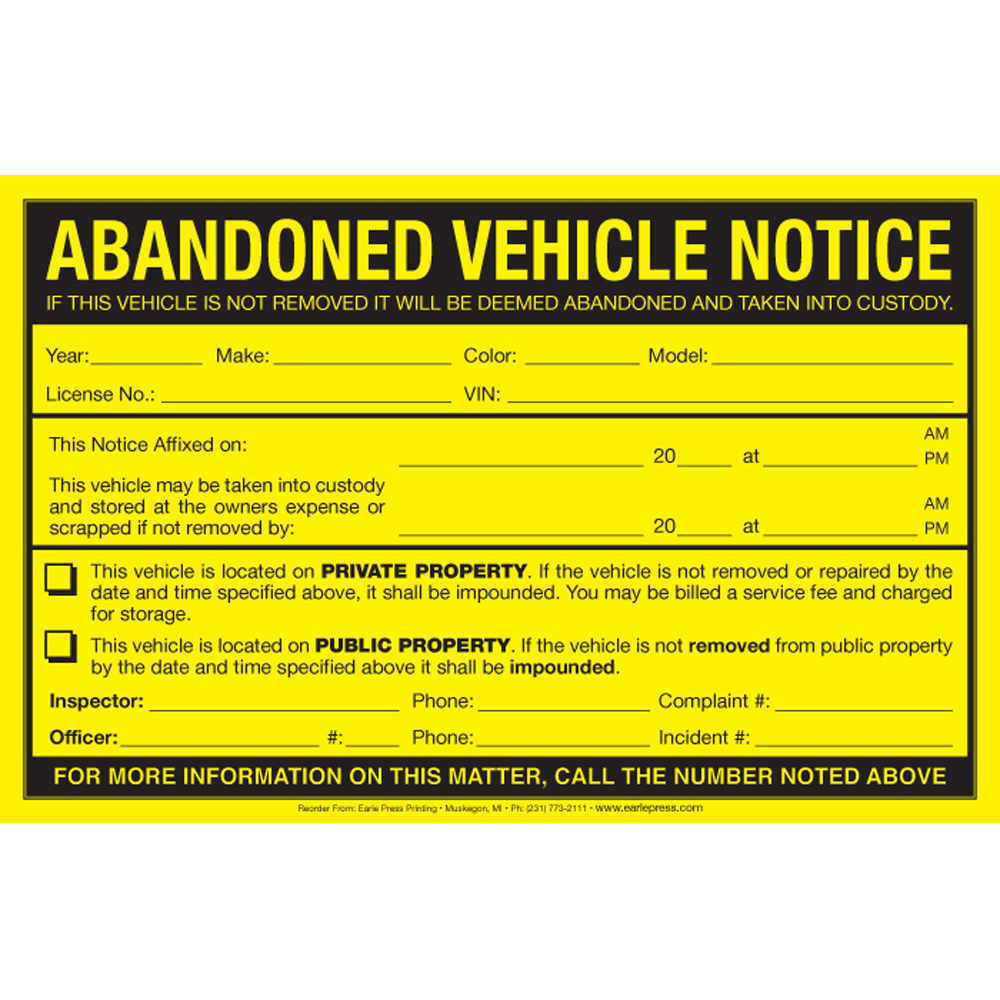
- **Vehicle Description:** Provide a comprehensive description including make, model, year, color, license plate number, and most importantly, the Vehicle Identification Number (VIN).
- **Location of Vehicle:** Specify the exact address and location on the property where the vehicle is situated.
- **Date Vehicle Observed as Abandoned:** Note the initial date you identified the vehicle as potentially abandoned.
- **Deadline for Removal:** State a clear and reasonable timeframe (e.g., 7, 10, or 14 days from the date of the notice) by which the vehicle must be removed.
- **Consequences of Non-Removal:** Explicitly inform the owner that failure to remove the vehicle by the deadline will result in towing, impoundment, storage fees, and potential legal action to recover costs.
- **Contact Information of the Property Owner/Issuer:** Provide your name, address, and phone number for the vehicle owner to contact.
- **Reference to Local Laws/Ordinances:** While not always required, including a brief reference to the local statutes governing abandoned vehicles can reinforce the legal standing of your notice.
Ensuring that your notice includes all these details not only makes it legally robust but also gives the vehicle owner all the necessary information to act. Vague or incomplete notices can be challenged, potentially delaying the removal process and costing you more time and money. Accuracy and completeness are paramount in this documentation.
Finally, consider how you will deliver the notice. Posting it conspicuously on the vehicle, preferably on the windshield or driver’s side window, is often the first step. If the vehicle’s registered owner can be identified through local authorities (often requiring police assistance), sending a notice via certified mail with a return receipt requested provides an irrefutable record of delivery. This dual approach maximizes your chances of notifying the owner and strengthens your legal position.
Step-by-Step Guide to Using an Abandoned Vehicle Notice Template
Once you’ve identified an abandoned vehicle and understand the fundamental legal requirements, utilizing an abandoned vehicle notice template becomes a straightforward process. The first step involves gathering all necessary information about the vehicle. This means getting up close and personal (safely, of course) to note down the make, model, color, license plate number, and crucially, the Vehicle Identification Number (VIN). The VIN is typically found on the driver’s side dashboard visible through the windshield or on the driver’s side door jamb. These details are vital for accurate identification and for any subsequent communication with law enforcement or towing companies.
Next, you’ll want to take your chosen template and meticulously fill in all the blanks with the information you’ve collected. Personalize the template with your specific property details, the exact date you observed the vehicle, and the deadline you are setting for its removal. It’s also wise to research your local city or county regulations regarding abandoned vehicles. Some jurisdictions have specific requirements for the notice period or what constitutes abandonment, and tailoring your template to these local nuances can save you a lot of trouble down the line. A robust abandoned vehicle notice template should be adaptable enough to incorporate these details effortlessly.
After populating the template with all the relevant information, serve the notice correctly. This usually involves securely attaching a copy of the notice to the vehicle in a highly visible location, such as the windshield or a side window. For an extra layer of legal protection, especially if you know or can ascertain the registered owner’s address (often with the help of local law enforcement), mail a copy via certified mail with a return receipt. This provides undeniable proof that the notice was sent and received.
It’s also highly recommended to document every step of the process. Take dated photographs of the vehicle, the notice affixed to it, and any other relevant details like its condition or location. Keep copies of all correspondence, including certified mail receipts and a copy of the notice itself. This meticulous record-keeping will be invaluable should you need to demonstrate that you followed due diligence in attempting to resolve the situation before resorting to towing or other actions. This proactive approach ensures a smooth resolution and protects your property rights.
By carefully following these steps, you can transform the frustrating experience of dealing with an abandoned vehicle into a structured and legally sound process. A properly executed notice provides the necessary legal groundwork, paving the way for the vehicle’s eventual removal without fear of repercussions. It’s about empowering you to take back control of your property, ensuring compliance and peace of mind.