Navigating the complexities of rental agreements can sometimes feel like a delicate dance for both landlords and tenants. When issues arise, such as missed rent payments or lease violations, landlords in South Carolina need a clear, legal pathway to address these concerns. It is crucial to handle such situations with precision and adherence to state laws, ensuring fairness and legal compliance throughout the process.
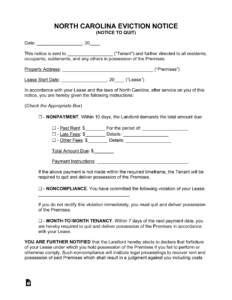
For landlords facing these challenges, having access to a reliable south carolina eviction notice template becomes an invaluable asset. This document serves as the formal communication informing a tenant of a breach in their lease agreement and the necessary steps they must take to either remedy the situation or vacate the property. It is the critical first step in what can be a sensitive and often legally involved process.
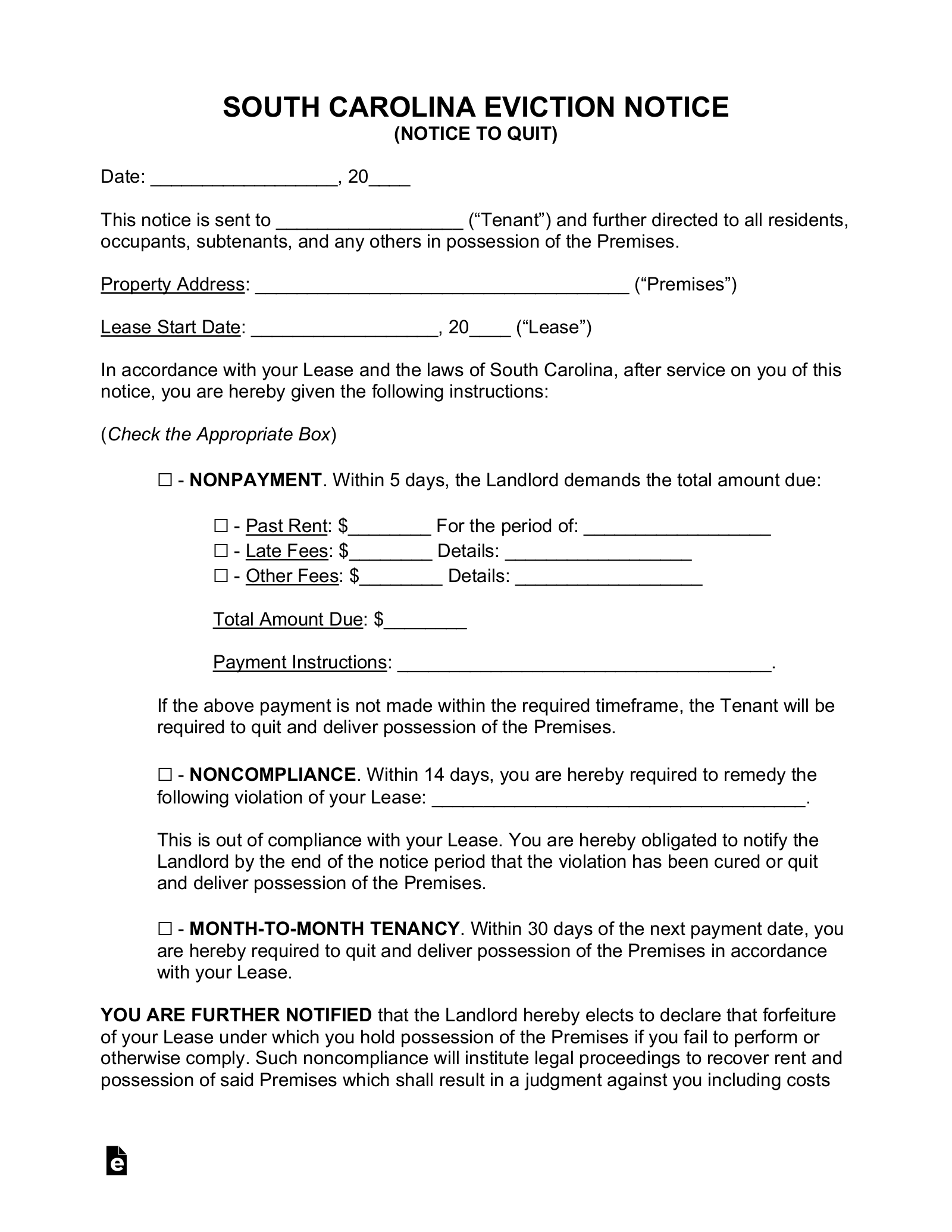
Using a properly structured template helps to ensure that all required information is included, leaving no room for ambiguity or potential legal loopholes. It standardizes the procedure, providing a clear record of communication and intent, which is vital should further legal action become necessary down the line. A well-prepared notice protects the landlord’s interests while clearly outlining the tenant’s obligations.
Understanding Eviction Notices in South Carolina
An eviction notice, often referred to as a “Notice to Quit” or “Notice to Vacate,” is a formal letter from a landlord to a tenant indicating the landlord’s intent to terminate the tenancy. In South Carolina, specific rules govern when and how these notices must be delivered, what information they must contain, and the amount of time a tenant has to respond or rectify the situation. It is not merely a polite request but a legally binding document that initiates the eviction process.
The legal framework for evictions in South Carolina is primarily governed by the South Carolina Residential Landlord and Tenant Act. This act outlines the rights and responsibilities of both parties, specifying the grounds for eviction and the procedures that must be followed. Failing to adhere strictly to these laws can result in significant delays, legal challenges, and even the dismissal of an eviction case, which can be costly and time-consuming for landlords.
There are generally a few common reasons a landlord might need to issue an eviction notice. These typically revolve around the tenant’s failure to uphold their part of the lease agreement. Understanding these reasons is the first step in correctly preparing and delivering the notice. Landlords must always ensure their grounds for eviction are legitimate and well-documented to avoid potential disputes.
Common Reasons for Eviction in the Palmetto State
When a landlord finds themselves in a position where an eviction notice is necessary, it almost always stems from a breach of the lease agreement. These breaches can vary in severity and nature, but all require proper documentation and adherence to the legal process.
- Non-payment of rent: This is arguably the most frequent reason for eviction. South Carolina law specifies a certain grace period before late fees can be charged and how many days notice must be given for non-payment.
- Lease violations: Tenants might breach their lease by having unauthorized pets, subletting without permission, causing excessive damage to the property, or engaging in illegal activities on the premises.
- Holdover tenancy: This occurs when a tenant remains on the property after their lease term has ended and they have been given proper notice to vacate, but they fail to do so.
- Damage to property: While standard wear and tear are expected, significant and intentional damage beyond normal use can be grounds for eviction.
Each of these situations demands a specific approach regarding the notice period and the content of the eviction letter. Accuracy in stating the reason and providing the correct timeframe for remedy or vacating is paramount for the notice to be legally valid.
Crafting Your South Carolina Eviction Notice
When preparing a South Carolina eviction notice template, attention to detail is critical. The document must be complete, accurate, and clearly convey the necessary information to the tenant. It is not enough to simply state that the tenant needs to leave; the notice must provide specific details that align with state law and the lease agreement. This formal communication sets the foundation for any subsequent legal action.
A well-drafted notice will include several key pieces of information to ensure its validity. Missing any of these elements could render the notice ineffective and force the landlord to restart the process. This is why a reliable south carolina eviction notice template is so beneficial, as it guides you through including all essential components.
The method of delivery is also as important as the content itself. While personal delivery is an option, using certified mail with a return receipt requested often provides undeniable proof that the tenant received the notice, which can be crucial evidence in court. Always keep a copy of the notice for your records, along with any proof of delivery.
- Tenant’s Full Name and Address: Ensure this is accurate as per the lease agreement.
- Landlord’s Full Name and Address: Your contact information should be clearly provided.
- Property Address: The specific address of the rental unit being addressed.
- Clear Reason for Eviction: State precisely why the notice is being issued, referencing the specific lease clause if applicable.
- Amount Owed (if applicable): If the eviction is due to non-payment, clearly state the exact amount of rent, late fees, or other charges due.
- Date by which Tenant Must Comply or Vacate: This is the critical deadline based on South Carolina law and the reason for eviction.
- Date of Notice and Landlord’s Signature: The date the notice is issued and your signature are essential for legal validity.
Ensuring that every detail is correctly filled out and the notice is properly served according to South Carolina law will significantly streamline the eviction process, should it proceed to court. Taking the time to get it right from the beginning can save a lot of headaches later on.
What Happens After the Notice is Served
Once the eviction notice has been properly served, the ball is essentially in the tenant’s court for the specified notice period. During this time, the tenant has a few options depending on the reason for the notice. They might choose to remedy the lease violation, for instance, by paying overdue rent if it is a notice for non-payment, or they might simply vacate the property by the given deadline. It is also possible for the tenant to dispute the notice, although this typically requires them to respond formally or through legal channels.
If the tenant fails to comply with the notice—meaning they do not cure the violation, do not pay the overdue amount, or do not vacate the premises by the stated date—the landlord’s next step is to initiate legal proceedings. In South Carolina, this involves filing an action in the magistrate’s court, typically called an “Action for Ejectment.” This formal legal process begins with the landlord submitting a complaint and a summons being issued to the tenant.
Following the filing, a hearing will be scheduled where both the landlord and tenant can present their cases before a magistrate. It is at this stage that the properly issued eviction notice and any supporting documentation become crucial evidence. If the court rules in favor of the landlord, a “Writ of Ejectment” will be issued, which is a court order authorizing law enforcement to remove the tenant from the property if they still refuse to leave.
Navigating landlord-tenant relationships requires a delicate balance of clear communication, adherence to legal procedures, and a professional approach. Properly understanding and utilizing an eviction notice is a cornerstone of responsible property management in South Carolina. It ensures that any necessary actions are taken within the bounds of the law, protecting the rights of both parties and maintaining order in the rental market.
The process, while potentially complex, is designed to provide a structured way to resolve disputes when a tenancy cannot continue. By using reliable resources and, when in doubt, seeking legal advice, landlords can confidently manage their properties, ensuring fairness and compliance every step of the way.