Navigating the complexities of landlord-tenant law can be a challenging experience for property owners in Ohio. Whether you are dealing with a tenant who has violated their lease agreement or simply need to terminate a month-to-month tenancy, understanding the proper legal steps is crucial to protect your rights and ensure a smooth process. It is never an easy decision to ask someone to leave their home, and doing so correctly can prevent further headaches down the line.
When it comes to ending a tenancy, especially a month-to-month arrangement, using a proper ohio 30 day eviction notice template is often the first and most critical step. This document serves as a formal communication to your tenant, informing them of your intention to terminate their lease and providing them with the legally required amount of time to vacate the property. Getting this right from the beginning sets the stage for any subsequent legal action, should it become necessary.
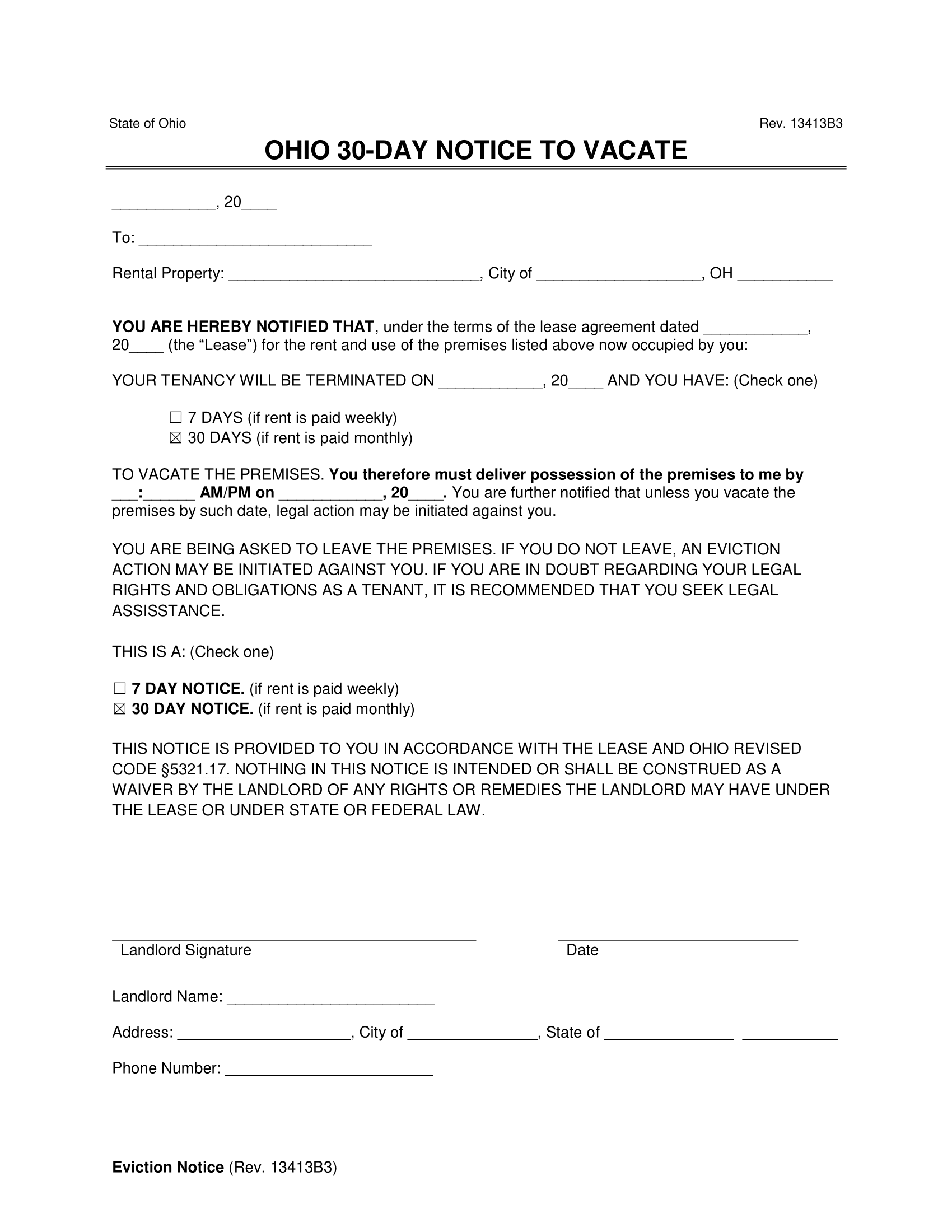
This article aims to demystify the process, offering insights into why and how you might use such a notice in Ohio. We will cover the essential elements of a valid notice, discuss the proper methods for serving it, and outline what happens after the notice period expires. Our goal is to equip you with the knowledge needed to handle this situation with confidence and adherence to state law.
Understanding the Ohio Eviction Process
The eviction process in Ohio, legally known as a "forcible entry and detainer" action, is governed by specific state statutes designed to protect both landlords and tenants. It is not a process to be taken lightly, and any deviation from the prescribed legal steps can lead to significant delays, legal complications, and even financial penalties for the landlord. Before you can even consider filing a lawsuit in court, you must first provide your tenant with a proper notice to vacate.
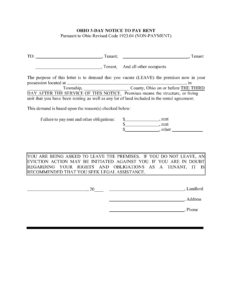
In Ohio, the type of notice required depends largely on the reason for the eviction and the terms of the lease agreement. For serious violations like non-payment of rent, a 3-day notice to vacate is typically used. However, for terminating a month-to-month lease where there is no specific end date, or for certain non-curable lease violations that do not involve rent, a 30-day notice is generally required. This 30-day period gives the tenant ample time to find new housing and move their belongings.
It is paramount that landlords resist the urge to engage in "self-help" evictions. This includes changing locks, removing a tenant’s belongings, shutting off utilities, or harassing tenants to leave. Such actions are illegal in Ohio and can result in the landlord facing legal action from the tenant, including damages and attorney fees. The only legal way to remove a tenant who refuses to leave after proper notice is through a court order.
Key Reasons for Eviction in Ohio
Ohio law outlines specific permissible reasons for which a landlord can initiate an eviction. Understanding these grounds is fundamental to issuing the correct type of notice and proceeding legally.
- Non-payment of Rent: This is perhaps the most common reason for eviction. If a tenant fails to pay rent when due, landlords can typically issue a 3-day notice to vacate.
- Lease Violations: Tenants are expected to adhere to the terms outlined in their lease agreement. This can include rules regarding property damage, unauthorized pets, excessive noise, or illegal activities on the premises. Depending on the nature of the violation and whether it is curable, different notice periods may apply. For some non-curable violations, a 30-day notice might be appropriate.
- Holding Over: This occurs when a tenant remains in the property after their lease has expired or after receiving a proper notice to vacate for a month-to-month tenancy. In these cases, the tenant is effectively trespassing and an eviction action can be filed.
- Termination of Month-to-Month Tenancy: Landlords can terminate a month-to-month tenancy without providing a specific reason, as long as they give the tenant at least 30 days’ written notice prior to the next rent due date.
Accuracy in stating the reason for the notice is vital. Any discrepancies could weaken your case if it proceeds to court.
Creating and Serving Your 30 Day Notice
Once you have determined that a 30-day notice is the appropriate step, the next phase involves drafting the document and ensuring it is served correctly. A well-prepared notice should clearly and accurately convey all necessary information. It typically includes the full names of the landlord and tenant, the complete address of the rental property, the specific date by which the tenant must vacate, and a clear statement indicating the termination of the tenancy. If there’s a specific reason other than a month-to-month termination, such as a lease violation, it should also be stated concisely.
The method of serving the notice is just as important as its content. Ohio law requires that the notice be delivered in a manner that ensures the tenant actually receives it. Failing to properly serve the notice can invalidate the entire eviction process, forcing you to start over.
- Personal Service: This involves directly handing the notice to the tenant. It is often considered the most effective method, and you should ideally have a witness present or obtain an acknowledgment of receipt from the tenant.
- Certified Mail: Sending the notice via certified mail with a return receipt requested provides proof that the tenant received the document. The date of delivery on the return receipt serves as the official date of notice.
- Posting: In some cases, if personal service or certified mail is not feasible, the notice can be posted on the main entry door of the property. However, it is advisable to also send a copy via regular mail.
After the notice has been served, the 30-day period begins. It is crucial to mark your calendar and adhere strictly to this timeframe. During this period, the tenant is expected to vacate the property. If the tenant fails to move out by the date specified in the notice, only then can you proceed to file a forcible entry and detainer action in the appropriate Ohio municipal or county court.
Issuing a proper notice is a fundamental step in regaining possession of your property in compliance with Ohio law. Having a clear and legally sound ohio 30 day eviction notice template can make a world of difference in the efficiency and legality of this challenging situation. While this information provides a general overview, specific situations can vary, and consulting with a legal professional is always recommended to ensure full compliance and protect your interests.