Navigating the landlord-tenant relationship can often present unexpected challenges, and sometimes, a landlord may find it necessary to formally end a tenancy. This process, while seemingly straightforward, is governed by strict legal protocols designed to protect both parties. Understanding the correct steps and documentation is paramount to ensure a smooth and lawful transition, preventing future disputes or legal complications.
In Arizona, like many other states, specific timelines and procedures must be adhered to when terminating a lease. For landlords in Arizona considering ending a month-to-month lease, or addressing certain types of non-compliance that require a longer notice period, the concept of an arizona 30 day eviction notice template becomes incredibly relevant. This document serves as the formal communication that initiates the legal process of regaining possession of your property.
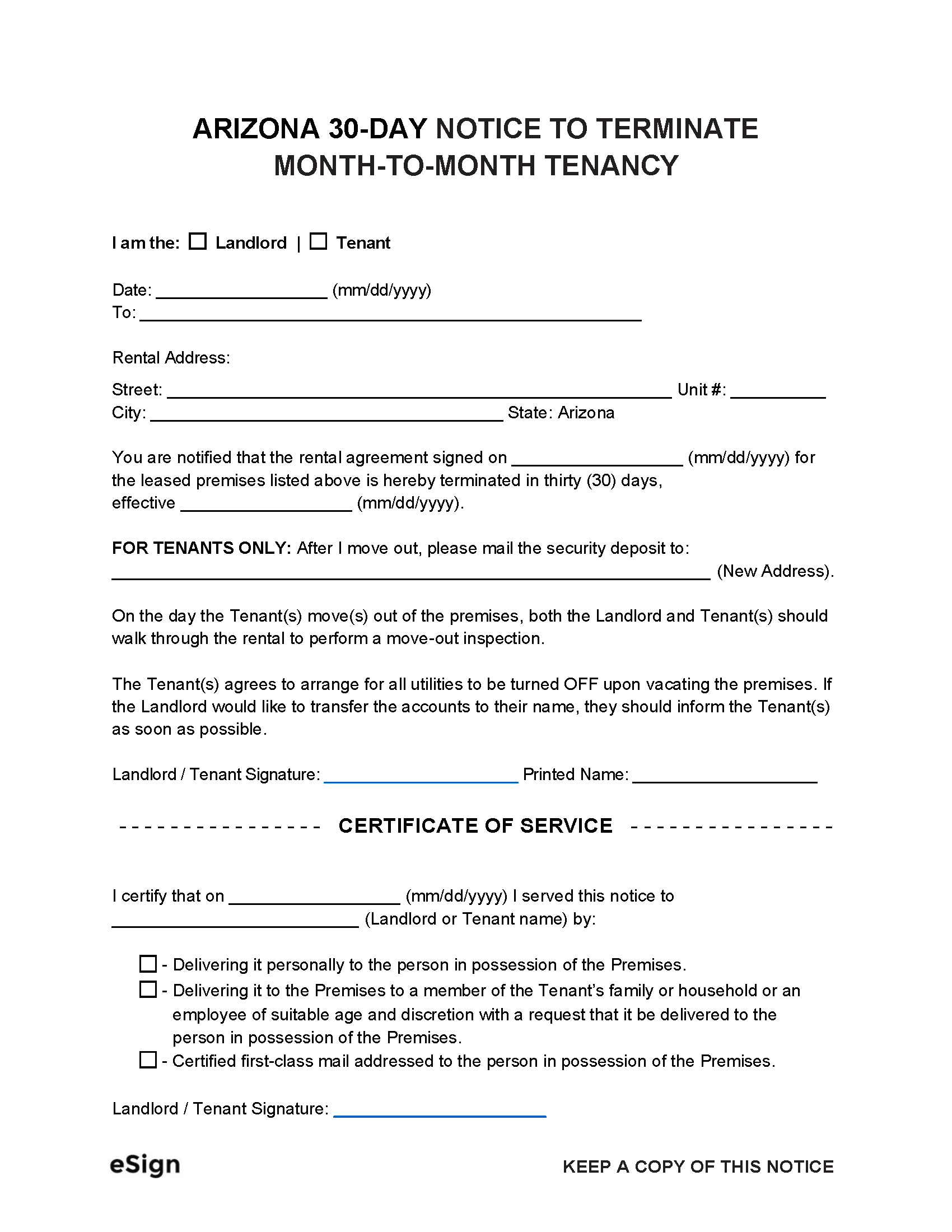
This article aims to shed light on the intricacies of the 30-day eviction notice in Arizona, explaining its purpose, when it’s applicable, and what essential elements it must contain to be legally valid. By understanding these critical details, landlords can approach the situation with confidence and ensure their actions align with Arizona state law.
Understanding Arizona’s Eviction Process: What a 30-Day Notice Means
The eviction process in Arizona is formally known as a “Special Detainer” action, and it is strictly regulated by the Arizona Residential Landlord and Tenant Act. Before a landlord can even think about filing a lawsuit to remove a tenant, they must first provide a written notice of termination. The type and length of this notice depend entirely on the reason for the eviction and the terms of the lease agreement. A 30-day notice is not a one-size-fits-all solution; it’s specifically used in particular scenarios, most commonly for the termination of a month-to-month tenancy or for certain types of non-compliance with the lease agreement that aren’t related to unpaid rent and are considered curable.
For instance, if a tenant is on a month-to-month lease, a landlord can generally terminate the tenancy by providing at least 30 days’ written notice, even if there’s no specific breach of the lease. This allows the tenant ample time to find new housing and vacate the property. Similarly, a 30-day notice might be appropriate if a tenant commits a material breach of the lease agreement that can be remedied, such as having unauthorized pets or making unauthorized alterations, and the landlord chooses to offer a chance to cure the issue within that 30-day timeframe, failing which the tenancy terminates. It’s crucial to distinguish this from non-payment of rent, which typically requires a shorter notice period, usually five days, before an eviction lawsuit can be filed.
Accuracy and adherence to legal requirements are the bedrock of any successful eviction process in Arizona. A poorly drafted or incorrectly served notice can lead to significant delays, additional costs, and even the dismissal of an eviction case by the court. Therefore, understanding the precise components required for a valid 30-day notice is not just helpful, but essential.
Key Components of an Effective Arizona 30-Day Eviction Notice
To be legally sound and enforceable, a 30-day eviction notice in Arizona must include several specific pieces of information. Omitting any of these details could render the notice invalid, forcing you to start the process over.
* The full names of all tenants on the lease agreement.
* The complete and accurate address of the rental property.
* The specific reason for the termination of the tenancy (e.g., termination of a month-to-month lease, or the specific lease violation if applicable).
* A clear statement informing the tenant that they must vacate the premises by a specific date, which must be at least 30 days from the date the notice is properly served.
* If the notice is for a curable breach, it must state the specific violation and the action required to cure it, along with the deadline for correction.
* The landlord’s name and signature, along with the date the notice was prepared.
* A “Certificate of Service” detailing how and when the notice was delivered to the tenant.
Proper service of the notice is just as important as its content. Arizona law dictates how these notices must be delivered to the tenant, typically requiring personal delivery, certified mail, or sometimes posting on the door if other methods fail. Documenting the method and date of service is crucial evidence if the case proceeds to court.
After the notice period expires, if the tenant has not complied by vacating the property or rectifying the specified breach, the landlord can then proceed to file an eviction complaint with the appropriate Justice Court. This formal legal action will then follow its own set of court procedures, culminating in a hearing where a judge will make a determination.
Why Using an Arizona 30 Day Eviction Notice Template is Crucial
In the complex landscape of landlord-tenant law, even minor errors can have significant consequences. This is precisely why utilizing a reliable arizona 30 day eviction notice template is not merely a convenience, but a critical safeguard for landlords. A well-crafted template ensures that all the legally required information is included, presented in the correct format, and articulated using the precise language mandated by Arizona state statutes. It removes the guesswork and drastically reduces the risk of making costly mistakes that could invalidate your notice or prolong the eviction process.
Without a standardized template, landlords risk omitting crucial details, misstating timelines, or using vague language that could be challenged in court. Imagine spending weeks on an eviction process only to have a judge dismiss your case because the notice you served didn’t clearly state the vacate date or failed to mention a specific lease violation. These errors not only waste time and resources but can also lead to increased frustration and potential financial losses, as you might need to re-issue the notice and restart the entire legal timeline.
Common pitfalls that a proper template helps avoid include:
* Incorrectly calculating the 30-day notice period, leading to an invalid vacate date.
* Failing to specify the exact reason for termination, especially if it’s for a lease violation.
* Not including the landlord’s contact information or signature.
* Neglecting to document the method and date of service, which is essential proof in court.
* Using outdated or generic language that doesn’t comply with current Arizona law.
While templates provide an excellent starting point, remember that they should be customized to fit your specific situation. Ensure you fill in all the blanks accurately with information pertinent to your property, your tenant, and the exact reasons for the notice. If you are ever in doubt about the specifics of your situation or how to properly complete and serve the notice, consulting with an attorney specializing in landlord-tenant law in Arizona is always a wise decision.
Understanding and correctly applying the law when terminating a tenancy is fundamental for any property owner. By diligently following the established legal procedures, landlords can protect their investments and ensure fair treatment for all parties involved. Proper documentation, especially a valid and well-executed notice, forms the backbone of a legally sound eviction process, minimizing potential pitfalls and delays in reclaiming your property.