In the highly regulated world of medical devices, effective and timely communication is not just good practice; it’s absolutely critical for patient safety and maintaining trust. When an issue arises, whether it’s a minor performance discrepancy or a significant safety concern, manufacturers bear the immense responsibility of informing healthcare providers and end-users with clarity and urgency.
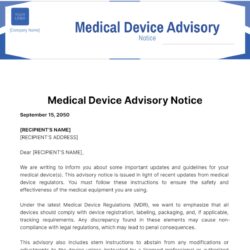
Navigating these situations effectively often hinges on having robust internal processes and, crucially, a well-defined medical device advisory notice template. Such a template serves as a standardized framework, ensuring that all necessary information is conveyed comprehensively and consistently, minimizing potential confusion and facilitating prompt action. It’s about being prepared before an incident occurs.

A carefully constructed template helps manufacturers meet regulatory obligations, protect their reputation, and most importantly, safeguard the well-being of patients who rely on these devices. It transforms a potentially chaotic situation into an organized and controlled response, which is invaluable in the fast-paced healthcare environment.
Crafting an Effective Advisory Notice: Key Elements
Developing an advisory notice that truly works means going beyond just stating there’s a problem. It requires a structured approach that ensures every piece of vital information is present, easy to understand, and actionable. Think of it as a roadmap for recipients, guiding them from understanding the issue to implementing the necessary corrective steps.
The initial step in this journey is unequivocally identifying the specific device and the nature of the issue. Ambiguity here can lead to widespread confusion and incorrect actions, potentially exacerbating risks. A comprehensive advisory notice template for medical devices should leave no room for guesswork regarding the affected products.
Identifying the Device and Issue
To ensure clarity, an advisory notice must precisely pinpoint which devices are subject to the alert. This section demands meticulous detail, allowing healthcare facilities and users to quickly determine if they possess or use an affected unit. Including unique identifiers is paramount for this accuracy.
Once the device is clearly identified, the next critical step is to articulate the problem itself. This isn’t just about stating that there’s an issue, but rather providing a clear, concise, and clinically relevant description of what has gone wrong and why it matters. The language used should be direct, avoiding jargon where possible, but precise enough for medical professionals to grasp the implications. This section forms the core understanding for the recipient, informing them of the specific defect or malfunction.
Describing the Nature of the Problem
This part of the advisory notice needs to be particularly robust, offering a candid and detailed explanation of the problem, its potential causes, and the associated risks. Transparency here builds trust and helps recipients understand the gravity of the situation. It’s about explaining the “what” and the “why” in a way that empowers informed decision-making.
Finally, and perhaps most crucially, the advisory notice must clearly outline the recommended actions. This is where the recipient learns what they need to do to mitigate the risk. These instructions must be unambiguous, practical, and easy to follow. Confusing or vague instructions can lead to delays or incorrect procedures, potentially endangering patients.
Recommended Actions and Next Steps
This section should provide a step-by-step guide for recipients. Whether it’s to cease using a device, return it, update software, or perform specific checks, the instructions must be laid out logically and clearly. This is the actionable part of the notice, designed to elicit a precise response.
Beyond the content, the tone of the advisory notice should always be professional, empathetic, and authoritative. It should convey a sense of urgency without causing undue panic, and responsibility without admitting liability where it’s not due. A well-constructed medical device advisory notice template helps ensure all these critical components are consistently addressed, fostering a culture of safety and preparedness.
Distribution and Follow-up Protocols
Having a meticulously crafted advisory notice is only half the battle; ensuring it reaches the right people in a timely manner is equally vital. The distribution strategy must be as carefully planned as the content itself, considering both the urgency of the message and the diverse channels required to reach all affected parties effectively.
The primary goal is to ensure that every individual or institution using the affected device receives the notice promptly. This often involves a multi-pronged approach, leveraging various communication methods to maximize reach and confirm receipt. It’s not just about sending; it’s about confirming the message landed and was understood.
Beyond initial distribution, robust follow-up protocols are indispensable. An advisory notice isn’t a one-and-done communication; it’s the beginning of a process to ensure compliance and resolution. This includes tracking responses, documenting actions taken by recipients, and providing channels for further questions or support. Regular check-ins and the ability to verify that recommended actions have been implemented are crucial for closing the loop on any potential safety issue. This comprehensive approach underscores a manufacturer’s commitment to patient safety and regulatory diligence.
Establishing these clear distribution and follow-up mechanisms helps reinforce the credibility of the manufacturer and ensures that the integrity of the medical device ecosystem is maintained. It demonstrates a proactive and responsible posture, which is critical in an industry where lives depend on the reliability and safety of products.
Ultimately, a well-executed advisory notice, from its initial drafting through to its distribution and follow-up, is a testament to an organization’s commitment to quality and patient safety. It transforms a potential crisis into an opportunity to demonstrate leadership and trustworthiness within the medical community. By systematically addressing every aspect of the communication process, manufacturers can uphold their responsibilities and contribute positively to healthcare outcomes.