Navigating the end of an employment relationship, whether initiated by an employer or an employee, is rarely an easy task. It involves delicate conversations, legal considerations, and a commitment to professional conduct. While the human aspect is paramount, having a clear, well-structured communication framework is equally vital for a smooth transition for all parties involved.
This is where a robust termination of employment notice template becomes an indispensable tool. It serves as a formal written record, ensuring that all necessary information is conveyed accurately and in compliance with relevant employment laws. Such a template helps prevent misunderstandings, protects both the employer and employee, and streamlines what can often be a complex process.
Ultimately, the goal is to manage the separation with dignity, clarity, and adherence to legal requirements. By understanding the components and best practices for a termination notice, organizations can ensure they handle these situations professionally and ethically, minimizing potential disputes and fostering a respectful environment even during departures.Crafting an Effective Termination Notice
A termination notice is far more than just a letter; it is a critical document that formalizes the end of an employment contract. Its primary purpose is to provide clear, unambiguous information regarding the termination, including the effective date, reasons (if appropriate and legally required), and details about final pay and benefits. A poorly constructed notice can lead to confusion, legal challenges, and damage to an organization’s reputation. Therefore, meticulous attention to detail and legal compliance are essential when preparing such a document.
The content of the notice should be factual, concise, and professional, avoiding any emotional language or accusations. It should clearly outline the terms of separation, ensuring both parties understand their rights and responsibilities. This includes information about the return of company property, any ongoing confidentiality obligations, and the process for accessing final remuneration.
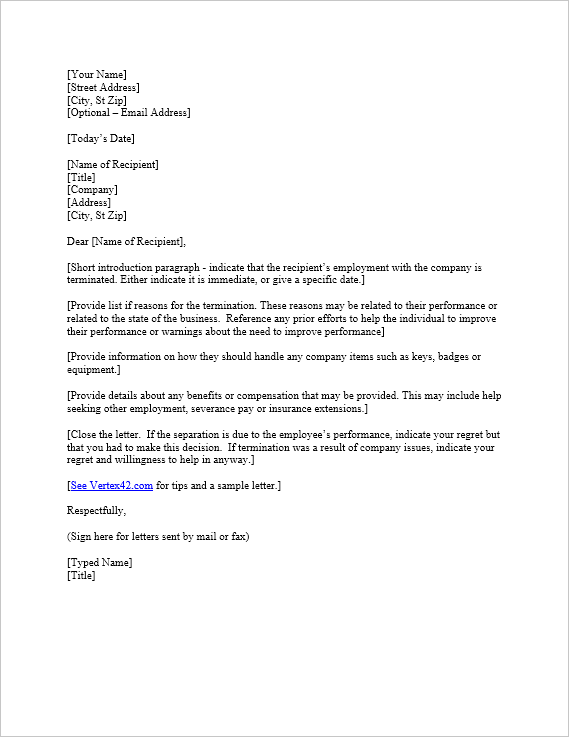
Essential Components to Include
- Employee’s full legal name and current address.
- The company’s full legal name and address.
- The date the notice is being issued.
- The specific effective date of termination.
- A clear statement of termination of employment.
- The reason for termination (if required by law or company policy, or if it helps clarity and avoids future dispute).
- Details regarding final wages, including payment for accrued but unused vacation time.
- Information about severance pay, if applicable.
- Instructions on continuing or converting benefits, such as health insurance (e.g., COBRA information in the United States).
- A request for the return of all company property, such as laptops, keys, and identification badges.
- A reminder of any ongoing post-employment obligations, like confidentiality or non-solicitation agreements.
- Signature lines for the employer representative and a space for the employee to acknowledge receipt (though acknowledgment is not always legally required for the notice to be valid).
When stating the reason for termination, it is crucial to be factual and truthful. In many jurisdictions, employers are advised to consult with legal counsel before detailing the reasons, especially in “at-will” employment states where a reason might not be legally required but providing one incorrectly could create liability. The notice should always align with internal documentation and records that support the termination decision.
Particular attention should be paid to the financial aspects. All final wages, including any outstanding commissions, bonuses, or vacation pay, must be calculated accurately and paid according to state and federal laws. Providing clear instructions on how and when these payments will be made helps prevent disputes and ensures legal compliance. A well-prepared termination of employment notice template considers all these elements, offering a structured approach to a sensitive process.
Navigating the Termination Process
While having an excellent template is fundamental, the notice itself is just one part of a broader, often challenging, process. The way a termination is handled from start to finish can significantly impact the departing employee, remaining staff morale, and the company’s reputation. It is crucial to approach the entire process with preparation, empathy, and strict adherence to legal and ethical guidelines.
Before delivering any notice, employers should ensure that all internal investigations or performance management processes have been thoroughly documented and concluded. Legal counsel should be consulted to review the decision and the proposed notice, ensuring it complies with all applicable local, state, and federal employment laws. This proactive step can prevent costly legal battles and protect the organization from potential claims of wrongful termination or discrimination.
- Consult legal counsel to review the decision and the notice document.
- Review and follow internal company policies and procedures for termination.
- Prepare all necessary documents, including the termination notice, severance agreements, and benefit information.
- Choose an appropriate private location and time for the termination meeting.
- Have a witness, such as an HR representative, present during the meeting.
- Deliver the news calmly, directly, and professionally, sticking to the facts.
- Allow the employee to ask questions and provide clear answers regarding the separation logistics.
- Facilitate the collection of company property and personal belongings in a respectful manner.
Throughout the termination meeting and the subsequent transition, maintaining professionalism is paramount. The goal is to facilitate a respectful departure, ensuring that the employee leaves with a clear understanding of the situation and all relevant information. This level of care can help maintain goodwill and reduce the likelihood of negative sentiment that could harm the company’s employer brand in the long run.
Effectively managing employment terminations requires more than just a template; it demands a thoughtful, legally compliant, and humane approach. By meticulously preparing the notice and carefully executing the entire process, organizations can ensure clarity, minimize risks, and uphold their commitment to fair labor practices. This structured approach helps transform a potentially difficult situation into a manageable transition for everyone involved.
Ultimately, investing in robust procedures and well-crafted documents ensures that even challenging professional goodbyes are handled with the utmost respect and legal precision. This commitment strengthens an organization’s foundation, protecting its interests while fostering a professional and fair environment for its workforce.