Venturing into the world of self-employment offers incredible freedom and flexibility, but it also comes with its own set of responsibilities. One of the most crucial tools for any freelancer, contractor, or consultant is a solid work agreement. Having a reliable self employed work contract template isn’t just a formality; it’s the cornerstone of clear communication, professional boundaries, and financial security in every client engagement you undertake.
Think of a contract not as a rigid, daunting legal document, but rather as a friendly roadmap for both you and your client. It outlines the journey ahead, clarifying expectations, deliverables, timelines, and most importantly, how and when you’ll be compensated for your hard work. Without such an agreement, you’re essentially operating on verbal promises, which can lead to misunderstandings, scope creep, and payment disputes that are difficult to resolve.
That’s why understanding what goes into a comprehensive contract and knowing how to adapt a template to your specific needs is incredibly empowering. It helps you safeguard your interests, maintain professionalism, and build lasting, positive relationships with your clients. Let’s explore why making a good contract a priority is one of the smartest business decisions you can make.
Why a Solid Contract Is Your Best Friend in the Self-Employed World
In the dynamic landscape of self-employment, where every project is unique and every client relationship distinct, a well-crafted contract serves as your ultimate protection and guide. It’s more than just a piece of paper; it’s a testament to your professionalism and a commitment to clarity that benefits both parties involved. When you invest time in setting up a robust agreement, you are essentially investing in the stability and growth of your independent business.
One of the primary benefits is establishing an undisputed scope of work. Without clear boundaries defined in writing, projects can easily expand beyond their original intent, a phenomenon often referred to as “scope creep.” Your contract should meticulously detail what services you will provide, what deliverables the client can expect, and any specific requirements or limitations. This level of detail ensures that everyone is on the same page from the outset, preventing misunderstandings down the line and allowing you to manage your time and resources effectively.
Equally vital are the payment terms. This section of your contract leaves no room for ambiguity regarding your fees, payment schedule, and acceptable payment methods. Will you require an upfront deposit? Are payments milestone-based, or will you invoice monthly? What are the late payment penalties, if any? Clearly outlining these financial aspects protects your income and ensures you are compensated fairly and promptly for your efforts, which is absolutely essential for any self-employed individual.
Beyond the financial aspects, a comprehensive contract also addresses critical legal considerations such as intellectual property rights and confidentiality. Who owns the work once it’s completed? Will you retain rights to use portions of the work in your portfolio? If you’re working with sensitive information, a confidentiality clause ensures that both parties understand their obligations to keep certain details private. These provisions are crucial for protecting your creative assets and your client’s proprietary information.
Furthermore, a good contract provides a roadmap for conflict resolution and project termination. While no one wants to anticipate problems, having clearly defined procedures for addressing disputes or for ending a project prematurely can save a lot of headaches and potential legal battles. It specifies notice periods, conditions for termination, and how outstanding payments or deliverables will be handled, offering a clear exit strategy should circumstances change for either party.
Ultimately, a robust contract elevates your professional standing. It shows clients that you are serious about your work, organized, and committed to a transparent and mutually beneficial working relationship. It acts as a foundational agreement that builds trust and fosters an environment where both you and your client can focus on achieving successful outcomes, free from the worries of unspoken expectations or forgotten details.
Key Components to Look For in Your Self Employed Work Contract Template
When you’re sifting through various options for a self employed work contract template, or even drafting one from scratch, it’s crucial to identify the core elements that make an agreement truly effective and protective. These components aren’t just boilerplate text; they are the essential pillars that define your professional engagement and safeguard your business interests. A thorough template will guide you in capturing all necessary details to prevent future complications.
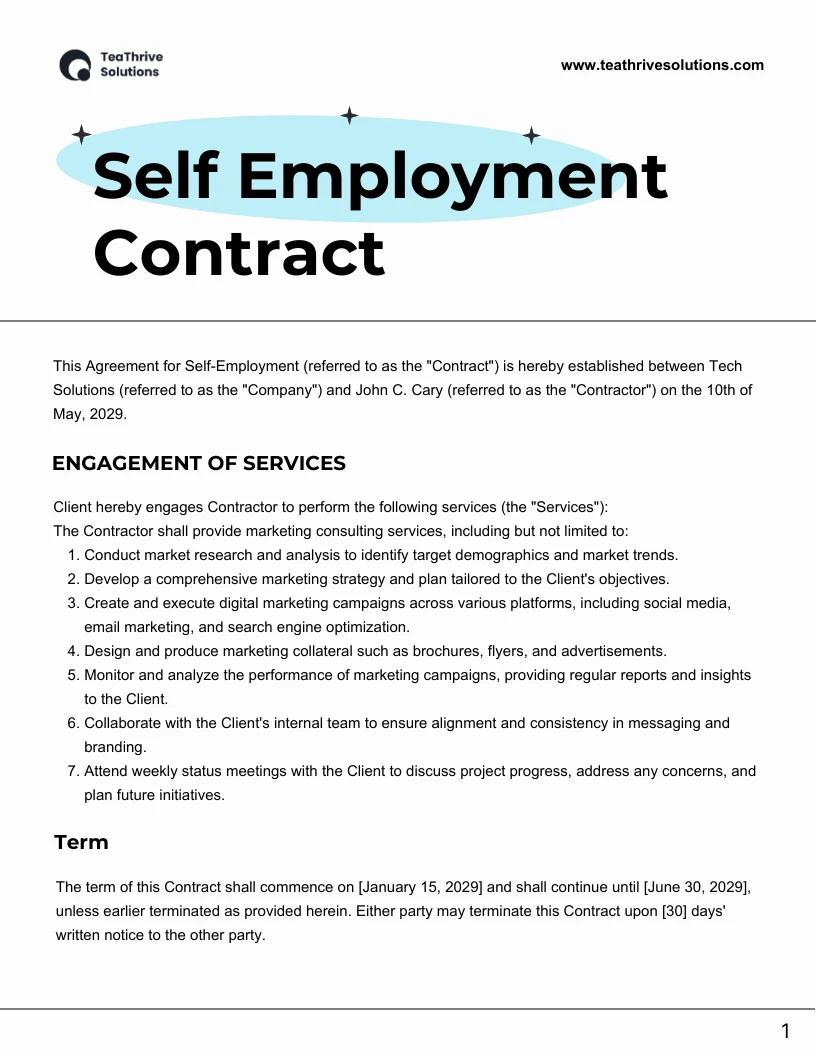
Every effective contract begins with the unambiguous identification of the parties involved, clearly stating who you are, who the client is, and sometimes the registered business names and addresses. Following this, a detailed description of the project and the scope of work is paramount. This section should clearly articulate what services you will provide, specific deliverables, and any limitations to your responsibilities. Ambiguity here is the root of many project disputes, so be as precise as possible.
A good template will then lead you through critical sections like payment terms, timelines, intellectual property, and confidentiality. These sections are non-negotiable for protecting your interests and ensuring a smooth project flow. Here is a list of key elements you should always look for:
- Identification of Parties: Full legal names and contact information for both you and the client.
- Scope of Work and Deliverables: A detailed description of the services to be provided and the specific outcomes or products.
- Payment Terms: Your fee structure, payment schedule, accepted payment methods, and any provisions for late payments or revisions.
- Project Timeline and Milestones: Start and end dates, key milestones, and deadlines for deliverables.
- Intellectual Property Rights: Who owns the work product upon completion, and any licenses granted for its use.
- Confidentiality and Non-Disclosure: Agreements to protect sensitive information exchanged during the project.
- Termination Clauses: Conditions under which either party can end the contract, notice periods, and financial implications.
- Indemnification: Protections for both parties against certain liabilities.
- Governing Law: The jurisdiction whose laws will govern the contract.
- Signatures: Spaces for both parties to formally agree to the terms.
Remember that a template is a starting point. While it provides a solid foundation, always customize it to fit the unique requirements of each project and client. It’s often wise to have a legal professional review your customized template, especially for complex projects, to ensure full compliance and robust protection.
Embracing the use of well-structured work contracts is a powerful strategy for any self-employed professional. It instills confidence in your clients, showcasing your commitment to professional standards and clear communication. More importantly, it provides you with the peace of mind that comes from knowing your efforts are formally recognized and your business interests are secured, allowing you to focus on delivering outstanding work.
Taking the time to understand and implement a robust contracting process will undoubtedly contribute to the long-term success and sustainability of your freelance career. It’s an investment in your future, fostering stronger client relationships, smoother project executions, and a more secure financial footing for your independent venture.