Giving your teenager their first cell phone or upgrading an existing one is a big step. It opens up a world of communication, learning, and entertainment. However, it also introduces challenges related to responsible use, safety, and managing screen time. Establishing clear boundaries from the start is crucial for a healthy digital experience.
This is where a teenage cell phone contract template becomes an invaluable tool. It’s more than just a piece of paper; it’s a living agreement that sets expectations, promotes open communication, and helps teach valuable life lessons about responsibility and privilege. By creating a clear understanding, you can avoid many common conflicts down the road.
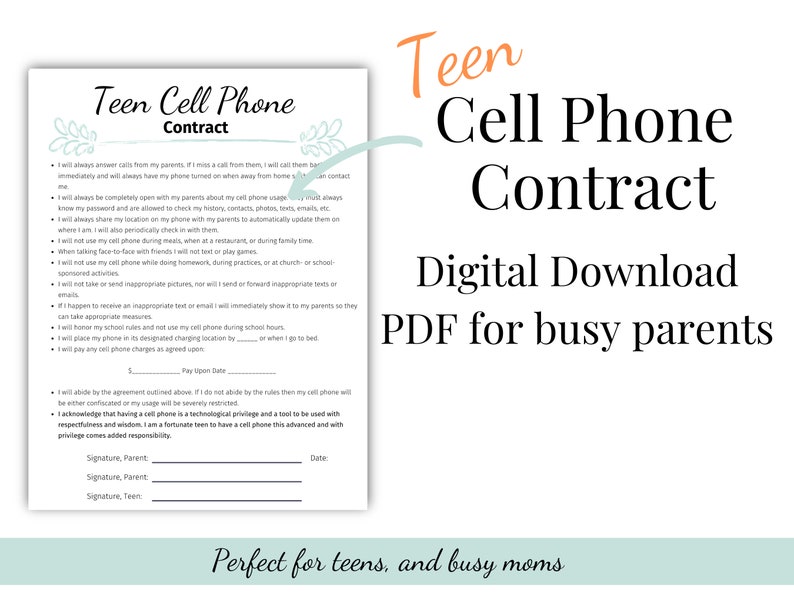
In this comprehensive guide, we’ll explore why a cell phone contract is essential, what key elements to include, how to customize it for your family, and best practices for implementation. Our goal is to empower both parents and teens to navigate the digital world successfully and respectfully.
Why a Cell Phone Agreement for Teens is Essential
In today’s digital age, cell phones are a ubiquitous part of a teenager’s life, offering both incredible benefits and potential pitfalls. Without clear guidelines, disputes over usage, content, and screen time can quickly become a source of family tension. A formal agreement helps mitigate these issues by establishing a foundation of understanding.
One primary benefit is the promotion of responsible digital citizenship. A contract allows parents to explicitly outline expectations regarding online behavior, privacy settings, and interactions with others. This proactive approach can help teens understand the lasting impact of their online actions and encourage thoughtful engagement.
Furthermore, a cell phone contract fosters open communication between parents and teens. The process of creating and signing the agreement provides a dedicated time to discuss important topics like cyberbullying, digital etiquette, and personal safety online. This dialogue can strengthen trust and ensure everyone feels heard and understood.
Beyond responsibility, the agreement also addresses practical concerns such as cost management and device care. Teens learn the value of their device and the financial implications associated with its use. This can instill a sense of ownership and encourage them to be more careful with their phone, reducing instances of damage or loss.
Setting Clear Expectations for Digital Boundaries
Defining clear boundaries is perhaps the most significant role of a cell phone contract. It prevents misunderstandings about when and where the phone can be used. For instance, specific times the phone must be put away, like during family meals or homework, can be explicitly stated.
These boundaries aren’t meant to be overly restrictive but rather to create a balance between screen time and other important activities. It helps teens prioritize schoolwork, sleep, and face-to-face interactions over constant digital engagement. This can lead to healthier habits and improved overall well-being.
By establishing these expectations upfront, teens know what is expected of them, reducing arguments based on unclear rules. When issues arise, parents can refer back to the agreed-upon terms, making enforcement fairer and more consistent. This predictability can be reassuring for everyone involved.
Encouraging Responsible Digital Citizenship
Digital citizenship goes beyond just not misbehaving online; it involves being a positive and respectful member of the digital community. A cell phone contract is an excellent starting point for discussing these broader concepts. It can cover topics like respecting others’ privacy, avoiding cyberbullying, and understanding the permanence of online content.
Parents can guide teens to think critically about the information they share and consume online. This includes recognizing fake news, understanding privacy settings, and being aware of digital footprints. These are crucial skills for navigating the complexities of the modern internet safely.
The contract can also address screen time management, emphasizing balance. It’s about helping teens understand that their phone is a tool, not a constant companion that dictates their every moment. Encouraging offline activities and hobbies is just as important as setting online rules.
Key Elements to Include in Your Teen’s Cell Phone Agreement
A comprehensive teenage cell phone contract template should cover several critical areas to be effective. These elements ensure that all potential issues, from usage limits to financial responsibilities, are addressed clearly. Think of it as a blueprint for responsible cell phone ownership.
Start by outlining the basic ownership and usage rules. Who owns the phone? What are the acceptable hours of use? Where is the phone allowed or not allowed? These foundational points eliminate ambiguity and provide a solid framework for the rest of the agreement.
Next, delve into the financial aspects. Who pays for the phone, the plan, and any repairs? Understanding the monetary commitment involved can significantly impact a teen’s sense of responsibility. This also teaches valuable lessons about budgeting and contributing to shared expenses.
Finally, consider the consequences of violating the agreement. What happens if rules are broken? Clear, consistent consequences are vital for the contract’s effectiveness. These should be discussed and agreed upon by both parties to ensure fairness and understanding.
Establishing Usage Rules and Expectations
One of the most common areas of conflict is how and when a phone can be used. This section of your contract should be very specific. Consider daily screen time limits, especially during school nights, and designated “no phone” zones or times.
For example, you might stipulate no phones at the dinner table, after a certain bedtime, or during homework sessions. You can also define acceptable applications and websites, and perhaps restrict certain types of content. This helps guide your teen towards productive and safe online activities.
It’s also important to address communication etiquette. This includes expectations about responding to calls and texts from parents, particularly in emergencies, and guidelines for respectful communication with peers. These rules help ensure the phone is used as a tool for connection, not distraction.
Defining Financial Responsibilities and Device Care
Who is financially responsible for the cell phone? This is a crucial conversation to have. Will the teen contribute to the monthly bill, or pay for app purchases? Clearly outlining these contributions teaches financial literacy and the value of their device.
Beyond the monthly cost, discuss responsibility for damage, loss, or theft. If the phone is broken, who pays for repairs or replacement? Having these answers beforehand can prevent heated arguments later. This emphasizes the importance of taking care of expensive personal property.
The contract should also include expectations for general device care, such as keeping it charged, protected with a case, and free from unauthorized modifications. Treating the phone as a valuable possession fosters a sense of accountability and careful stewardship.
Outlining Consequences for Non-Compliance
Even the best agreements need a system for when things go wrong. Clearly defining the consequences for breaking the contract rules is essential for its integrity. These consequences should be proportional to the infraction and agreed upon in advance.
Consequences could range from temporary loss of phone privileges (e.g., an hour, a day, or a weekend) for minor infractions to more severe measures for repeated or serious breaches. The goal is to teach responsibility, not just to punish.
It’s important that both parents and teens understand and agree to these consequences. This collaborative approach makes enforcement feel less arbitrary and more like a logical outcome of choices made. Consistency in applying these consequences is key to their effectiveness.
Customizing Your Teenage Cell Phone Contract Template
While a teenage cell phone contract template provides a great starting point, its true power lies in its ability to be customized. Every family and every teenager is unique, and the agreement should reflect those individual circumstances. Avoid a one-size-fits-all approach.
Personalizing the contract makes it more relevant and meaningful to your teen. It shifts it from being a set of rules imposed by parents to a mutually agreed-upon understanding. This sense of ownership on the teen’s part can significantly improve compliance and cooperation.
Consider your teen’s age, maturity level, and specific needs. A younger teenager might require more stringent guidelines regarding screen time and content access, while an older teen might have more autonomy with certain responsibilities. Flexibility is key as your teen grows and develops.
Involving Your Teen in the Agreement Process
One of the most effective ways to customize the contract is to involve your teenager in its creation. Sit down together and discuss each clause. This open dialogue not only helps tailor the rules but also ensures your teen understands the “why” behind them.
When teens feel they have a voice in the rules that govern them, they are far more likely to adhere to those rules. They can offer insights into their digital habits, concerns, and needs, which might not be immediately apparent to parents. This collaborative approach builds trust.
Allowing them to contribute ideas for rules or consequences also teaches them negotiation skills and the importance of compromise. This shared ownership transforms the contract from a parental mandate into a partnership for responsible phone use, fostering self-regulation.
Adapting the Contract to Your Family’s Values
Every family has unique values, and your cell phone contract should reflect these. For some families, religious observances might dictate specific phone-free times. For others, a strong emphasis on academic performance might lead to stricter rules around phone use during school hours.
Think about what’s most important to your family: open communication, academic achievement, family time, digital safety, or a combination of these. Tailor the contract’s clauses to support and reinforce these core values. This makes the agreement feel authentic to your household.
For instance, if family meal times are sacred, make sure the contract explicitly states that phones are not allowed at the table. If good grades are a priority, specify that homework must be completed before any leisure screen time. These details make the contract truly functional.
Implementing and Enforcing the Cell Phone Agreement
Having a well-written teenage cell phone contract template is only half the battle; successful implementation and consistent enforcement are equally crucial. A contract sitting in a drawer won’t do much good. It needs to be a living document that guides daily interactions.
Start by having a formal “signing ceremony” where everyone involved acknowledges their understanding and commitment. Display the contract in a prominent place, like on the refrigerator or a family bulletin board, so it’s a constant visual reminder of the agreed-upon terms.
Consistency in enforcement is paramount. If rules are sometimes enforced and sometimes ignored, the contract loses its credibility. Both parents must be on the same page and present a united front when addressing non-compliance to ensure the agreement remains effective.
Regular Review and Updates
The digital world changes rapidly, and so do teenagers. What works today might need adjustments next year. Schedule regular review sessions, perhaps every six months or annually, to discuss the contract’s effectiveness with your teen. This allows for necessary updates.
These reviews are an opportunity to commend your teen on adherence to the rules and to discuss any challenges they might be facing. It also allows you to adjust rules as your teen matures, granting more autonomy as they demonstrate greater responsibility.
For example, an older teen might be ready for later screen time curfews or more flexibility with social media. Conversely, if new issues arise, the contract can be updated to address them. This ensures the agreement remains relevant and fair over time.
Tips for Consistent Enforcement
Consistent enforcement requires effort and a united front from parents. Avoid making exceptions “just this once,” as this can undermine the entire agreement. When a rule is broken, refer back to the contract and apply the agreed-upon consequence calmly and firmly.
Use “I” statements to express your feelings rather than accusatory language. For example, “I feel concerned when you use your phone during homework time because our agreement states homework comes first,” rather than, “You always break the rules with your phone!”
Remember that the goal is not to punish but to teach. Frame consequences as learning opportunities that reinforce responsible behavior. Celebrate successes and acknowledge when your teen adheres to the contract, reinforcing positive habits.
Common Contract Clauses: A Comparison
Understanding what other families include in their cell phone agreements can help you tailor your own. Below is a comparison of common clauses found in a typical teenage cell phone contract, highlighting different approaches and potential considerations.
| Clause Category | Common Wording/Expectation | Alternative/Flexible Approach |
|---|---|---|
| Ownership & Cost | “Parent owns the phone, pays for bill. Teen pays for apps & damage.” | “Teen contributes X% to bill. Earns phone privileges by completing chores.” |
| Usage Hours | “No phone after 9 PM on school nights; none at dinner.” | “Flexible screen time with parent approval; ‘Do Not Disturb’ mode after bedtime.” |
| Content & Apps | “No social media until age 13; all app downloads require approval.” | “Age-appropriate apps reviewed by parent; open discussion about online content.” |
| Safety & Privacy | “Parents have access to phone/passwords; location tracking enabled.” | “Privacy respected unless safety concerns arise; regular check-ins about online safety.” |
| Consequences | “First offense: 1-day phone loss. Second offense: 1-week phone loss.” | “Consequences tailored to infraction’s severity; collaborative problem-solving.” |
Expert Tips for a Successful Cell Phone Agreement
Creating and maintaining an effective cell phone contract with your teenager requires more than just a template. These expert tips will help you navigate the process with greater ease and foster a more positive digital environment for your family.
- Keep it Positive and Empowering: Frame the contract as a tool to help your teen succeed and grow responsibly, rather than a list of restrictions. Emphasize the privileges that come with responsible use.
- Lead by Example: Your own cell phone habits heavily influence your teen. Model the behavior you wish to see, such as putting your phone away during family time or refraining from constant checking.
- Focus on Open Dialogue: Use the contract as a springboard for ongoing conversations about digital life, not as the final word. Encourage your teen to come to you with questions or concerns without fear of judgment.
- Be Prepared for Pushback: It’s natural for teens to test boundaries. Anticipate this and respond calmly by referring back to the agreed-upon terms. Consistency is your greatest ally.
- Educate Yourself Continuously: Stay informed about new apps, social media trends, and online safety issues. This knowledge will help you understand your teen’s digital world better and inform your discussions.
- Consider a Trial Period: If you’re unsure about certain rules, propose a trial period for the contract, perhaps three months. This allows you to assess what works and make adjustments without permanent commitment.
- Prioritize Real-World Connections: Actively encourage and create opportunities for your teen to engage in offline activities, hobbies, and face-to-face interactions. Remind them that the phone is a tool, not their entire world.
Conclusion
Implementing a teenage cell phone contract template is a proactive and empowering step for any family navigating the digital age. It provides a clear framework for responsible cell phone use, fosters open communication, and helps teens develop essential digital citizenship skills. By working together to create and uphold this agreement, you’re not just setting rules; you’re building a foundation of trust and responsibility that extends far beyond screen time.
Remember that this contract is a living document designed to evolve as your teenager grows and the digital landscape changes. Regular reviews, open dialogue, and consistent enforcement are key to its long-term success. Embrace this opportunity to guide your teen towards a balanced and responsible relationship with their technology, preparing them for a future where digital literacy is paramount.