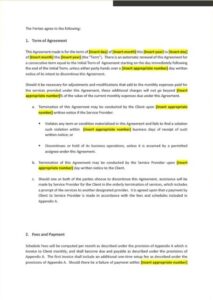
Embarking on a journey in clinical psychology requires dedication, rigorous training, and most importantly, effective supervision. A strong supervisory relationship is the bedrock of professional development, guiding aspiring clinicians through complex cases and ethical considerations. To ensure clarity, mutual understanding, and professional boundaries, a well-structured clinical psychology supervision contract template is not just helpful, it’s essential. This article will explore why such a document is crucial, detail its key components, and provide a comprehensive understanding to help you create an effective agreement.
Having a clear supervision agreement from the outset minimizes misunderstandings and provides a roadmap for the supervisory process. It acts as a professional framework, delineating expectations for both the supervisor and the supervisee. Without a formal agreement, critical aspects of the relationship, such as confidentiality, emergency protocols, and performance evaluations, can be left vague, potentially leading to complications.
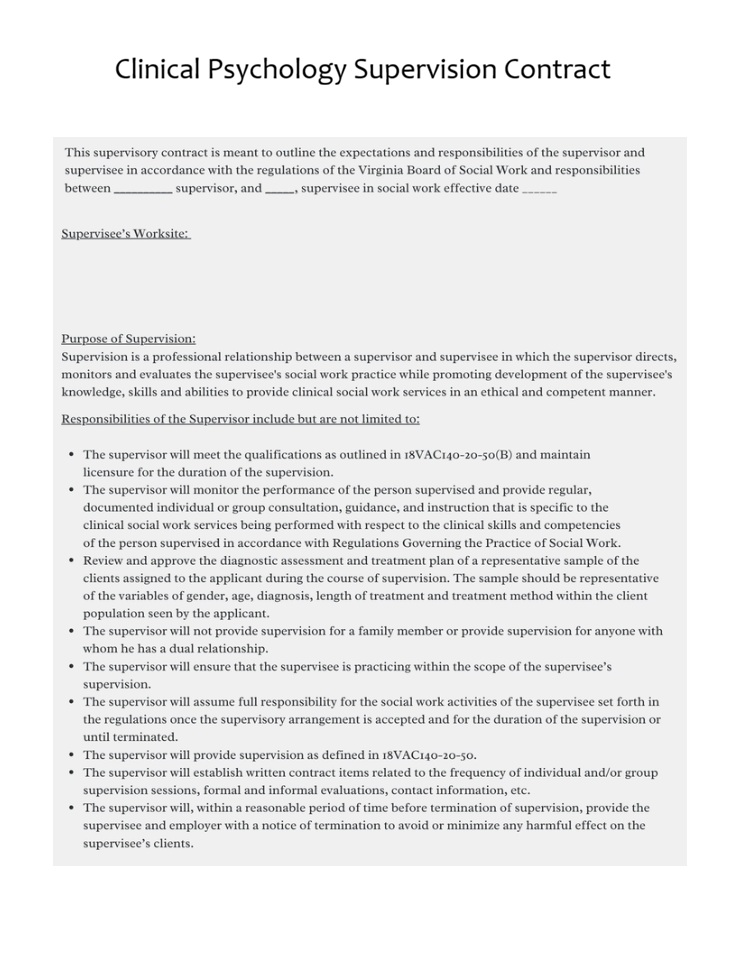
This guide will walk you through the core elements of a robust supervision contract, offering insights into best practices. You will learn how to articulate roles, responsibilities, and the structure of supervision sessions. Ultimately, understanding and utilizing a comprehensive clinical psychology supervision contract template empowers both parties to foster a productive and ethically sound learning environment.
Why a Robust Supervision Agreement is Essential for Clinical Psychologists
A well-crafted supervision agreement serves as the foundational document for the entire supervisory relationship in clinical psychology. It clarifies the scope, limits, and expectations for both the supervisor and the supervisee. This proactive approach helps prevent potential conflicts and ensures a structured pathway for professional growth and adherence to ethical guidelines.
The process of developing and signing a clinical psychology supervision contract template promotes open dialogue and mutual understanding. It forces both parties to discuss important issues upfront, such as goals, theoretical orientations, and preferred learning styles. This initial conversation is invaluable for establishing rapport and building trust, which are critical for effective supervision.
Ensuring Ethical Practice and Professional Boundaries
One of the primary benefits of a formal supervision contract is its role in upholding ethical standards within clinical practice. It explicitly outlines the ethical responsibilities of both supervisor and supervisee, referencing relevant professional codes, such as those from the American Psychological Association (APA). This clarity helps prevent ethical dilemmas and ensures that client welfare remains paramount.
The contract defines professional boundaries, addressing areas like dual relationships, confidentiality, and informed consent. It establishes clear protocols for managing sensitive information and ensuring that client data is protected. By setting these boundaries early, the contract safeguards the integrity of the therapeutic process and the reputation of both individuals involved.
Facilitating Clear Communication and Expectations
Miscommunication can undermine even the most well-intentioned supervisory relationships. A detailed supervision contract provides a written record of agreed-upon expectations, reducing ambiguity significantly. It covers aspects such as the frequency, duration, and format of supervision sessions, whether in-person, online, or a hybrid model.
This document also typically outlines the supervisee’s learning objectives and the supervisor’s responsibilities in facilitating these goals. It specifies procedures for giving and receiving feedback, outlining how progress will be monitored and evaluated. Clear expectations foster a predictable and supportive environment, allowing the supervisee to focus on learning and development.
Supporting Supervisee Growth and Competency Development
Ultimately, the goal of clinical supervision is to foster the supervisee’s professional growth and competency. A comprehensive supervision agreement supports this by outlining the specific skills and knowledge areas that will be addressed. It can include a plan for gradually increasing independence and responsibility, tailored to the supervisee’s current stage of development.
The contract often includes provisions for performance evaluations, detailing the criteria and frequency of formal assessments. This structured feedback helps supervisees track their progress, identify areas for improvement, and celebrate achievements. By providing a clear framework, a robust clinical psychology supervision contract template helps guide supervisees towards becoming competent and ethical practitioners.
Key Components of an Effective Clinical Supervision Contract
An effective clinical supervision contract is a detailed document that covers all essential aspects of the supervisory relationship. It should be comprehensive yet understandable, ensuring both parties are fully aware of their commitments and rights. Crafting this agreement requires careful consideration of legal, ethical, and practical elements specific to clinical psychology practice.
Developing a thorough contract ensures that all potential areas of conflict are addressed before they arise. It serves as a living document that can be referred to throughout the supervision period, providing guidance and clarity. Investing time in its creation will pay dividends in fostering a productive and respectful supervisory experience for both supervisor and supervisee.
Defining Roles, Responsibilities, and Confidentiality
The contract must clearly delineate the roles and responsibilities of both the clinical supervisor and the supervisee. The supervisor typically agrees to provide guidance, feedback, and case consultation, ensuring adherence to ethical guidelines and professional standards. The supervisee, in turn, commits to preparing for sessions, actively engaging, and seeking guidance when needed.
Confidentiality is a paramount concern in clinical practice, and the contract must address how client information will be handled within supervision. It should specify the limits of confidentiality, such as mandatory reporting requirements, and detail how client data will be stored and protected. This section often also includes provisions for the supervisee’s own confidentiality within the supervisory relationship.
Structuring Supervision Logistics and Evaluation
Practical logistics are crucial for successful supervision. This section of the clinical psychology supervision contract template specifies the frequency, duration, and location of supervision sessions. It also outlines policies for missed sessions, cancellations, and how to reschedule, ensuring consistency and accountability for both parties. Details about fee structures, if applicable, should also be clearly stated.
The contract must also outline the process for evaluating the supervisee’s performance and progress. This includes the methods of evaluation (e.g., direct observation, review of recordings, case presentations), the criteria used, and the frequency of formal assessments. A transparent evaluation process ensures that feedback is fair, constructive, and aligned with learning objectives and licensure requirements.
Addressing Ethical Dilemmas and Dispute Resolution
Clinical psychology practice inevitably involves encountering complex ethical dilemmas. An effective supervision contract should include a section on how such issues will be identified, discussed, and resolved within supervision. It might outline a process for consulting with external resources or professional bodies if necessary, providing a clear pathway for ethical decision-making.
Furthermore, the contract should contain a clear procedure for dispute resolution in the event of disagreements between the supervisor and supervisee. This could involve an informal discussion process initially, escalating to mediation or consultation with a third party if issues persist. Establishing this framework upfront provides a structured approach to managing conflicts respectfully and professionally.
Sample Clinical Psychology Supervision Contract Template Explained
Creating a comprehensive clinical psychology supervision contract template can seem daunting, but breaking it down into key sections makes the process manageable. Below is an outline of what a typical supervision agreement might look like, highlighting the crucial information included in each part. This structure ensures all vital aspects of the supervisory relationship are formally addressed.
This sample is designed to be adaptable, allowing both parties to customize it to their specific needs and contexts. It covers the necessary administrative details, ethical considerations, and practical arrangements to foster a clear and effective supervisory environment. Utilizing such a template helps in establishing a strong professional foundation.
I. Identification of Parties
- Supervisor Information:
- Name, Credentials (e.g., Ph.D., Licensed Psychologist), License Number, Contact Information (email, phone).
- Theoretical Orientation and Areas of Expertise.
- Supervisee Information:
- Name, Current Degree Program/Affiliation, Contact Information (email, phone).
- Clinical Experience Level, Goals for Supervision (e.g., licensure, competency development).
II. Purpose and Goals of Supervision
- Overall Purpose: To facilitate the supervisee’s professional development, ethical practice, and adherence to professional standards.
- Supervisee’s Specific Goals: List 3-5 primary learning objectives (e.g., enhance diagnostic skills, improve therapeutic interventions for specific populations, develop ethical decision-making processes).
- Supervisor’s Commitment: To provide guidance, feedback, and support consistent with these goals and professional guidelines.
III. Logistics of Supervision
- Frequency and Duration:
- e.g., “Weekly 60-minute sessions.”
- Day and Time of Scheduled Sessions.
- Location/Modality:
- e.g., “In-person at Supervisor’s Office” or “Via secure videoconferencing platform (specify platform).”
- Cancellation Policy:
- e.g., “48-hour notice required for cancellations. Missed sessions without adequate notice may be charged.”
- Emergency Contact/Procedures:
- How to reach the supervisor in urgent client-related situations outside of scheduled supervision.
- Fees and Payment (if applicable):
- Rate per session, billing cycle, acceptable payment methods.
IV. Roles and Responsibilities
- Supervisor Responsibilities:
- Providing ethical guidance, promoting professional growth, ensuring client welfare, monitoring supervisee’s clinical work.
- Maintaining confidentiality within legal and ethical limits.
- Regularly assessing supervisee’s performance and offering feedback.
- Supervisee Responsibilities:
- Presenting cases, preparing for sessions, actively seeking feedback.
- Adhering to ethical guidelines and legal requirements, seeking consultation when uncertain.
- Notifying supervisor of any significant client issues or changes in their own professional status.
- Maintaining client confidentiality.
V. Confidentiality and Its Limits
- Client Confidentiality:
- Discussion of client cases in supervision is not a breach of confidentiality for the purpose of professional development.
- Any identifying client information will be protected.
- Mandatory reporting laws (e.g., child abuse, duty to warn) will be discussed and adhered to.
- Supervisee Confidentiality:
- Discussions regarding the supervisee’s personal growth will remain confidential within the supervisory relationship, unless there are ethical/legal requirements to disclose (e.g., impairment).
VI. Evaluation and Feedback
- Methods of Evaluation:
- e.g., “Case presentations, review of process recordings/transcripts, direct observation, self-report.”
- Frequency of Formal Evaluation:
- e.g., “Mid-point and end-point written evaluations.”
- Process for Feedback:
- Ongoing informal feedback during sessions, opportunities for supervisee to provide feedback to supervisor.
VII. Ethical and Legal Considerations
- Adherence to Ethical Codes:
- Reference relevant professional codes (e.g., APA Ethical Principles of Psychologists and Code of Conduct).
- Supervisee’s Professional Liability:
- Requirement for supervisee to carry professional liability insurance.
- Dual Relationships:
- Statement on avoiding dual relationships that could impair objectivity.
- Grievance/Dispute Resolution:
- Process for addressing disagreements (e.g., initial discussion, consultation with a third party).
VIII. Signatures and Dates
- Supervisor Signature:
- Printed Name, Signature, Date.
- Supervisee Signature:
- Printed Name, Signature, Date.
A robust supervision contract ensures both parties are well-informed and protected, laying the groundwork for an invaluable learning experience. This framework for a clinical psychology supervision contract template guides the development of an agreement tailored to individual needs. It supports the supervisee’s journey towards competence and ethical practice while safeguarding the integrity of the profession.
Establishing a clear and comprehensive clinical psychology supervision contract is a critical step for both supervisors and supervisees. It creates a transparent framework that supports ethical practice, fosters professional growth, and mitigates potential misunderstandings. By proactively defining expectations, roles, and responsibilities, you lay the foundation for a productive and enriching supervisory relationship.
Remember, this contract is a living document, and open communication should always be prioritized throughout the supervisory period. Regularly reviewing and, if necessary, updating the agreement ensures it remains relevant and effective for both parties. Taking the time to craft a thorough contract demonstrates a commitment to professional excellence and ethical conduct in clinical psychology.