Getting a new person on board to help manage your daily tasks is a huge milestone for any growing business or busy executive. It represents a shift from doing everything yourself to finally having the support you need to scale your operations. However, before your new hire starts answering emails and organizing your calendar, you need to make sure the legal groundwork is solid. This is where using a high quality administrative assistant employment contract template becomes an essential part of your hiring process to ensure both parties are on the same page from day one.
Many people think that a handshake or a simple offer letter is enough, especially if the new hire is a friend or a referral. While trust is the foundation of any good working relationship, a formal document provides a level of clarity that verbal agreements simply cannot match. It serves as a roadmap for the professional relationship, outlining exactly what is expected and what happens if things do not go as planned. It protects the employer from potential disputes and gives the employee a sense of security in their new role.
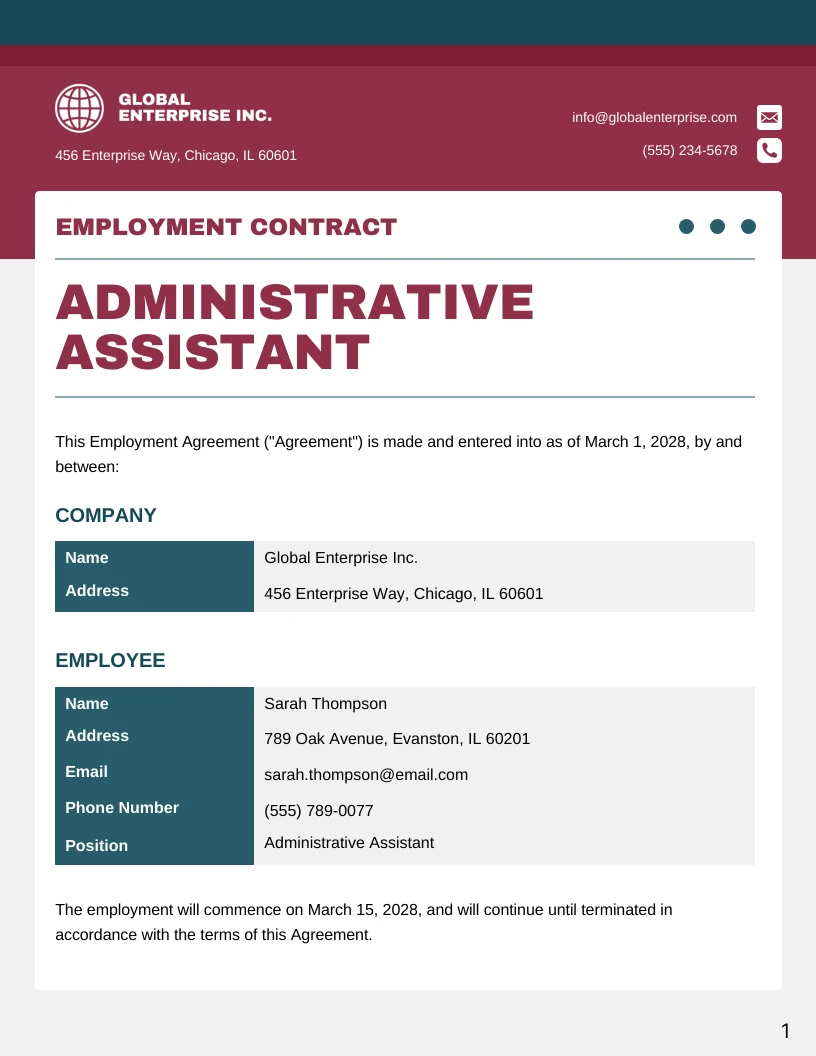
Starting from a blank page is intimidating for most business owners who are not legal experts. That is why templates are such a lifesaver. They give you a structured framework to follow so you do not accidentally forget to include important details like notice periods or confidentiality clauses. By using a pre-made structure, you can focus more on finding the right personality fit and less on worrying about whether you formatted your legal document correctly.
Essential Components of a Strong Assistant Agreement
When you sit down to draft the details, you want to make sure you are covering all the logistical bases. A good agreement is more than just a list of rules; it is a way to define the culture and the standards of your workplace. You want your new assistant to read this document and feel like they have entered a professional environment where their contributions are valued and their boundaries are respected. A well thought out contract prevents confusion and sets a professional tone for the entire tenure of the employee.
Detailed Job Descriptions and Expectations
One of the most common points of friction in an office is a misunderstanding of what a person is actually supposed to be doing. To prevent this, your document should clearly outline the scope of work. Are they expected to handle personal errands, or is the role strictly professional? Will they be managing your social media, or are they focused solely on bookkeeping and travel arrangements? Defining these tasks early on helps in measuring performance later.
Being specific helps your assistant succeed because it gives them a clear target to hit. When roles are vague, employees often feel anxious about whether they are doing enough or if they are overstepping their bounds. By laying out the primary duties in black and white, you create a sense of security and allow them to take ownership of their specific area of the business. This clarity is the first step toward a productive partnership.
Compensation and Benefits Structure
Next, you have to talk about the financial side of the arrangement. This part needs to be very clear to avoid any awkward conversations later. You should state the base salary or hourly rate and explain how and when payments will be made. If there are opportunities for bonuses based on performance or year end goals, it is a good idea to mention the criteria for those incentives here so the employee knows what they are working toward.
Do not forget to include the expected working hours and the physical or digital location of the work. If the role is remote, specify whether they need to be online during certain core hours or if they have the flexibility to choose their own schedule. Mentioning details about overtime pay and holiday schedules will also help manage expectations regarding their work life balance. Clearly defined benefits like health insurance or retirement contributions should also be documented here.
Finally, confidentiality is huge for an administrative role. Assistants often have access to sensitive information like passwords, client lists, and financial data. Including a robust non-disclosure section ensures that your business secrets remain safe. This protects your intellectual property and gives you peace of mind that your private company information is not going to leave the office or be shared with unauthorized parties.
Why Customizing Your Agreement Matters
While it is great to have a starting point, every business has its own unique quirks that should be reflected in the final document. A law firm might need much stricter privacy clauses than a creative marketing agency. Similarly, a startup might need an assistant who is more of a jack of all trades, whereas a large corporation might need someone who focuses on one specific department. Customization ensures the contract actually fits the daily reality of the job.
You also need to think about the local laws where your business operates. Employment regulations can vary significantly from one region to another, so you should always review your administrative assistant employment contract template to make sure it aligns with your local labor standards. This includes checking things like minimum wage requirements and mandatory leave policies that might apply to your specific situation. Legal compliance is non-negotiable when it comes to hiring.
Taking the time to tailor the document shows your new employee that you are organized and that you care about the details of their employment. It sets a professional tone right from the start. Here are a few things you might want to customize before you finalize the paperwork:
Remember that a contract is a living reflection of your professional relationship. As your business grows and the role of your assistant evolves, you might find that you need to update the terms to reflect new responsibilities. Keeping an open line of communication about these changes ensures that the agreement always stays relevant to the actual work being performed on a daily basis.
Finalizing the paperwork is often the last step before you truly begin your new partnership. Once the document is signed and filed away, you can stop worrying about the legalities and start focusing on the actual work. Having this foundation in place allows you to build a relationship based on mutual respect and clear communication, which is the key to any long term successful hire.
Taking the time to get the contract right is an investment in your business future. It protects your interests while also providing your new team member with the clarity they need to do their best work. With the right documentation in hand, you are well on your way to a productive and stress free working relationship that will help your business thrive for years to come.