Embarking on a classic car restoration project is an exhilarating journey, filled with the promise of bringing a piece of automotive history back to life. It is a labor of love, often involving significant financial and emotional investment. To ensure this intricate process unfolds smoothly and protects all parties involved, having a solid foundation is crucial, and that’s precisely where a classic car restoration contract template becomes an invaluable tool. It’s not just a formality; it’s a blueprint for success, clarity, and peace of mind from the first bolt to the final polish.
Without a clear agreement in place, miscommunications can easily arise regarding the scope of work, timelines, costs, and even the quality of parts used. Imagine the frustration of expecting a concourse-level finish only to find the budget didn’t allow for it, or discovering unexpected charges for work you didn’t approve. These situations, while unfortunate, are all too common when the expectations of the vehicle owner and the restorer are not meticulously documented.
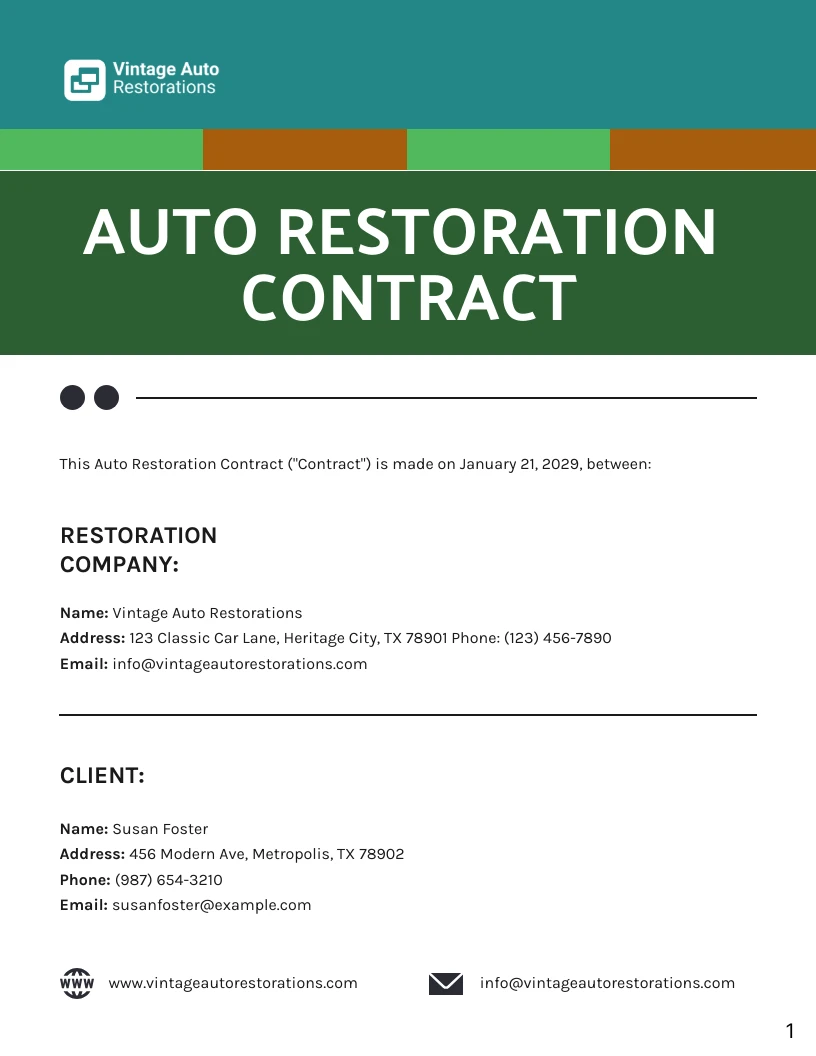
This article will guide you through the essential components of such an agreement, helping you understand what makes a contract robust and effective. Whether you’re an owner commissioning a dream restoration or a professional shop aiming to protect your business and reputation, understanding the nuances of a comprehensive contract is your first step towards a successful, mutually beneficial outcome.
Why Every Classic Car Restoration Needs a Solid Contract
The restoration of a classic car is far more than a simple repair; it’s an art form, a historical preservation effort, and a detailed engineering challenge all rolled into one. Owners pour their hearts into these vehicles, often seeing them as extensions of themselves or legacies to be preserved. This deep personal connection means that the stakes are incredibly high, and any misunderstanding or deviation from the agreed plan can lead to significant disappointment and even legal disputes. A well-crafted contract serves as the ultimate safeguard, documenting every facet of the project to prevent such eventualities.
Consider the complexity involved: bodywork, paint, engine rebuilds, electrical systems, interior upholstery, chrome plating, and sourcing rare parts. Each of these areas can have multiple sub-tasks and potential variations. Without a contract, the restorer might interpret a request differently than the owner intended, leading to work being completed incorrectly or to a different standard. This can result in costly rework, project delays, and strained relationships, none of which are conducive to a positive restoration experience.
For the classic car owner, the contract provides transparency and accountability. It ensures that the restorer is committed to delivering the agreed-upon services within specified parameters. It defines the quality standards expected, the types of parts to be used (original, NOS, aftermarket reproductions), and how any unexpected issues or deviations will be handled. This level of detail empowers the owner with confidence, knowing their prized possession is in capable and committed hands, operating under clear guidelines.
Conversely, for the restoration shop, a contract is equally vital. It protects their business from scope creep, where an owner continuously requests additional work not originally discussed, without adjusting the budget or timeline. It clarifies payment schedules, ensuring the shop receives compensation for their labor and materials in a timely manner, which is critical for cash flow and managing project expenses. It also limits liability by explicitly stating what the shop is and is not responsible for.
A comprehensive agreement acts as a communication tool, fostering open dialogue between the owner and the restorer. It encourages both parties to thoroughly think through every aspect of the project before any work begins, ironing out potential disagreements and setting clear expectations from the outset. This proactive approach significantly reduces the likelihood of disputes arising later in the restoration process, saving both time and money.
Ultimately, the goal of a classic car restoration is to bring a cherished vehicle back to its former glory while ensuring a positive experience for everyone involved. A detailed contract helps achieve this by creating a framework of trust, clarity, and mutual understanding. It’s the cornerstone of a successful project, allowing both the owner to dream big and the restorer to deliver exceptional results with confidence and protection.
Key Elements to Include in Your Restoration Agreement
When preparing your agreement, think of it as telling the entire story of the restoration before it even begins. Every detail, no matter how small, can prevent a future misunderstanding. This means moving beyond a simple handshake and into the specifics of what will transform a faded classic into a gleaming masterpiece. The clearer the document, the smoother the journey for both parties.
The document should comprehensively cover all aspects of the restoration, leaving no room for ambiguity. It sets the stage for how the project will be managed, financed, and completed, ensuring that the dream of restoration aligns with the practical realities of the process. Having a classic car restoration contract template allows you to systematically cover these points.
Here are some essential elements that should be meticulously detailed within your restoration agreement:
- Scope of Work: This is the heart of the contract. It must be incredibly detailed, outlining every specific task to be performed, from body repair and paint color codes to engine rebuild specifications and interior material choices. Include details about specific components, sub-assemblies, and the desired level of finish (e.g., driver quality, show car, concourse). If any part of the car is not to be touched, that should be explicitly stated as well.
- Cost Estimates and Payment Schedule: Provide a clear breakdown of estimated costs for labor, parts, materials, and any outsourced services. Establish a payment schedule, including an initial deposit, progress payments tied to specific milestones (e.g., bodywork complete, engine rebuilt, paint applied), and a final payment upon completion and owner inspection. Detail how cost overruns will be managed and approved.
- Timeline and Milestones: Set a realistic project timeline with estimated start and completion dates. Include key milestones for major stages of the restoration, providing a framework for progress tracking. Discuss how delays caused by either party, parts availability, or unforeseen circumstances will affect the schedule.
- Parts and Materials Sourcing: Specify who is responsible for sourcing parts (owner or restorer), the preferred type of parts (original, NOS, reproduction, custom fabricated), and how approval will be obtained for significant part purchases. Address what happens if specific parts become unavailable.
- Change Orders: Establish a formal process for any changes or additions to the original scope of work. This typically involves a written change order, signed by both parties, detailing the new work, its associated cost adjustment, and any impact on the project timeline.
- Insurance and Liability: Clearly define who is responsible for insurance coverage for the vehicle while it is in the restorer’s care, during transport, and for potential damage or theft. Detail the restorer’s liability limits.
- Dispute Resolution: Outline the steps to be taken if a dispute arises, such as mediation or arbitration, before resorting to litigation. This can save significant time and legal fees should disagreements occur.
By including these comprehensive details, both the owner and the restorer can move forward with confidence and clarity. It ensures that expectations are aligned, responsibilities are understood, and the path to a beautifully restored classic car is well-defined and protected.
The journey of restoring a classic car is deeply rewarding, bringing back not just a vehicle but a piece of history and a personal dream. By investing a little time upfront in developing a robust contract, you are not merely signing paperwork; you are forging a partnership based on clarity and mutual respect. This foundation will allow you to focus on the passion of the project, knowing that the practicalities are securely managed.
Taking the proactive step to utilize a detailed agreement ensures that the process remains focused on the craft and the joy of seeing a magnificent machine reborn. It is the best way to safeguard your investment, manage the intricate details, and ultimately guarantee a satisfying outcome, allowing you to cruise into the sunset with your restored classic, free from unnecessary worries.