When you create an original piece of work, be it a captivating photograph, a compelling piece of writing, an intricate design, or even a unique song, you automatically possess copyright over it. This inherent protection is known as common law copyright, which springs into existence the moment your creation is “fixed” in a tangible medium, such as being written down, recorded, or saved digitally. You don’t need to register your work with any government office to have these fundamental rights; they are yours by virtue of your creative act.
While common law copyright is automatic, clearly asserting your ownership is still a smart move. This is where a common law copyright notice template becomes incredibly useful. A visible notice acts as a public declaration, informing potential users or infringers that the work is protected and belongs to you. It serves as a deterrent against unauthorized use and can significantly strengthen your position should you ever need to defend your rights.
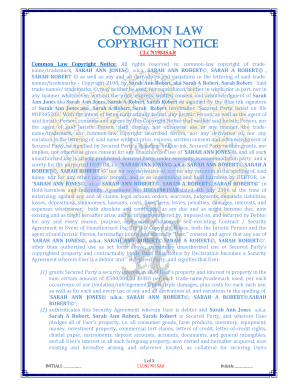
Understanding how to properly formulate and display such a notice is essential for any creator looking to safeguard their intellectual property. This guide will walk you through the components of an effective common law copyright notice and provide insights into its application, helping you to confidently assert your creative ownership.
Understanding Common Law Copyright and Its Importance
Common law copyright is the foundational layer of protection for original works of authorship, providing automatic rights the instant a creation is expressed in a fixed form. Unlike registered copyright, which involves a formal application process with a government body, common law rights are intrinsic to the act of creation itself. This means that from the moment you finish writing that blog post, capture that unique image, or compose that melody, you have a legal claim to its ownership and the exclusive right to reproduce, distribute, perform, display, or adapt your work.
Given this automatic protection, some creators might wonder why they should bother with a notice at all. The answer lies in deterrence and clarity. A prominent copyright notice, even for works protected by common law, serves as a clear warning to the public. It unequivocally states that the work is not free for the taking and that specific rights are reserved by the creator. This proactive approach can significantly reduce instances of accidental or intentional infringement, as it removes any ambiguity about the work’s protected status.
Furthermore, a well-placed common law copyright notice can be valuable evidence in the unfortunate event of a legal dispute. It demonstrates that you have made a public assertion of your rights, making it more difficult for an infringer to claim they were unaware the work was protected. While it doesn’t grant the same statutory benefits as a registered copyright, such as the ability to sue for statutory damages or attorney’s fees, it undeniably strengthens your claim of ownership and helps to establish a clear timeline of your rights.
It is important to understand that common law copyright applies as long as your work remains unpublished or before it enters the public domain. Once a work is “published,” which generally means it has been distributed to the public without restriction, common law protection begins to merge with federal statutory copyright, especially in the United States. However, even for published works, a notice remains a best practice to clearly communicate your proprietary claims.
The simple act of including a notice clarifies to the world that you are serious about protecting your creative output. It’s a small effort that yields significant peace of mind and provides a clear signal to anyone encountering your work.
What Should Your Common Law Copyright Notice Include
Crafting an effective common law copyright notice doesn’t require complex legal jargon. Its primary purpose is to clearly and simply convey your ownership. There are generally three core elements that should be present to make your notice unmistakable.
Here are the essential components to include:
- The copyright symbol (©), the word “Copyright,” or the abbreviation “Copr.” Any of these options clearly indicates that the work is protected by copyright.
- The year of first publication. This is the year your work was first made available to the public. If your work is unpublished, you might use the year of creation instead, or simply state “unpublished work.”
- The name of the copyright owner. This should be the legal name of the individual or entity that holds the copyright.
For example, a typical notice might read: “© 2023 Jane Doe” or “Copyright 2023 XYZ Corporation. All Rights Reserved.” The “All Rights Reserved” phrase, while technically optional in many jurisdictions today due to international treaties, adds an extra layer of clarity that you retain all possible rights under copyright law. Ensure the information is accurate and easy to read, as clarity is key to its effectiveness.
Crafting Your Effective Common Law Copyright Notice
Developing your common law copyright notice is a straightforward process once you understand its core elements. The goal is to create a concise yet informative statement that accurately reflects your ownership and the status of your work. Think of it as a friendly but firm signpost indicating that this creative territory is claimed. You want to avoid overly complicated language, opting instead for directness that anyone can understand, regardless of their legal background.
Once drafted, the placement of your common law copyright notice is just as important as its content. For the notice to be effective, it needs to be reasonably legible and placed in such a way that it gives reasonable notice to an ordinary observer that the work is copyrighted. This means it should be visible and easily discoverable without needing to hunt for it. The best location often depends on the type of work you’re protecting.
Consider these common placements for your notice:
- For websites and digital content: Typically found in the footer of every page, alongside the year and your name. For specific articles or images, it might also appear directly below the title or next to the media.
- For written works (books, articles, reports): Usually on the title page, the reverse of the title page (verso page), or at the beginning of the text.
- For photographs and artwork: Embedded in the image metadata, as a watermark, or prominently displayed on accompanying labels or display cards.
- For software: Often included in the splash screen, “About” dialog box, in the source code comments, or within the software’s documentation.
Consistency in displaying your common law copyright notice across all instances of your work reinforces your claim and makes it harder for anyone to argue they were unaware of your rights. Remember to update the year of publication periodically, especially for ongoing works like websites or annual reports, to reflect the most recent copyright claim. Utilizing a robust common law copyright notice template can streamline this process and ensure all your works are properly marked.
The creation of original works is a deeply personal and often challenging endeavor, making the protection of your intellectual property a natural extension of your creative process. While common law copyright provides an automatic shield, a well-placed and clearly worded notice acts as a critical reinforcement, ensuring that your ownership is not only inherent but also overtly declared to the world. It’s a simple yet powerful tool in your creative arsenal.
By consistently applying a clear and accurate copyright notice, you empower yourself as a creator. You communicate to every viewer and user that your work is valued, protected, and that its use is governed by your rights. This proactive step helps to foster an environment of respect for intellectual property and allows you to focus more on creating and less on potential infringements.