In the complex world of construction, unforeseen issues can often arise, leading to disputes over costs and responsibilities. Whether it’s a subcontractor failing to meet safety standards, delays caused by poor workmanship, or a need for corrective actions, these situations frequently result in what are known as “back charges.” A back charge is essentially a financial claim made by one party against another for costs incurred due to their failure to perform as agreed upon in the contract. Effectively managing these situations is paramount to keeping projects on track and avoiding larger conflicts.
Navigating these financial reclamations requires clear, concise, and professional communication. An informal approach can easily lead to misunderstandings, prolonged disputes, and even legal battles. This is precisely where a well-structured construction back charge notice template becomes an indispensable tool. It provides a standardized framework for documenting issues, outlining expected resolutions, and formally notifying the responsible party of the incurred costs. Utilizing such a template ensures that all necessary information is captured, lending credibility and legal weight to your claim.
This article will guide you through the essential components of a back charge notice, explain its significance in project management, and help you understand how to implement it effectively. By adopting a systematic approach to issuing back charges, you can safeguard your project’s budget, maintain clear communication with all parties, and protect your contractual rights.
Understanding the Importance of a Back Charge Notice
A back charge notice serves as a critical document in the construction industry, acting as a formal record of a problem and the associated costs. It isn’t just a bill; it’s a declaration of an issue that requires a specific resolution. Without such a notice, claims can be easily disputed, as there’s no documented proof of the incident, the costs incurred, or the formal notification process. This can lead to significant financial losses and damage to professional relationships.
The necessity for a back charge notice arises when one party’s actions or inactions directly cause additional costs or delays for another party. Common scenarios include a subcontractor’s crew leaving a site in disarray, requiring clean-up by the general contractor; defective work that needs to be redone by another party; or a supplier delivering incorrect materials, leading to project delays and additional labor costs. Each of these situations represents a justifiable reason for a back charge, provided it aligns with the terms of the original contract.
Failing to properly document and issue a back charge can have severe financial implications. Unrecouped costs directly impact project profitability and can strain budgets. Moreover, without a formal notice, proving the legitimacy of your claim in a legal or arbitration setting becomes significantly more challenging. It leaves your company vulnerable to disputes and potential financial liabilities that could have been avoided with proper documentation.
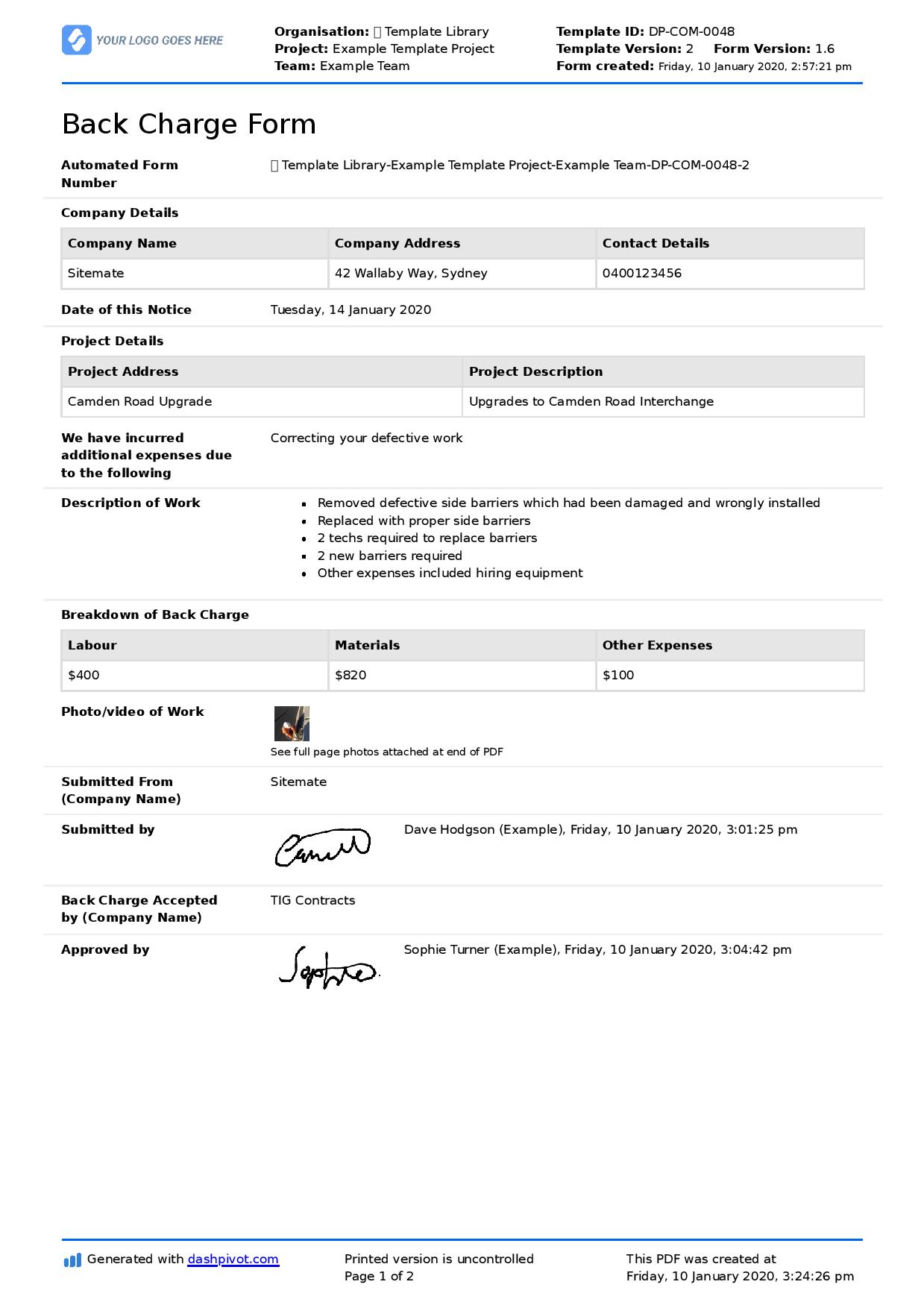
A standardized template streamlines the entire process, ensuring that no crucial information is overlooked. It prompts you to include all necessary details, such as contract references, specific dates, detailed descriptions of the issue, and a clear breakdown of the costs. This comprehensive approach minimizes ambiguity and clearly communicates the expectations for resolution.
Ultimately, a back charge notice is more than just an administrative task; it’s a strategic tool for risk management and contract enforcement. It fosters accountability among all parties involved in a construction project and helps maintain a fair and transparent financial ecosystem. By standardizing this communication, you are not only recovering costs but also setting a precedent for professional conduct on future projects.
Key Elements to Include in Your Notice
- Clear identification of all parties involved, including company names, addresses, and relevant project roles.
- A detailed and objective description of the specific issue or non-conformance, avoiding emotional language.
- Specific reference to the relevant clause or clauses within the original contract that have been violated.
- The exact date the issue occurred or was discovered, along with any relevant timelines for remediation.
- A clear statement of the proposed solution or the action required from the responsible party.
- An itemized breakdown of the estimated or actual cost of the back charge, including labor, materials, and equipment.
- A reasonable deadline for the responsible party to respond to the notice or resolve the issue.
- Any supporting documentation such as photographs, project reports, daily logs, emails, or witness statements.
How to Effectively Issue a Back Charge Notice
The timing of issuing a back charge notice is crucial. It should be sent as soon as the issue is identified and the costs are incurred or reasonably estimated. Delaying the notice can weaken its impact and make it harder to attribute responsibility. Prompt action demonstrates professionalism and adherence to contractual obligations, signaling to the responsible party that you are serious about resolving the matter efficiently and fairly. It also allows the issue to be addressed before it escalates further and impacts project timelines more significantly.
When it comes to delivering the notice, it’s essential to use methods that provide proof of receipt. Sending the notice via certified mail with a return receipt requested is a common and highly recommended practice, as it provides undeniable evidence that the document was sent and received. Email with a read receipt is another acceptable method for official communication, especially when supplemented by a follow-up phone call to ensure it hasn’t been overlooked. Always keep a copy of the sent notice and any delivery confirmations in your project files for future reference.
After sending the notice, it’s important to establish a clear follow-up procedure. If you don’t receive a response within the specified deadline, a follow-up communication should be sent, referencing the original notice and reiterating the need for a resolution. Should the issue remain unresolved, the next steps might involve escalating the matter according to your contract’s dispute resolution clause, which could include mediation, arbitration, or legal action. Maintaining detailed records of all communications and actions taken is paramount throughout this entire process.
Effectively managing back charges isn’t just about recovering costs; it’s about maintaining healthy professional relationships and ensuring project continuity. A well-prepared and properly issued back charge notice promotes accountability and transparency across all project stakeholders. It helps to clarify expectations, mitigate financial risks, and ultimately contributes to the successful completion of construction projects on time and within budget.
By adopting a standardized approach to back charges, construction professionals can streamline their operations, reduce the potential for disputes, and ensure that all parties adhere to their contractual obligations. A robust construction back charge notice template is more than just a document; it’s a fundamental tool for effective project management and financial safeguarding in the construction industry.