It’s a digital world out there, and with all the incredible opportunities for sharing and creativity comes the unfortunate reality of content theft. Whether you’re a photographer, a writer, a musician, or any kind of digital creator, seeing your hard work used without permission can be incredibly frustrating and disheartening. It feels like a violation, a disregard for the time and effort you poured into your creations.
Thankfully, there’s a powerful tool designed to help you reclaim your rights and get unauthorized content removed: the DMCA takedown notice. When faced with copyright infringement, knowing how to properly draft and send one of these notices is absolutely crucial. A well-crafted dmca take down notice template can make all the difference in quickly and effectively addressing the issue.
Acting promptly and correctly is key. Sending an incomplete or inaccurate notice might delay the process, giving the infringing content more time to remain online. Understanding the specific requirements and legal nuances involved will empower you to protect your intellectual property and ensure your creations are respected across the vast digital landscape.
Navigating Copyright Infringement with the DMCA
The Digital Millennium Copyright Act (DMCA) is a United States copyright law that was enacted in 1998. Its primary goal is to address the challenges of copyright in the digital age, offering protection for copyright owners while also providing certain safe harbors for online service providers (OSPs). Essentially, it’s a legal framework that helps balance the rights of creators with the operational realities of the internet. Without the DMCA, OSPs like website hosts or social media platforms could be held liable for every piece of infringing content posted by their users, which would be an impossible task to manage.
One of the most significant aspects of the DMCA is its “notice and takedown” procedure. This mechanism allows copyright holders to inform an OSP about infringing material hosted on their platform. Upon receiving a valid notice, the OSP is generally required to promptly remove or disable access to the infringing material to maintain its “safe harbor” status, meaning they won’t be held liable for the infringement themselves. This places the burden of policing infringement largely on the copyright owner, but provides a clear path for action.
It’s important to understand that the DMCA doesn’t grant new copyright protections; rather, it provides a means to enforce existing ones in the online realm. For creators, it represents a crucial lifeline, offering a standardized and legally recognized way to combat the unauthorized use of their work. However, simply knowing about the DMCA isn’t enough; you need to know how to properly invoke its power through a formal notice.
Essential Components of a Valid Takedown Request
For a DMCA takedown notice to be effective and legally sound, it must include several specific pieces of information as outlined by the statute. Omitting any of these could render your notice invalid, causing delays or even rejection by the service provider. Getting these details right from the start ensures your request is taken seriously and acted upon promptly.
Here are the key elements your notice must contain:
- Identification of the copyrighted work claimed to have been infringed, or, if multiple copyrighted works at a single online site are covered by a single notification, a representative list of such works at that site.
- Identification of the material that is claimed to be infringing or to be the subject of infringing activity and that is to be removed or access to which is to be disabled, and information reasonably sufficient to permit the service provider to locate the material. This includes specific URLs.
- Information reasonably sufficient to permit the service provider to contact the complaining party, such as an address, telephone number, and, if available, an electronic mail address.
- A statement that the complaining party has a good faith belief that use of the material in the manner complained of is not authorized by the copyright owner, its agent, or the law.
- A statement that the information in the notification is accurate, and under penalty of perjury, that the complaining party is authorized to act on behalf of the owner of an exclusive right that is allegedly infringed.
- A physical or electronic signature of the complaining party or a person authorized to act on behalf of the owner of an exclusive right that is allegedly infringed.
These elements are not mere suggestions; they are legal requirements. Failing to include them, or providing inaccurate information, could lead to your notice being ignored, or worse, expose you to legal repercussions if you knowingly make false claims. Always ensure your statements are truthful and you genuinely believe an infringement has occurred.
Crafting Your Own Effective DMCA Takedown Notice
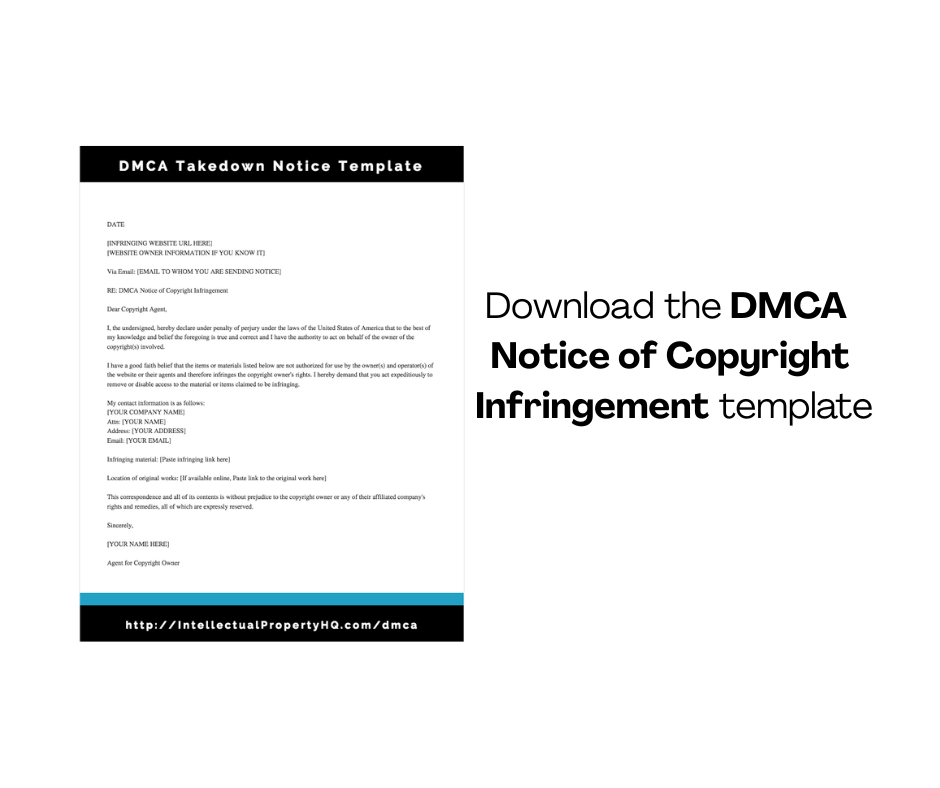
While the legal requirements might seem daunting, creating a DMCA takedown notice doesn’t have to be an overly complicated process. Many reliable resources offer a dmca take down notice template that you can adapt to your specific situation. The key is to start with a solid foundation and then meticulously fill in the details pertinent to your copyrighted work and the infringement you’ve discovered. This customization is where accuracy truly shines.
When you’re ready to fill out your chosen template, be as specific as possible. For instance, when identifying your copyrighted work, don’t just say “my photos.” Instead, provide titles, registration numbers if applicable, and clear links to where your original work can be found online. Similarly, for the infringing material, pinpoint the exact URLs of the infringing pages or files, not just the general website. Screenshots can also be incredibly helpful in providing concrete evidence of the infringement.
Once your notice is complete and thoroughly reviewed for accuracy and completeness, the next step is sending it to the appropriate party. Most online service providers have a designated DMCA agent whose contact information is usually available on their website, often in their terms of service, legal section, or a dedicated copyright page. Sending your notice to the wrong department or person can cause significant delays, so always double-check.
Here are some practical steps to ensure your notice reaches its destination effectively:
- Identify the hosting provider or online service provider responsible for the infringing content.
- Locate the designated DMCA agent for that service provider, usually found on their website.
- Fill in all fields of your chosen template with accurate and detailed information regarding your copyrighted work and the infringing material.
- Attach any supporting evidence, such as screenshots or links to your original work, to strengthen your claim.
- Send the notice via certified mail, email, or through their online reporting portal, always keeping a copy for your records.
Taking these steps diligently will not only expedite the takedown process but also establish a clear paper trail, which can be invaluable should any further action be required. Protecting your creative output online is an ongoing effort, and understanding these tools is a fundamental part of that journey.
Empowering yourself with the knowledge and tools to protect your intellectual property is more important than ever in our digital landscape. A correctly executed DMCA takedown notice is a powerful legal instrument that can effectively remove unauthorized content and safeguard your creative rights. It’s a direct way to assert ownership and ensure your work is respected by those who host online content.
Don’t let copyright infringement deter you from creating or sharing your passion with the world. By understanding the DMCA and knowing how to properly utilize its provisions, you equip yourself with the means to defend your creations. Take the proactive step to protect what’s yours and ensure your digital footprint remains authentically yours.