Navigating the complexities of tenant landlord relationships in California can be quite challenging. When issues arise that necessitate ending a tenancy, the legal process can seem daunting, especially for landlords who just want to ensure everything is done correctly. Understanding the initial steps is absolutely critical to avoid costly delays and potential legal setbacks down the road.
One of the most crucial steps in starting the eviction process is serving a legally compliant eviction notice. This document formally informs the tenant of the landlord’s intent to terminate the tenancy and the reasons behind it. Finding a reliable free California eviction notice template can be a huge relief, providing a structured starting point that helps ensure all necessary legal requirements are met.
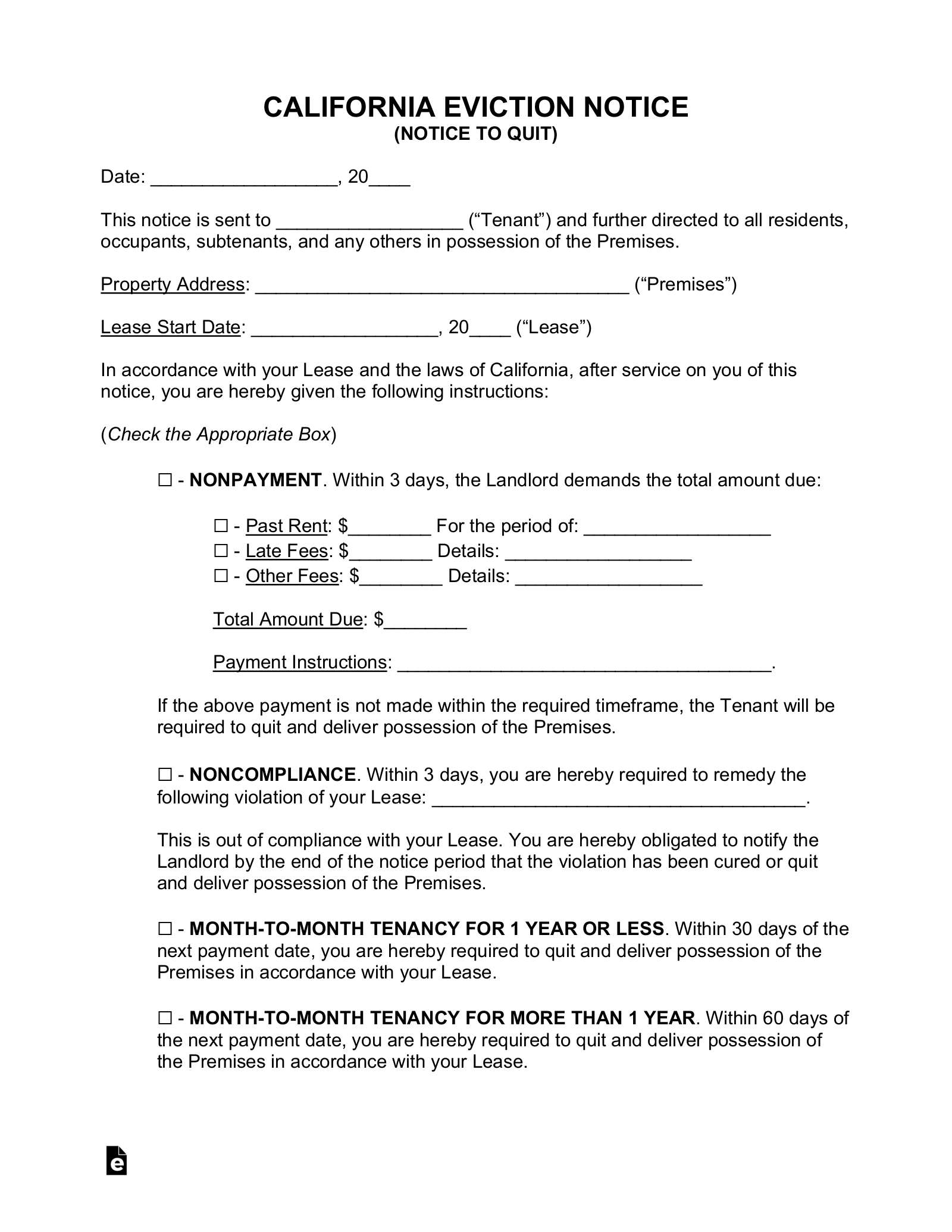
Properly preparing and serving this notice is not just a suggestion; it’s a mandatory legal requirement that sets the foundation for any subsequent legal action. Without a correctly issued notice, any attempt to proceed with an eviction could be invalidated, forcing you to restart the entire process and incur additional time and expense.
Understanding California Eviction Notices The Essential First Step
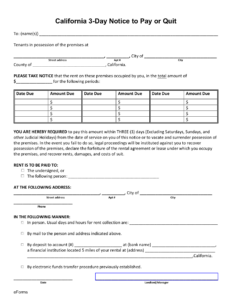
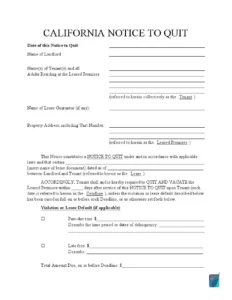
An eviction notice, also known as a notice to quit, is the formal document that a landlord serves to a tenant to begin the eviction process in California. This notice is a foundational piece of any eviction, and its accuracy is paramount. California law is very specific about the types of notices that can be served, each corresponding to different reasons for eviction. For instance, a 3-day notice to pay rent or quit is used when a tenant has fallen behind on rent. A 3-day notice to perform covenants or quit addresses lease violations that can be remedied, while a 3-day unconditional notice to quit is reserved for serious, non-curable lease violations. Longer notices, such as 30-day, 60-day, or even 90-day notices, are typically used for no-fault evictions or when ending a month-to-month tenancy, depending on how long the tenant has lived in the property.
Given California’s tenant-friendly legal landscape, any misstep in preparing or serving an eviction notice can lead to significant delays, dismissals, or even fines. It is not enough to simply tell a tenant they need to leave; the notice must clearly state the reason for termination, the specific actions required (if any), and the timeframe within which the tenant must comply. Failing to include precise details or using the wrong type of notice for the situation can give the tenant grounds to challenge the eviction in court, prolonging an already stressful situation.
Common scenarios necessitating an eviction notice often revolve around rent issues or lease violations. Unpaid rent is perhaps the most frequent cause, leading to the use of a “3-day notice to pay rent or quit.” Other violations might include unauthorized pets, property damage, or breaches of quiet enjoyment clauses, which would typically involve a “3-day notice to cure or quit.” For instances where a landlord simply wishes to end a tenancy without fault, such as when they plan to move into the property or remove it from the rental market, specific longer-term notices apply.
Key Information to Include in Your California Eviction Notice
- Tenant’s full legal name and the complete rental property address.
- Landlord’s full name and contact information.
- The date the notice is issued.
- A clear, specific, and detailed reason for the eviction (e.g., exact amount of unpaid rent, specific lease clause violated).
- The exact amount of time the tenant has to comply (e.g., 3 days, 30 days) before further legal action is taken.
- A statement informing the tenant of the consequences of non-compliance, typically leading to an unlawful detainer lawsuit.
- Information on how the tenant can pay overdue rent or cure the violation, if applicable.
- A “Proof of Service” section to document how and when the notice was delivered.
A comprehensive free California eviction notice template ensures that all these vital pieces of information are prompted, reducing the chance of oversight. Relying on a template can provide a safeguard against missing a critical detail that could invalidate the entire notice and subsequently delay your ability to regain possession of your property.
Understanding and adhering to these requirements is not just about following the law; it’s about protecting your rights as a landlord and ensuring a smoother, albeit challenging, process. A well-prepared notice signals to the tenant that you are serious and knowledgeable about the legal process, which can sometimes encourage quicker resolution.
Where to Find and How to Use Your Free California Eviction Notice Template
Fortunately, there are numerous resources available online that offer a free California eviction notice template. These templates are designed to incorporate the basic legal requirements specific to California, making the initial step of drafting the notice much more manageable for landlords. When searching for a template, it’s wise to ensure it’s from a reputable source that frequently updates its forms to reflect the latest changes in California tenancy law. The convenience and cost-effectiveness of using a free template can alleviate some of the burden associated with the eviction process.
Once you have downloaded your chosen template, the next critical step is to carefully and accurately fill in all the required fields. This isn’t a task to rush through. Every blank space needs specific information tailored to your unique situation. Double-check tenant names, property addresses, the exact amount of rent owed, or the precise lease clause that was violated. Any discrepancies, no matter how minor, could be used by a tenant to dispute the notice. Make sure to clearly state the type of notice you are serving (e.g., 3-Day Notice to Pay Rent or Quit) and the deadline for the tenant’s compliance.
After completing the template, it is absolutely essential to serve the notice correctly according to California law. Proper service ensures that the tenant officially receives the notice and that you have a legal record of its delivery. California law typically allows for personal service (handing the notice directly to the tenant), substituted service (leaving it with another responsible person at the property and mailing a copy), or posting and mailing (affixing it to the property and mailing a copy), depending on the circumstances. Always keep copies of the completed notice and the proof of service for your records, as these documents will be crucial if you need to proceed with an unlawful detainer action in court.
Navigating the eviction process can undoubtedly be stressful and complex for any landlord. However, by understanding the foundational requirements and utilizing readily available tools like a free California eviction notice template, you can approach the situation with greater confidence and accuracy. Taking the time to properly prepare and serve this initial document is not merely administrative; it is a vital safeguard that protects your investment and ensures adherence to California’s specific legal framework.
With the right resources and a clear understanding of your obligations, you can ensure that each step of the eviction process is handled professionally and legally. While challenging, properly initiating the process with a compliant notice helps pave the way for a smoother resolution, allowing you to move forward with managing your property effectively.