Navigating the complexities of landlord-tenant relationships can sometimes lead to difficult situations, such as needing to evict a tenant. While no landlord wishes for this outcome, it’s crucial to understand that the process is highly regulated and requires strict adherence to legal procedures. In Pennsylvania, improper steps can delay the process, incur unnecessary costs, or even lead to legal challenges against you.
One of the most critical first steps in any eviction process is serving a legally compliant notice to the tenant. This document officially informs them of the violation and provides a specified period to remedy the issue or vacate the property. Finding a reliable and accurate free Pennsylvania eviction notice template can be an invaluable resource for landlords seeking to ensure they start the eviction process correctly and according to state law.
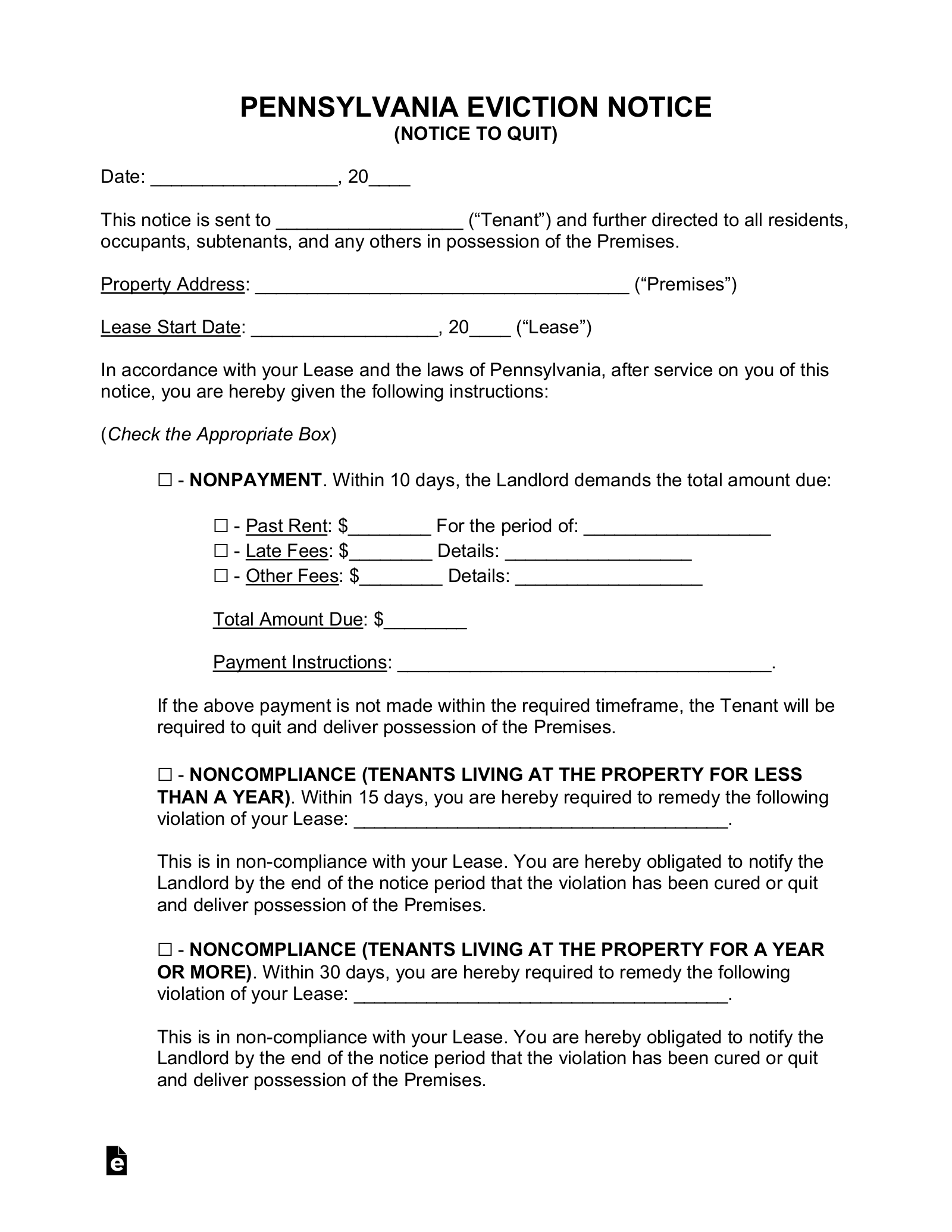
This article aims to guide Pennsylvania landlords through the essentials of eviction notices, ensuring you have the knowledge to proceed confidently and legally. We’ll delve into state-specific requirements and highlight how using a proper template can simplify an otherwise daunting task.
Understanding Pennsylvania Eviction Laws and Notice Requirements
Evicting a tenant in Pennsylvania is not as simple as asking them to leave; it is a legal process governed by specific state laws, primarily the Landlord-Tenant Act of 1951. Landlords must follow these regulations meticulously to ensure the eviction is lawful and enforceable. Any deviation can result in significant delays or even dismissal of your case by the courts, meaning you would have to start over. It is paramount to understand the legal grounds for eviction before you even consider serving a notice.
The reasons for eviction in Pennsylvania typically fall into a few categories: non-payment of rent, violation of lease terms, or the expiration of the lease term. Each reason dictates the type of notice you must serve and the amount of time the tenant has to respond or remedy the situation. For instance, if a tenant fails to pay rent, state law generally requires a 10-day notice to quit for non-payment for residential leases. However, if the eviction is for a lease violation other than non-payment, the notice period can vary depending on the lease term, often requiring a 15-day notice for leases of one year or less, and a 30-day notice for leases greater than one year.
It is vital to distinguish between these scenarios and ensure your notice reflects the correct reason and the corresponding legal timeframe. Incorrectly stating the reason or providing insufficient time can render your notice invalid. Furthermore, Pennsylvania law also allows for “at will” tenancies or situations where the lease simply expires, which also require proper notice to vacate, typically 15 or 30 days depending on the length of the tenancy.
Key Elements of an Effective Pennsylvania Eviction Notice
To be legally valid and effective, a Pennsylvania eviction notice must contain specific information. Omitting any crucial detail could weaken your position should the case proceed to court. Understanding what must be included will help ensure your template serves its purpose.
Here are the essential components that every Pennsylvania eviction notice should include:
* The full legal name(s) of the tenant(s) being evicted.
* The complete address of the rental property.
* A clear and concise statement of the specific reason(s) for the eviction (e.g., non-payment of rent, lease violation, end of lease term).
* If the reason is non-payment of rent, the exact amount of rent owed, including any late fees as per the lease agreement.
* The precise date by which the tenant must either comply with the lease terms (if applicable) or vacate the property.
* A statement clearly indicating the landlord’s intent to file a Landlord-Tenant Complaint (also known as an ejectment action) with the local Magisterial District Court if the tenant does not comply by the specified date.
* The landlord’s full legal name and signature.
* The date the notice is issued.
Beyond the content, proper service of the notice is equally important. Pennsylvania law generally requires that notices be delivered in a way that proves the tenant received it, such as by certified mail with a return receipt requested, or by personal service, where an adult serves the notice to the tenant or posts it visibly on the property. Keeping proof of service is absolutely critical for any future legal proceedings.
Why Use a Free Pennsylvania Eviction Notice Template?
Utilizing a free Pennsylvania eviction notice template offers several significant advantages for landlords. Primarily, these templates are designed to incorporate the specific legal language and formatting required by Pennsylvania law, reducing the risk of errors that could invalidate your notice. They provide a structured framework, ensuring you don’t overlook any critical information that must be included, which can be particularly helpful for landlords who are not legal experts or those new to the eviction process.
Beyond legal compliance, templates save valuable time and resources. Instead of drafting a document from scratch, you can simply fill in the necessary details specific to your situation. This efficiency is especially beneficial when dealing with urgent matters like non-payment of rent, where every day counts. Moreover, the “free” aspect eliminates the cost of hiring an attorney to draft a simple notice, although legal counsel is always recommended for complex or contested cases. A reliable free Pennsylvania eviction notice template ensures consistency and professionalism in your documentation, which can be beneficial in court.
While a template provides an excellent starting point, it’s always prudent to cross-reference it with the most current Pennsylvania landlord-tenant laws. Laws can change, so ensuring your template is up-to-date is vital. Reputable legal resource websites often provide free, regularly updated templates. While templates are a powerful tool for streamlining the initial stages of an eviction, they are not a substitute for legal advice in intricate situations. For unique lease agreements, difficult tenants, or when facing counterclaims, consulting with a qualified attorney is always the best course of action to protect your interests.
Taking proper legal steps from the very beginning of an eviction process is crucial for landlords in Pennsylvania. By understanding state requirements and utilizing accessible resources like a well-crafted template, you can ensure that your actions are compliant and procedurally sound. This proactive approach not only protects your rights as a property owner but also contributes to a fair and lawful resolution for all parties involved.