Venturing into the world of freelance project management offers incredible freedom and diverse opportunities, but it also comes with a unique set of responsibilities. One of the most critical tools in your arsenal, often overlooked until a problem arises, is a robust freelance project manager contract template. This isn’t just a piece of paper; it’s the foundation of your professional relationship with clients, outlining expectations, protecting your interests, and ensuring a smooth project journey from start to finish.
Without a clear and comprehensive contract, you risk encountering misunderstandings about project scope, payment schedules, or even ownership of the work. Imagine pouring your time and expertise into a project, only to face disputes over deliverables or delayed payments. These situations can be stressful, costly, and detrimental to your reputation and business.
That’s why having a solid, adaptable contract template is non-negotiable for any serious freelance project manager. It provides clarity for both parties, sets professional boundaries, and significantly reduces the likelihood of costly disagreements down the line. Think of it as your professional shield, allowing you to focus on what you do best – managing projects effectively.
What Essential Elements Must Your Freelance Project Manager Contract Include
Creating an effective contract isn’t just about throwing some legal jargon together. It’s about meticulously detailing every aspect of your engagement to prevent future headaches. A well-structured contract template acts as a blueprint for success, ensuring both you and your client are on the same page from day one. It safeguards your time, effort, and professional reputation while fostering trust and transparency.
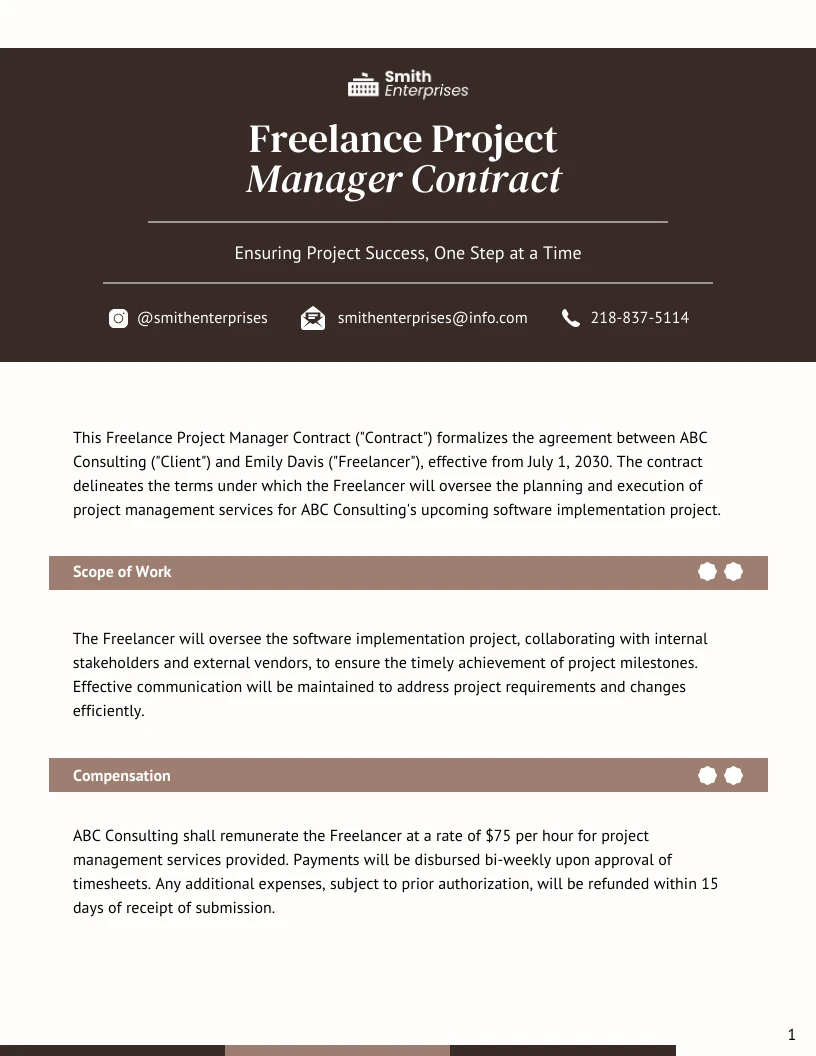
First and foremost, your contract must clearly define the **Scope of Work**. This section specifies exactly what services you will provide as a project manager, what the project aims to achieve, and any specific deliverables or milestones expected. Ambiguity here is a common pitfall; detailed descriptions help prevent scope creep, where additional work is requested without corresponding adjustments to payment or timeline. Be specific about your responsibilities, such as planning, execution, monitoring, and closing, and equally clear about what falls outside your scope.
Equally crucial are the **Payment Terms**. This part outlines your fee structure, whether it’s an hourly rate, a fixed project fee, or a retainer. It should also detail the payment schedule, such as an upfront deposit, milestone-based payments, or a final payment upon completion. Don’t forget to include provisions for late payments, specifying any penalties or interest charges, and the methods by which invoices will be submitted and paid. Clarity around money matters is paramount to avoid awkward conversations later.
Next, address the **Project Timeline and Milestones**. A good contract will lay out the expected start and end dates for the project, as well as key milestones with associated deadlines. This helps manage client expectations and provides a framework for tracking progress. While flexibility might be built in, a clear initial timeline ensures everyone understands the commitment involved and the pace at which the project is expected to advance.
It’s also vital to include **Termination Clauses**. These provisions specify the conditions under which either party can end the agreement early. This might include reasons like non-payment, breach of contract, or mutual agreement. Detail the notice period required for termination, any fees or payments due upon termination, and how assets or incomplete work will be handled. This ensures a clear exit strategy should the need arise.
**Confidentiality and Intellectual Property** clauses protect sensitive information and clarify ownership. Many projects involve proprietary information, and a confidentiality agreement ensures that client data, trade secrets, and other sensitive details are kept private. The intellectual property clause specifies who owns the work products created during the project – typically the client upon full payment, but it’s essential to explicitly state this to prevent disputes over copyright and usage rights.
Finally, consider **Dispute Resolution**. In the event of a disagreement, how will it be handled? Your contract should outline the preferred method, such as mediation or arbitration, before resorting to litigation. Specifying the governing law and jurisdiction (which state or country’s laws apply) is also critical, especially when working with international clients. A solid freelance project manager contract template incorporates these elements to provide a comprehensive shield for your freelance business.
Tailoring Your Contract Template for Specific Engagements
While a robust freelance project manager contract template provides an excellent starting point, remember that no two projects or clients are exactly alike. The true power of a template lies in its adaptability. It’s a framework that needs to be customized for each unique engagement to ensure it accurately reflects the specific nuances, expectations, and agreed-upon terms of that particular client relationship. Simply filling in the blanks might not always capture the full scope of your work or the bespoke needs of a project.
Customization involves more than just inserting names and dates. It means reviewing every clause and considering how it applies to your current project. For instance, a complex, multi-phase project might require more detailed milestone definitions and payment schedules than a simpler, short-term task. Similarly, if you’re working with a client in a highly regulated industry, specific compliance or data security clauses might need to be added or emphasized. Taking the time to tailor your contract shows professionalism and foresight, reinforcing your commitment to a successful partnership.
Think about these key areas when customizing your template:
- **Client-Specific Details:** Ensure all names, addresses, and contact information are accurate for both parties.
- **Unique Project Requirements:** Detail specific software, tools, methodologies, or communication channels that will be used.
- **Deliverables and Success Metrics:** Go beyond generic descriptions; define tangible outputs and how project success will be measured.
- **Communication Preferences:** Specify preferred methods (email, calls, project management software) and expected response times.
- **Risk Allocation:** Clarify responsibilities for potential risks, delays, or unforeseen challenges.
- **Jurisdiction and Governing Law:** Always confirm the legal jurisdiction that will govern the contract, especially for remote or international clients.
A well-crafted contract is more than just a legal document; it’s a testament to your professionalism and a protective measure for your freelance business. By meticulously detailing the terms of your engagement, you set clear expectations, foster trust, and minimize the potential for misunderstandings that can derail a project or damage a client relationship. It empowers you to focus on delivering exceptional project management services with confidence and peace of mind.
Investing the time to create and customize a comprehensive contract template is an investment in your career and the longevity of your client relationships. It demonstrates your commitment to clarity and fairness, establishing a strong foundation for every project you undertake. Embrace the power of a solid contract, and watch your freelance project management career thrive.