Navigating the landlord-tenant landscape in Massachusetts can sometimes feel like a maze, especially when it comes to something as crucial as a rent increase. Whether you are a landlord needing to adjust your rental income to match rising costs or a tenant receiving such a notice, understanding the proper procedures is paramount. A well-crafted Massachusetts rent increase notice template isn’t just a formality; it’s a legal document that ensures clarity and compliance with state regulations, protecting both parties involved in the lease agreement.
The rules around rent increases can vary significantly from state to state, and Massachusetts has its own set of guidelines that landlords must adhere to. Ignoring these guidelines could lead to disputes, legal challenges, and unnecessary stress. Therefore, having a clear understanding of what constitutes a valid notice, how much notice is required, and what information needs to be included is incredibly beneficial for smooth property management and tenancy.
This article aims to demystify the process, offering practical insights and guidance on how to properly implement or understand a rent increase in the Commonwealth. We’ll cover the essential legal considerations, what components make up a robust notice, and how to ensure your communication is clear and effective.
Understanding Massachusetts Rent Laws for Increases
Before you even think about drafting a Massachusetts rent increase notice template, it’s crucial to grasp the legal framework that governs rent increases in the state. Unlike some other regions, Massachusetts does not have statewide rent control. This means that landlords generally have the ability to increase rent amounts, but they must always do so in compliance with specific notice periods and within the terms of any existing lease agreements. This freedom comes with the responsibility of following proper legal procedures to avoid any pitfalls.
The primary legal concern for landlords is providing adequate notice. The amount of notice required largely depends on the type of tenancy. For tenancies at will, which are common in Massachusetts, the law typically requires a 30-day notice or one full rental period, whichever is longer. This means if rent is paid monthly, you need to give at least 30 days notice before the next rent due date. For example, if rent is due on the first of the month and you give notice on May 15th, the earliest the increase can take effect is July 1st, giving more than 30 days and covering a full rental period.
If there’s a written lease agreement in place, the terms of that lease usually dictate when and how rent can be increased. Most fixed-term leases specify that rent cannot be increased until the lease term expires. If the lease converts to a month-to-month tenancy after the initial term, then the 30-day or one rental period rule would apply. It’s always best practice to review the existing lease carefully before initiating any rent increase to ensure you are not breaching the contract.
Key Legal Requirements and Considerations
- Notice Period: As mentioned, usually 30 days or one full rental period, whichever is longer, for at-will tenancies. Fixed-term leases prevent increases until their expiration.
- Non-Discrimination: Rent increases must not be discriminatory based on protected characteristics like race, color, religion, sex, sexual orientation, national origin, ancestry, genetic information, marital status, veteran status, age, or familial status.
- Retaliation: It is illegal for a landlord to increase rent in retaliation against a tenant for exercising their legal rights, such as complaining about housing conditions to the board of health. Such increases are often challenged in court.
- Clear Communication: The notice itself must be clear, unambiguous, and effectively communicate the new rent amount and the effective date.
Understanding these foundational legal points ensures that any rent increase you implement stands on solid legal ground. It’s not just about filling in dates and numbers on a form; it’s about respecting the legal framework designed to protect both landlords and tenants. Taking the time to be thorough in this initial stage will save a lot of potential headaches down the line and foster a more positive landlord-tenant relationship.
Another important aspect to consider is the condition of the property. While not directly a legal requirement for a rent increase notice, tenants are more likely to accept a reasonable rent adjustment if the property is well-maintained and services are up to par. Conversely, a significant rent increase on a property with unaddressed maintenance issues can quickly sour tenant relations and potentially lead to disputes or tenant turnover. A proactive approach to property maintenance can make rent increases much smoother.
Crafting Your Massachusetts Rent Increase Notice
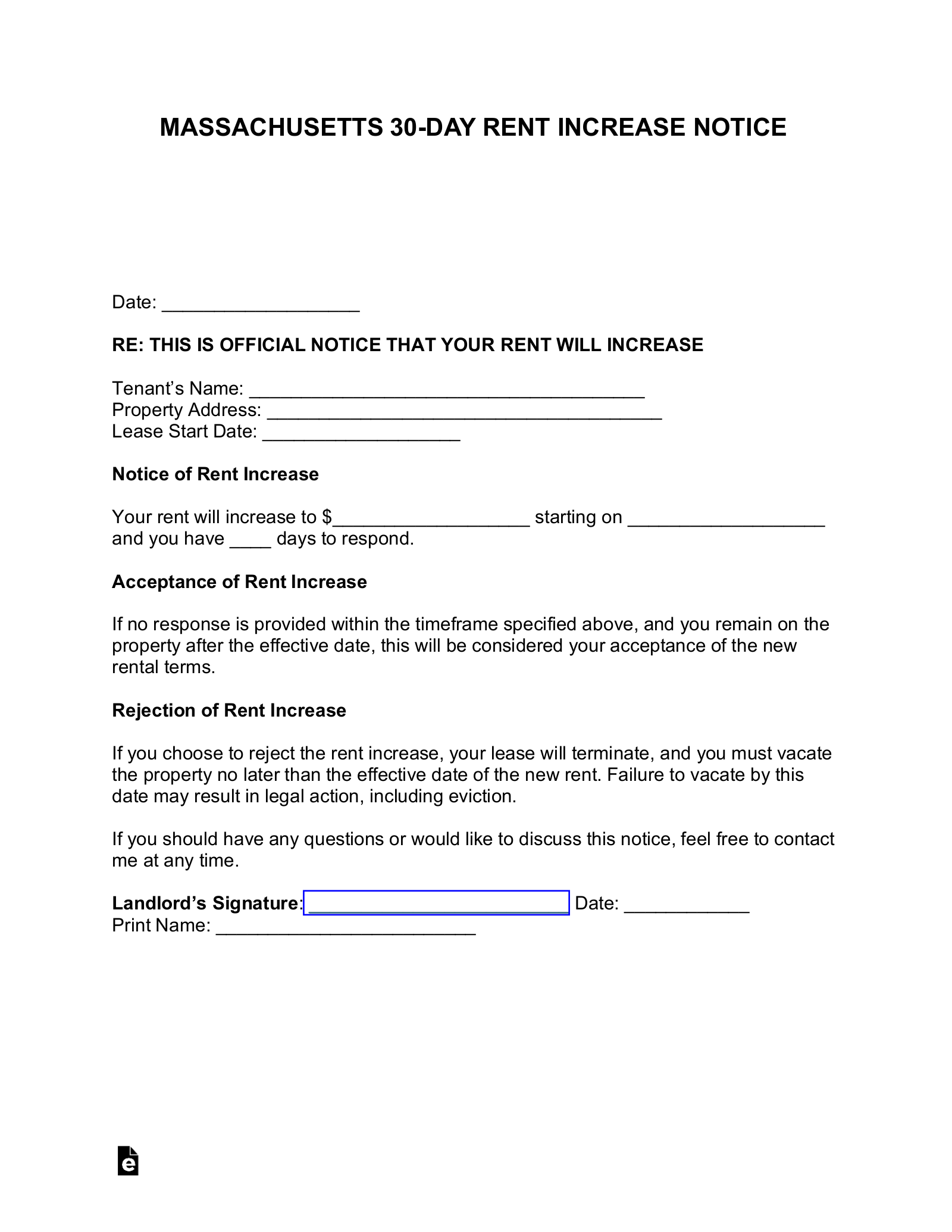
Once you’re confident in the legal basis for your rent increase, the next step is to draft the actual notice. A clear, concise, and legally compliant Massachusetts rent increase notice template is essential. This document serves as formal communication to your tenant, outlining the changes to their rent. It should leave no room for misunderstanding and should provide all necessary information for the tenant to understand the adjustment and its effective date.
The core components of any effective rent increase notice include the property address, the tenant’s name, the current rent amount, the new rent amount, and the effective date of the increase. It’s also good practice to include the date the notice is issued. While not always legally required, explaining the reason for the increase, especially for a significant jump, can help maintain a good relationship with your tenants. For example, mentioning rising property taxes, increased maintenance costs, or improvements made to the unit can provide valuable context.
Here are some key elements to include in your notice:
- Date of Notice: When the notice is officially issued.
- Landlord Information: Your name and contact details.
- Tenant Information: The name(s) of all tenants on the lease.
- Property Address: The full address of the rental unit.
- Current Rent: Clearly state the rent amount currently being paid.
- New Rent Amount: Clearly state the new rent amount.
- Effective Date: The exact date when the new rent amount will take effect. This must align with the required notice period.
- Signature: Your signature as the landlord or authorized agent.
Delivery of the notice is just as important as its content. While not always legally mandated to be delivered a certain way, sending it via certified mail with a return receipt requested provides undeniable proof that the tenant received the notice and when. Hand delivery with a signed acknowledgment from the tenant is another effective method. Avoid simply slipping it under the door without any proof of delivery, as this could lead to disputes if the tenant claims they never received it.
Preparing a proper rent increase notice in Massachusetts doesn’t have to be a daunting task. By understanding the legal requirements for notice periods, ensuring your notice is free from discrimination or retaliation, and carefully crafting the document with all essential information, you can manage this process effectively and professionally. This diligence helps foster clear communication and a stable landlord-tenant relationship, avoiding potential disputes down the line.
Ultimately, a well-executed rent increase ensures that landlords can maintain their properties and continue to provide quality housing, while tenants receive fair and transparent communication about changes to their living expenses. Utilizing a reliable Massachusetts rent increase notice template, informed by the legal context of the state, is a cornerstone of responsible property management and tenancy in the Bay State.