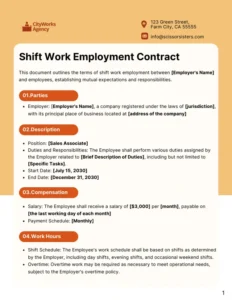
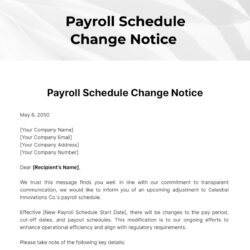
Facing the need to implement temporary layoffs within your Ontario business can be a challenging situation, both emotionally and legally. It often comes during difficult economic periods or unexpected operational shifts, requiring careful consideration and adherence to provincial regulations. Understanding the correct procedures is paramount to avoid potential legal pitfalls and maintain a good relationship with your workforce.
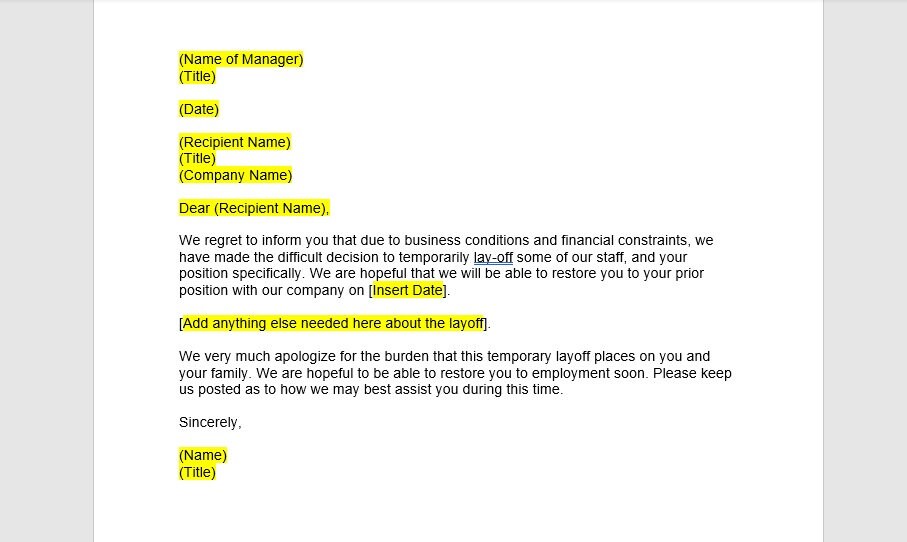
One of the most critical steps in this process is providing a legally compliant and clearly worded notice to affected employees. Having a reliable ontario temporary layoff notice template at hand can simplify this complex task significantly, ensuring that all necessary information is conveyed accurately and in accordance with the law. This document serves as a formal communication, outlining the terms and conditions of the temporary cessation of employment.
In Ontario, temporary layoffs are governed by the Employment Standards Act, 2000 (ESA), which sets out specific rules and limitations that employers must follow. Failing to adhere to these guidelines can result in an employee claiming constructive dismissal, which essentially treats the layoff as a termination, obligating the employer to pay severance and other termination entitlements. Therefore, meticulous attention to detail and legal compliance is non-negotiable.
Understanding Temporary Layoffs in Ontario
A temporary layoff in Ontario is defined by the ESA as a period during which an employee is not performing duties for the employer and is not being paid wages, but remains an employee, and the employment relationship is expected to resume. It is distinct from a permanent termination, as there is an intention to recall the employee within a specified timeframe. Employers often resort to temporary layoffs to manage economic downturns, seasonal fluctuations, or other operational necessities without permanently severing ties with their skilled staff.
For a temporary layoff to be valid and not constitute a constructive dismissal, it typically requires either an express or implied term in the employment contract allowing for such a layoff, or the employee’s consent. Without such a provision or agreement, an employer unilaterally laying off an employee risks a claim of constructive dismissal, which can be costly. It is always best practice to have clear language in employment contracts addressing the possibility of temporary layoffs.
The most crucial aspect of temporary layoffs under the ESA is their duration. Generally, a temporary layoff cannot exceed 13 weeks in any period of 20 consecutive weeks. If the layoff extends beyond this period, it is deemed a termination of employment, and the employee becomes entitled to termination pay and severance pay, if applicable. There are, however, specific circumstances where a temporary layoff can be extended beyond 13 weeks, such as if the employee continues to receive benefits, accrues seniority, or agrees to a recall date.
Exceeding the permitted duration without meeting one of the ESA’s exceptions automatically converts the layoff into a termination. This means that even if an employer fully intends to recall an employee, failing to do so within the prescribed timeline triggers termination entitlements. This strict rule underscores the importance of careful planning and communication throughout the layoff period.
Essential Elements of an Ontario Temporary Layoff Notice
When preparing an official notice, clarity and comprehensiveness are key. A well-drafted notice should leave no room for ambiguity regarding the employee’s status and rights. It’s not just about informing them of the layoff; it’s about providing all legally required details and setting clear expectations for their return.
Here are the critical components that every ontario temporary layoff notice template should include to ensure it meets legal standards and effectively communicates the necessary information:
* Employee’s Full Name and Contact Information
* Employer’s Legal Name and Contact Information
* The Date the Notice is Issued
* The Effective Start Date of the Temporary Layoff
* A Clear and Concise Reason for the Layoff (e.g., “due to economic downturn and reduced operational needs”)
* The Expected Duration of the Layoff, or a statement indicating it will not exceed the ESA maximums if indefinite
* Information Regarding the Continuation of Benefits (e.g., health, dental, life insurance) during the layoff period, if applicable, and how premiums will be managed
* Details on Any Recall Rights or Procedures, including how the employee will be contacted for their return to work
* Instructions for how the employee can contact the employer with questions or for updates
* A Statement Reminding the Employee of their Rights under the Employment Standards Act, 2000
* Signature Lines for the Employer Representative
Ensuring all these details are accurately reflected in the notice not only helps in complying with the ESA but also fosters transparency and trust with employees during a difficult period.
Navigating the Legal Landscape and Employee Rights
During a temporary layoff, employees still retain certain rights, even though they are not actively working or receiving regular wages. One significant right relates to benefits continuation. Many employers choose to continue an employee’s benefits, such as health and dental coverage, during a temporary layoff. This is often done to maintain goodwill, assist employees, and sometimes to meet the criteria for extending the layoff period beyond 13 weeks under the ESA. Clear communication about the status of benefits is essential in the notice.
Employers must also understand the implications of the layoff duration on employee entitlements. If a temporary layoff exceeds the statutory limits and doesn’t fall under an exception, it converts into an involuntary termination. At this point, the employee is entitled to termination pay and, if eligible, severance pay as per the ESA. This can be a substantial financial obligation for employers, emphasizing the need to monitor layoff periods closely and make timely decisions about recalling employees or formally terminating their employment.
Clear and consistent communication throughout the entire layoff process is not just good practice, it’s a legal safeguard. Documenting every interaction, every notice, and every decision related to the layoff helps to protect the employer in the event of a dispute. Maintaining an open dialogue, even if it’s just to provide updates on business conditions, can significantly mitigate employee distress and reduce the likelihood of legal challenges. Employers should always consult with legal counsel to ensure their specific situation aligns with all current regulations and best practices.
Successfully managing temporary layoffs hinges on meticulous planning, strict adherence to legal requirements, and empathetic communication. Providing a comprehensive and legally sound temporary layoff notice is the cornerstone of this process, setting the stage for either a smooth return to work or a legally compliant termination.
By utilizing a reliable and well-structured notice, businesses can navigate these challenging circumstances with greater confidence and reduce their exposure to potential legal disputes. Investing time in crafting a compliant notice protects both the business and its valuable employees, ensuring clarity and fairness during uncertain times.