Getting a new client on board is one of the most exciting parts of being an independent professional. Whether you are helping a startup build its brand identity or assisting a seasoned company with a tricky media crisis, the energy of a fresh project is contagious. However, before you dive into drafting press releases or pitching to journalists, you need to ensure your business relationship is on solid ground. Using a comprehensive public relations consultant contract template is the smartest way to protect your time, your talent, and your sanity. It sets the stage for a professional partnership where everyone knows exactly what to expect from day one.
Many consultants make the mistake of relying on a handshake or a series of informal emails to outline their work. While trust is the foundation of any good PR relationship, it is not a substitute for a legally binding document. When things are going well, a contract might feel like a formality. But if a project experiences scope creep or a payment gets delayed, you will be incredibly grateful to have a clear agreement to fall back on. It acts as a roadmap that guides both you and the client through the duration of your collaboration, ensuring that no details fall through the cracks.
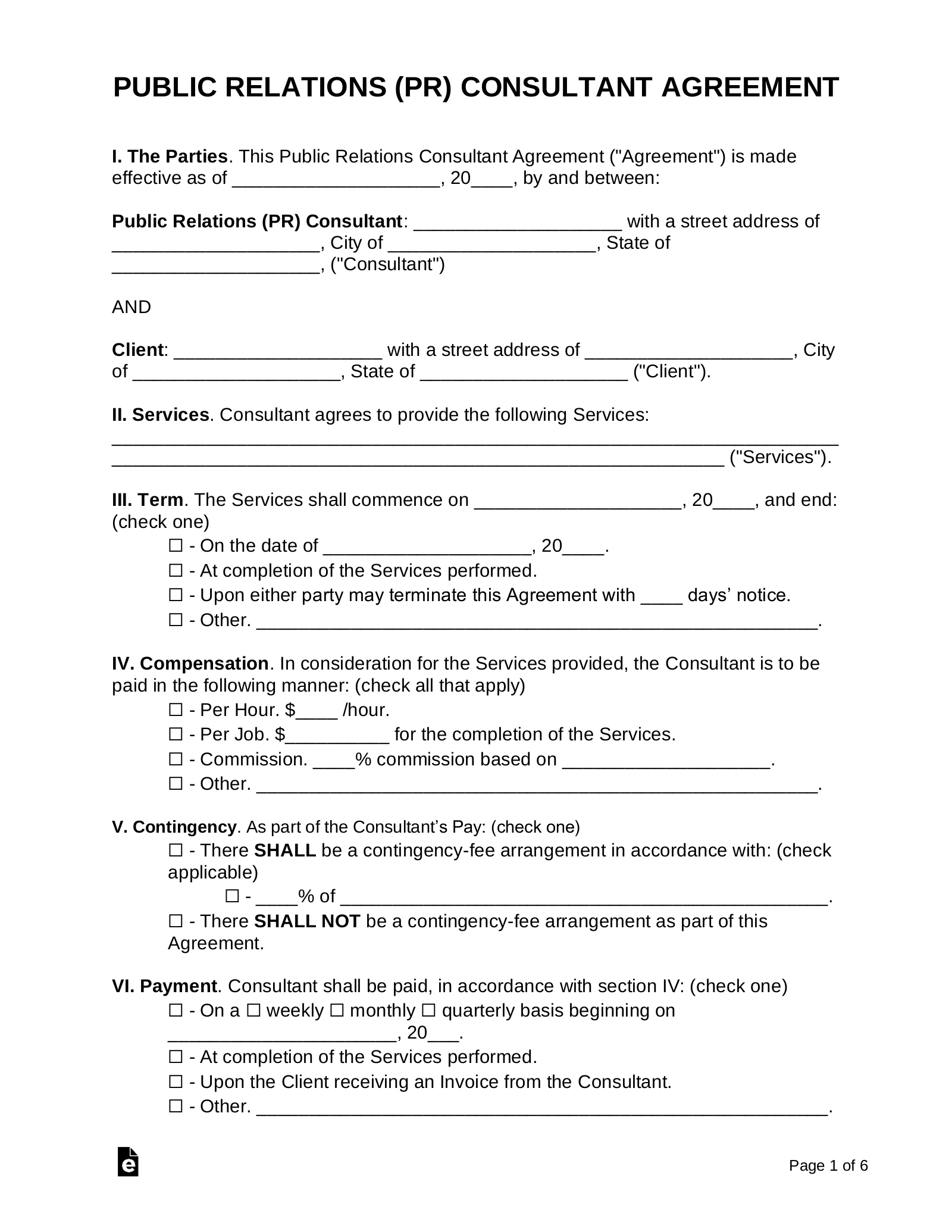
The beauty of starting with a standardized document is that it allows you to maintain consistency across all your clients while still being flexible enough to adapt to specific needs. It signals to your clients that you are a serious professional who values their business and your own work. By taking the time to set up these boundaries early on, you prevent awkward conversations later about what was or was not included in the original fee. It is essentially about building a bridge of transparency that helps foster long-term loyalty and repeat business.
The Essential Components of a PR Service Agreement
The first thing you need to focus on is the scope of services. This is perhaps the most critical part of any agreement because it defines the boundaries of your labor. You should be as specific as possible about what you will be doing, whether it is managing social media accounts, writing monthly newsletters, or securing three media placements per quarter. Without a detailed scope, you might find yourself doing extra work that was never discussed, which can lead to burnout and frustration for any consultant trying to manage multiple accounts at once.
Next, you must address the financial side of the relationship. This involves more than just stating your hourly rate or monthly retainer. You need to clarify when invoices will be sent, what the payment deadlines are, and whether there are penalties for late payments. It is also important to mention how expenses will be handled. If you are traveling for a client event or purchasing specialized software for their campaign, you should have a clear process for getting those costs reimbursed so you are not paying out of pocket for their business growth.
Protecting Information and Intellectual Property
In the world of public relations, you are often privy to sensitive information before it hits the general public. This makes confidentiality clauses an absolute necessity. Your contract should outline how you will handle private data and trade secrets. This builds an immense amount of trust with your client, knowing that their upcoming product launches or internal shifts are safe in your hands. A well-drafted public relations consultant contract template will always include language that protects both parties from the unauthorized disclosure of proprietary information.
Another area that often causes confusion is the ownership of the work produced. Do the press releases, media lists, and strategy decks belong to you or the client once the bill is paid? Usually, the client expects to own the final deliverables, but you might want to retain the right to use the results in your portfolio. Clearly stating who owns the intellectual property prevents legal headaches down the road and ensures that you can still showcase your hard work to future prospects without violating any agreements.
Termination clauses are another vital element that people often overlook because they do not want to think about the relationship ending. However, sometimes things just do not work out. You need a fair way for either party to exit the contract with proper notice, usually thirty or sixty days. This gives you time to wrap up ongoing projects and the client time to find a replacement. It also defines what happens to unpaid fees or ongoing work during that transition period, making the breakup as professional as the beginning.
Finally, do not forget to include a section on communication and reporting. In PR, results can sometimes take time to manifest, and clients can get anxious if they do not hear from you. Setting expectations for how often you will provide updates and what those reports will look like keeps the client informed and satisfied. By documenting these expectations, you eliminate the need for constant check-ins and allow yourself the space to focus on the actual creative work you were hired to do.
How to Customize Your Agreement for Maximum Effectiveness
While having a base document is a great start, you should never treat it as a one size fits all solution. Every client has different goals and different risk tolerances. Some might be very focused on digital metrics, while others care more about traditional print media. Tailoring the specific language of your contract to reflect these unique priorities shows the client that you have actually listened to their needs. It makes the document feel less like a hurdle and more like a tailored strategy for their success.
You also need to consider the legal jurisdiction where you are operating. Laws regarding independent contractors can vary significantly from one region to another. It is always a good idea to have a local legal professional glance over your customized version to ensure it complies with local regulations. This small step can save you a massive amount of trouble if you ever need to enforce the contract in court. A template provides the skeleton, but your specific business context provides the muscle and skin that make it functional.
To make the process even smoother, you might want to include a few standard items in every customization. These help clarify the day to day working relationship beyond just the big legal points. Consider adding the following details to your specific agreements:
- The primary point of contact for both the consultant and the client company
- Expected turnaround times for client approvals on drafted materials
- Limits on the number of revisions allowed for specific deliverables
- A list of specific media outlets or influencers that are off limits
- Procedures for handling emergency or crisis communication requests after hours
Ultimately, a contract is a tool for communication. It is the final stage of the negotiation process where everything discussed in meetings and phone calls is solidified into a single source of truth. When you hand over a professional document, you are telling the client that you are organized, prepared, and committed to a high standard of excellence. This initial investment in paperwork pays off through smoother project management and a much more relaxed working environment for everyone involved.
Taking the time to refine your business processes is what separates a hobbyist from a successful consultant. By implementing a clear system for your agreements, you free up mental energy to focus on what you do best which is telling compelling stories and building meaningful connections for your clients. A solid agreement protects your revenue stream and ensures that your reputation remains untarnished by simple misunderstandings. It is the invisible backbone of a thriving consultancy that allows you to grow with confidence.
As you move forward with your next big pitch, remember that the contract is not just a safety net for when things go wrong. It is a proactive document that defines what success looks like for the partnership. When both you and your client can look at a piece of paper and agree on the goals, the timeline, and the value of the work, you are setting yourself up for a win. Use your contract as a foundation to build something great, and watch how much more professional and profitable your consulting practice becomes.