Winter has a way of creeping up on us when we least expect it. One day you are enjoying the crisp autumn air, and the next, you are staring at a driveway buried under six inches of heavy, wet snow. If you run a snow removal business or if you are a homeowner who wants to ensure your property stays clear all winter long, getting your paperwork in order early is essential. Using a reliable residential snow plow contract template can make the difference between a stress-free winter and a season filled with misunderstandings and back-and-forth arguments about what work was actually promised.
Most people do not think about the legalities of snow removal until a plow hits a hidden curb or someone slips on an icy patch that was supposed to be salted. Without a written agreement, you are essentially operating on a handshake, which rarely holds up when things go wrong. A formal contract sets clear expectations for both the service provider and the client. It defines exactly what areas will be cleared, how deep the snow must be before the plow arrives, and how much the service will cost. This level of clarity is what turns a one-time job into a professional relationship that lasts for years.
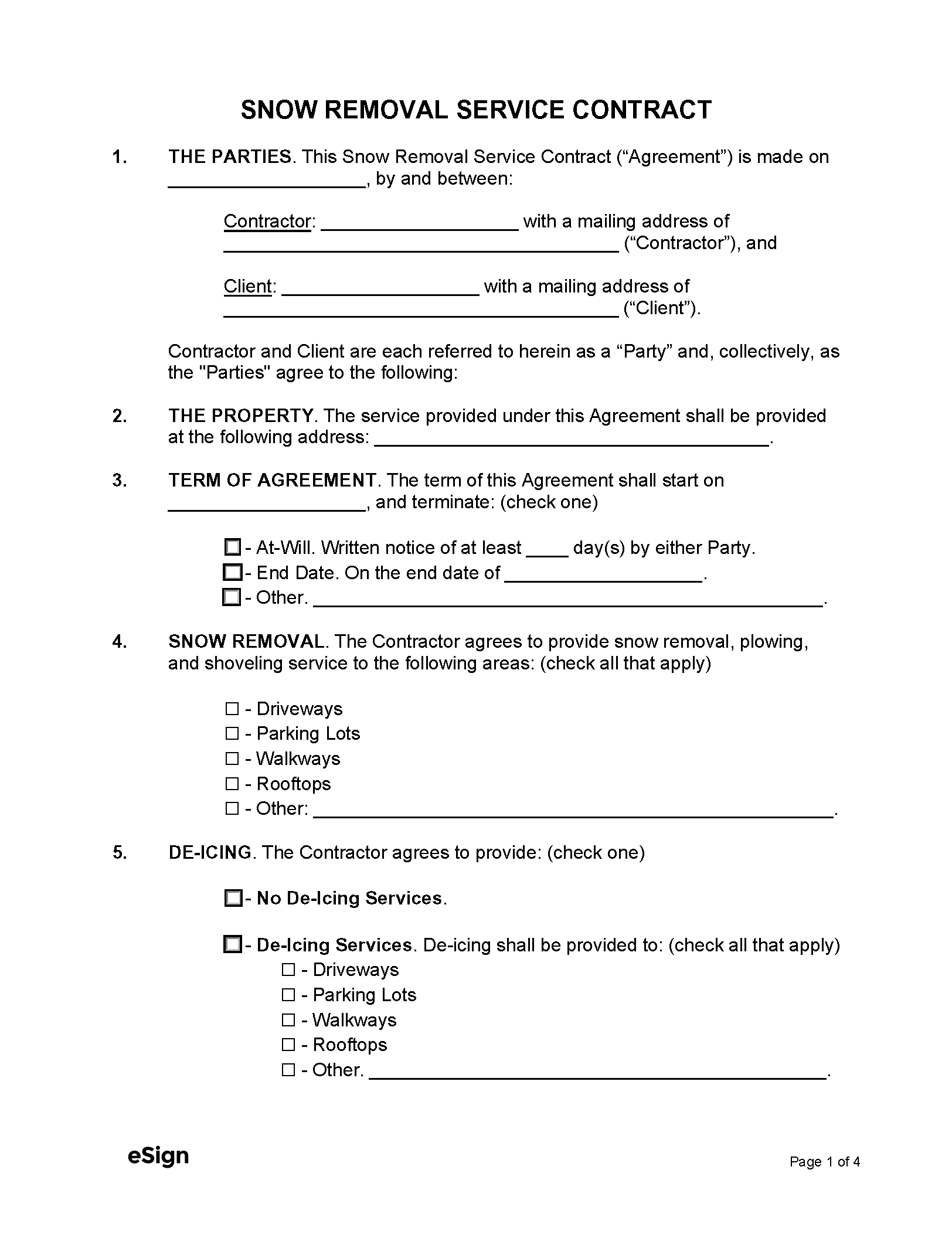
The beauty of starting with a template is that you do not have to be a legal expert to create a professional document. You can take a standard framework and customize it to fit the specific needs of a particular property. Every driveway is different, and every homeowner has different priorities. Some might care most about having the path to their front door cleared by 7 AM, while others might be more concerned about where the snow is piled so it does not block their view of the street. Putting these details in writing protects everyone involved and ensures that the work is done right the first time.
Why Detailed Terms Matter for Snow Removal Services
When you are drafting your agreement, the most important thing to consider is the trigger depth. This is the specific amount of snowfall that requires the contractor to come out and start plowing. Some people want their driveway cleared as soon as an inch hits the ground, while others are happy to wait until there are three or four inches. By defining this in your residential snow plow contract template, you avoid the common problem of a homeowner calling and asking where the plow is when it has only started to dust the ground. It creates a measurable standard that both parties can agree on before the first flake falls.
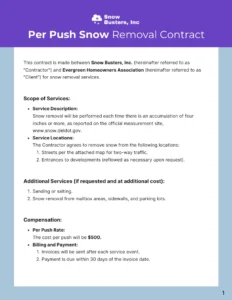
Another critical element to include is the scope of service. Does the contract cover just the main driveway, or does it include the sidewalk, the walkway to the front door, and the area around the mailbox? If these details are not spelled out, a contractor might show up, plow the driveway, and leave the homeowner struggling to shovel their own front steps. Clarity here prevents resentment. You should also specify whether manual labor, like hand-shoveling or snow blowing in tight corners, is included or if that requires an additional fee on top of the standard plowing rate.
Liability is perhaps the most significant reason to have a written contract. Snow removal is inherently risky work. Plows can accidentally scrape a garage door, clip a hidden landscape light, or damage the edge of a lawn if the boundaries are not clearly marked. Your contract should explicitly state who is responsible for these types of damages. Most contractors will require the homeowner to install snow stakes to mark the edges of the driveway. If the stakes are not there and the plow hits a curb, the contract can protect the driver from being held financially responsible for something they could not see under the snow.
Addressing Ice Management and Salting
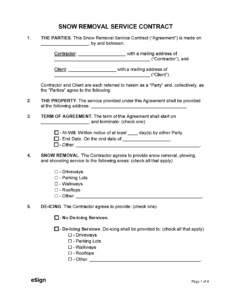
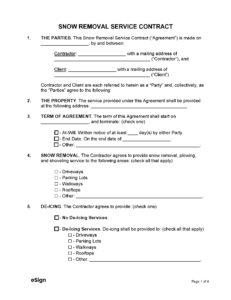
Snow is only half the battle during a typical winter. Ice is often the bigger danger. In your agreement, you need to decide if de-icing services like salting or sanding are included automatically or if they are performed only upon request for an extra charge. Some homeowners are very particular about the type of salt used, especially if they have pets or if they are worried about the salt damaging their concrete or nearby plants. Listing the specific products and the conditions under which they will be applied prevents slip-and-fall accidents and property damage claims.
Payment structures are another area where you need absolute transparency. There are generally two ways to bill for snow removal: a seasonal flat rate or a per-visit fee. A seasonal rate provides the homeowner with a predictable cost regardless of how much it snows, while a per-visit fee is often preferred by those who want to pay only for the work that is actually done. Whichever method you choose, make sure the contract outlines when payment is due, whether it is at the end of the month or immediately after the service is performed. This keeps the cash flow steady for the contractor and avoids late-payment friction.
Finally, consider adding a clause about extreme weather events. Sometimes a blizzard is so severe that it is simply not safe for plows to be on the road, or the accumulation happens so fast that it is impossible to keep up. Having a section that explains how these “acts of God” are handled can save a lot of grief. It allows the contractor to prioritize safety and gives the homeowner a realistic expectation of when they can expect service during a major emergency. Communication is key during these times, and the contract should set the stage for how updates will be shared.
Structuring Your Agreement for Maximum Efficiency
To make your document easy to read and professional, you should organize it into clear sections. Start with the basics, such as the names and contact information of both the contractor and the client, as well as the physical address of the property where the work will be done. It sounds simple, but you would be surprised how often people forget to include the exact boundaries of the service area. A simple list of included features can help prevent any confusion once the snow starts piling up.
You may want to include a checklist of specific tasks to ensure nothing is missed during a busy shift:
- Clearance of the primary driveway and turn-around areas.
- Shoveling of the front walkway and porch steps.
- Clearing a path to the trash bins or side entrance.
- Application of calcium chloride or rock salt to prevent icing.
- Removal of snow banks that obstruct the view of oncoming traffic.
Beyond the physical tasks, ensure there is a section regarding the duration of the contract. Most residential agreements run from late autumn through early spring. It is also wise to include a termination clause that allows either party to end the agreement with a certain amount of notice, such as thirty days. This provides an exit strategy if the relationship is not working out or if the homeowner moves. By having all these pieces in place, you create a robust framework that allows you to focus on the work itself rather than the logistics of the deal.
As the winter season approaches, taking a few hours to sit down and finalize your paperwork is one of the smartest moves you can make. It demonstrates professionalism to your clients and provides a sense of security for your business. When the weather forecast predicts a major storm, you will feel much better knowing that your agreements are signed, your routes are planned, and everyone knows exactly what to expect when the first plow hits the pavement.
Ultimately, a good contract is about building trust. It shows that you value the client’s property and that you are committed to providing a high-quality service. It also ensures that you are fairly compensated for the hard work and long hours that come with winter weather management. With everything documented and agreed upon, you can face the coldest months of the year with confidence, knowing that you have a plan in place for whatever nature throws your way.