Navigating real estate transactions and other contractual agreements often involves a myriad of specific clauses designed to protect parties involved. One such significant provision is the Right of First Refusal (ROFR). This right grants a specific party the option to enter into a business transaction with the owner of something, according to specified terms, before the owner can offer it to a third party. Understanding how to properly execute this right, or fulfill obligations under it, is absolutely crucial for a smooth process.
When it comes time to trigger or respond to a ROFR, a formal document is required to ensure clarity and legal compliance. This is where a well-structured right of first refusal notice template becomes an indispensable tool. It serves as the official communication that informs the holder of the ROFR that a bona fide offer has been received, providing them with the details necessary to decide whether to exercise their right or waive it.
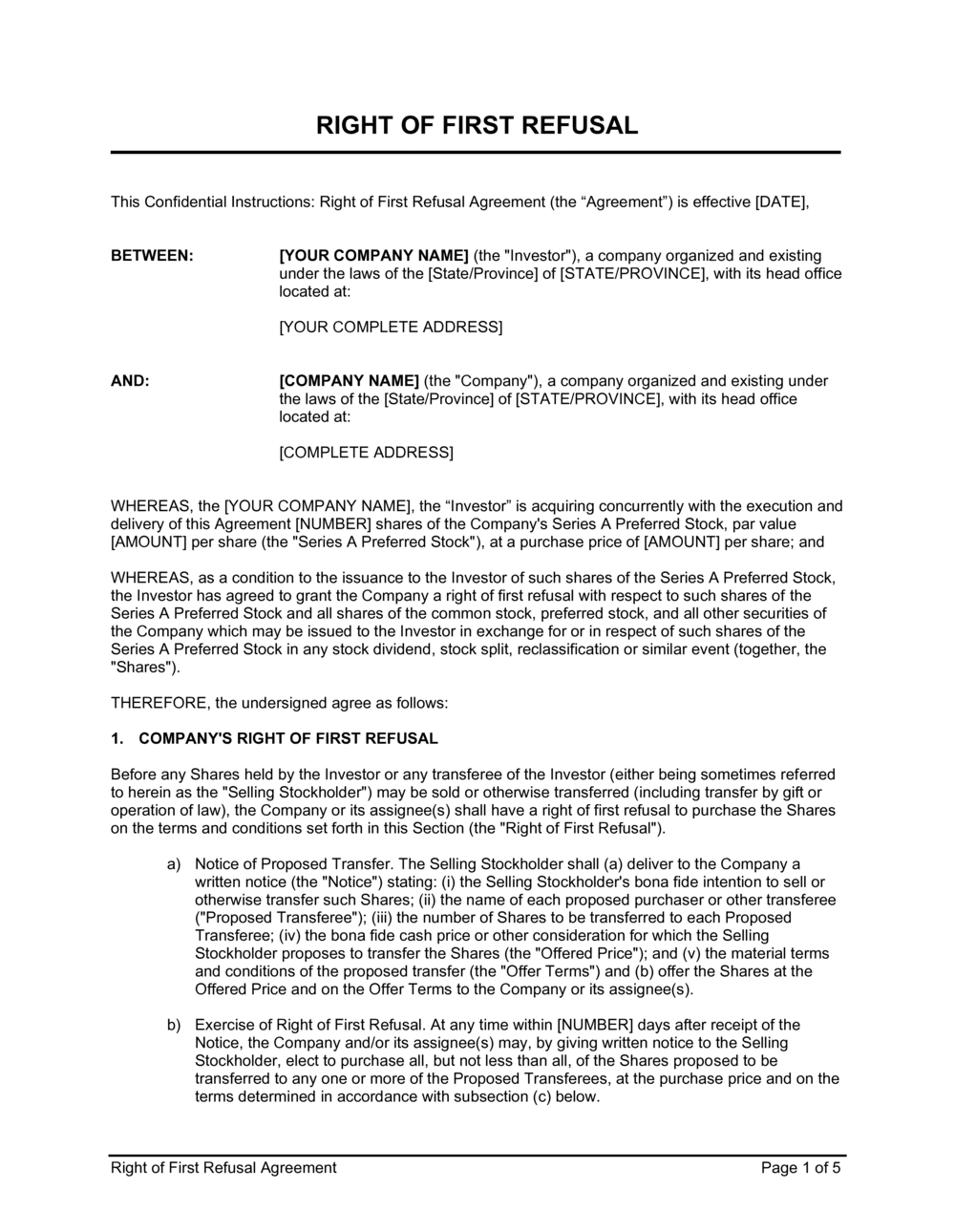
Without a clear, concise, and legally sound notice, parties risk misunderstandings, delays, and potential legal disputes. The stakes are often high, whether it’s a valuable piece of property, a share in a business, or another significant asset. Therefore, knowing what constitutes an effective notice and how to utilize a reliable template is key to protecting everyone’s interests.Crafting an Effective Right of First Refusal Notice
The core purpose of a Right of First Refusal notice is to formally present the terms of a third-party offer to the ROFR holder, giving them the opportunity to match those terms. This isn’t just a casual heads-up; it’s a critical legal document that initiates a time-sensitive process. Its accuracy and completeness are paramount to avoid any ambiguity or future challenges.
Imagine you’ve received an excellent offer for your property, but you’re bound by a ROFR agreement. Sending an incomplete or incorrect notice could jeopardize your sale or even open you up to litigation. The notice must clearly outline the exact offer you’ve received, leaving no room for misinterpretation of the terms or deadlines.
Key Elements to Include in Your Notice
To ensure your notice is comprehensive and legally sound, it must contain several crucial pieces of information:
- Identification of Parties: Clearly name the grantor (the one offering the item) and the grantee (the holder of the ROFR). Include their full legal names and contact information.
- Description of the Subject Matter: Whether it’s real estate, shares, or another asset, provide a clear, unambiguous description. For property, include the full legal description, address, and any relevant parcel numbers.
- The Bona Fide Offer Details: This is the heart of the notice. You must present the exact terms and conditions of the third-party offer you’ve received. This includes the proposed purchase price, any earnest money deposits, financing contingencies, closing dates, and any other material conditions that are part of the offer. You might even attach a copy of the third-party offer (redacted for sensitive information) to demonstrate its bona fide nature.
- ROFR Exercise Period: State the exact duration the ROFR holder has to exercise their right, as defined by the original ROFR agreement. Provide clear start and end dates for this period.
- Method of Acceptance or Waiver: Explain precisely how the ROFR holder must communicate their decision, whether it’s through written acceptance, a specific form, or by simply letting the deadline pass to signify a waiver.
- Contact Information for Inquiries: Provide a point of contact for any questions the ROFR holder might have regarding the offer.
- Signatures and Date: The notice must be properly dated and signed by the grantor or their authorized representative.
Presenting a “bona fide offer” is more than just stating a price; it means the offer must be legitimate and made by a truly interested third party, on terms that you genuinely intend to accept if the ROFR holder waives their right. This prevents an owner from artificially inflating terms to discourage the ROFR holder from exercising their right.
The exercise period is another critical component. It must strictly adhere to the terms outlined in the original ROFR agreement. Failing to provide the correct timeframe, or not giving the ROFR holder adequate time, could invalidate the notice and create legal headaches.
The Value of Using a Right of First Refusal Notice Template
While the specifics of a ROFR notice will always depend on the original agreement and the particular transaction, starting with a reliable template offers significant advantages. It provides a structured framework that helps ensure you don’t overlook any critical information, which can be easy to do when dealing with complex legal documents. A template serves as a checklist, prompting you to fill in all the necessary details and ensuring consistency across different situations.
Using a template can save considerable time and reduce the likelihood of errors. Instead of drafting a notice from scratch, which requires a deep understanding of legal terminology and formatting, you can focus on accurately inputting the unique details of your transaction. This efficiency is particularly valuable in time-sensitive situations where delays can have costly consequences. It also helps in maintaining a professional and official tone, lending credibility to the communication.
However, it’s vital to remember that a template is a starting point, not a one-size-fits-all solution. Every ROFR agreement is unique, and the template must be meticulously customized to reflect the specific terms and conditions laid out in your particular contract. Always review the original ROFR clause within your agreement to ensure that all requirements, such as notification methods, response timelines, and specific language, are accurately incorporated into your notice. For highly complex situations or when significant assets are involved, consulting with a legal professional is always recommended to ensure full compliance and protection of your interests.
Sending a well-prepared and legally compliant ROFR notice is more than a formality; it’s a vital step in ensuring fair play and adherence to contractual obligations. It safeguards both the grantor’s ability to proceed with a transaction and the grantee’s right to exercise their priority claim, ultimately contributing to a transparent and trustworthy process.
By diligently using a right of first refusal notice template and adapting it precisely to your circumstances, you can navigate these transactions with greater confidence, minimizing potential conflicts and facilitating a smoother outcome for all parties involved.