Navigating the complexities of tenant-landlord relationships can be quite a challenge, especially when circumstances require the difficult step of ending a tenancy. Whether you are a seasoned property owner or new to the landlord game, ensuring you follow the correct legal procedures is paramount. It protects both your interests and the rights of your tenants, preventing future complications and potential legal disputes.
Understanding the specific legal framework in South Africa is crucial for any landlord contemplating an eviction. It is not simply a matter of asking someone to leave; there are strict processes that must be adhered to. This is where having access to a reliable south africa 30 day eviction notice template becomes incredibly useful, providing a structured starting point for what can be a very sensitive situation.

The South African legal system, particularly the Prevention of Illegal Eviction from and Unlawful Occupation of Land Act (PIE Act), is designed to protect occupants from arbitrary evictions. This means that landlords have a clear responsibility to ensure every step taken is in accordance with the law, from the initial notice to any potential court proceedings that might follow. Getting it right from the outset can save immense time, stress, and resources down the line.
Understanding the Eviction Process in South Africa
The eviction process in South Africa is often perceived as daunting, and for good reason. It is heavily regulated to safeguard tenants, particularly those who might be vulnerable. The PIE Act dictates that no person may be evicted from their home without a court order, and this order can only be granted after considering all relevant circumstances. This means that simply issuing a notice, while essential, is only the first step in a potentially longer journey.
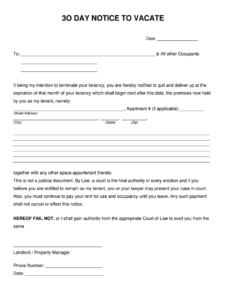
Typically, a 30-day notice period is standard in many lease agreements and is often the first formal communication from a landlord wishing to terminate a tenancy. However, it is vital to remember that this 30-day period serves primarily as a contractual notice to terminate the lease, not an eviction order itself. The actual eviction process, if a tenant does not vacate after this notice, involves obtaining a court order.
Reasons for eviction can vary, but generally fall into categories such as non-payment of rent, breach of a material term of the lease agreement, or the expiry of a fixed-term lease where the tenant refuses to leave. Each reason requires specific handling and a clear articulation within your notice to the tenant. It is important to clearly state why the tenancy is being terminated, leaving no room for ambiguity.
The Importance of a Formal Notice
A formal, written notice is not just a polite request; it is a critical legal document that establishes the landlord’s intent and starts the formal clock on the termination of the lease. Without a properly issued notice, any subsequent attempts to seek a court-ordered eviction might be severely hampered or even dismissed. This document serves as proof that the tenant was informed of the landlord’s intention to terminate the agreement and the expected date of vacation.
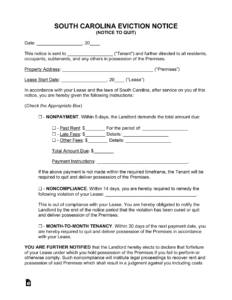
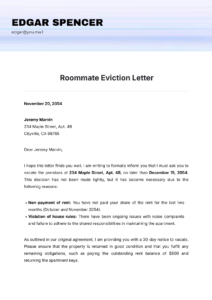
This notice must contain specific information to be considered valid and effective. It should clearly identify both the landlord and the tenant, provide the full address of the property, and state the exact reason for the termination of the lease. Furthermore, it must specify the date by which the tenant is expected to vacate the property, usually 30 days from the date of the notice, depending on the lease agreement.
Key components to include in your notice are:
- The full names and contact details of both the landlord and the tenant.
- The complete physical address of the property being rented.
- A clear and concise reason for the termination of the lease agreement.
- The specific date by which the tenant is required to vacate the premises.
- A clause stating the consequences of failing to vacate by the specified date.
- The date the notice is issued and the landlord’s signature.
Ensuring the notice is delivered correctly is as important as its content. It is advisable to serve the notice in a manner that provides proof of delivery, such as registered mail, hand-delivery with acknowledgement of receipt, or via a sheriff of the court.
What to Look For in a South Africa 30 Day Eviction Notice Template
When searching for a south africa 30 day eviction notice template, it is essential to look for one that aligns with South African legislation and the specifics of your situation. A good template will not only provide the basic structure but also guide you on what information needs to be inserted and why. It should be comprehensive enough to cover the necessary legal requirements without being overly complex, allowing you to fill in the blanks easily.
While templates are incredibly helpful as a starting point, they should always be customized to reflect your unique circumstances and the terms of your specific lease agreement. Remember, a generic template is just that – a general guide. You will need to accurately input details such as the tenant’s name, the property address, the exact clause of the lease agreement that has been breached (if applicable), and the precise 30-day period.
It is also wise to consider what happens after the notice is issued. A template helps with the documentation, but understanding the steps that follow – such as dialogue with the tenant, potential mediation, or the necessary court application if the tenant does not vacate – is part of responsible landlordship. Be prepared for various outcomes and have a strategy for each.
Common reasons for needing an eviction notice include:
- Non-payment of rent.
- Breach of a material term of the lease agreement (e.g., unauthorized subletting, causing extensive damage).
- Expiry of a fixed-term lease agreement where the tenant refuses to vacate.
- The landlord requiring the property for personal occupation (subject to specific conditions and reasonable notice).
Taking the step to issue an eviction notice is never an easy one, but doing so correctly and legally is paramount. Utilizing a well-structured and legally compliant template can significantly simplify this initial phase, ensuring you meet all procedural requirements. It sets a solid foundation for any further action that might be necessary, providing clarity and adherence to the law from the very beginning.
While a template offers a valuable framework, it is always recommended to seek professional legal advice if you are unsure about any aspect of the eviction process or if your situation presents unique challenges. Legal professionals can provide tailored guidance, ensuring that your specific circumstances are handled in full compliance with South African law, thereby minimizing risks and protecting your rights as a landlord.