Navigating the world of professional voice-over work, whether you’re an artist lending your unique sound or a client seeking that perfect voice, can be incredibly rewarding. However, like any creative endeavor that involves financial transactions and intellectual property, it comes with its share of potential pitfalls. That’s precisely why a robust voice over artist contract template isn’t just a good idea; it’s an absolute necessity for safeguarding everyone involved and ensuring a smooth, professional collaboration from start to finish.
Think of a contract not as a rigid legal burden, but as a clear roadmap. It outlines expectations, defines responsibilities, and provides a framework for how the project will unfold. Without one, both parties are essentially operating in the dark, relying on spoken agreements that can be easily misinterpreted or forgotten, leading to misunderstandings, delays, and potential disputes that nobody wants.
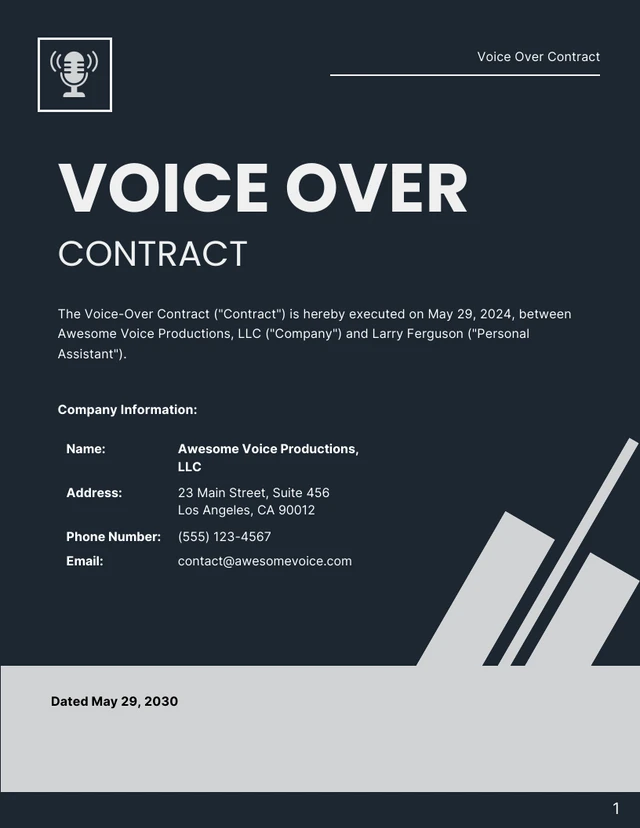
From the nuances of usage rights to the specifics of payment schedules and revision policies, every detail matters in a voice-over project. A well-drafted agreement ensures that these critical elements are documented and agreed upon upfront, creating a foundation of trust and clarity that allows everyone to focus on the creative work itself, rather than worrying about administrative headaches.
What Should Your Voice Over Contract Absolutely Include?
When you’re putting together or reviewing a voice-over contract, there are several core components that simply cannot be overlooked. These aren’t just legal niceties; they are the foundational pillars that protect both the voice artist’s creative work and the client’s investment. A comprehensive agreement leaves no stone unturned, detailing every aspect of the project to prevent any ambiguity down the line.
Client and Artist Identification
First and foremost, the contract needs to clearly identify who the parties involved are. This means full legal names, business names if applicable, addresses, and contact information for both the voice artist and the client. This seemingly simple step ensures that everyone knows exactly who is bound by the agreement. Without precise identification, enforcing the contract becomes a much more complicated affair.
Project Scope and Deliverables
This section defines the heart of the project. It should meticulously describe the voice-over work itself: the script title, the desired tone and style, the estimated length, the language, and any specific technical requirements for the audio files (e.g., WAV, MP3, sample rate, bit depth). Crucially, it also specifies what the artist is expected to deliver, such as raw audio, edited audio, or audio synced to video, and the agreed-upon delivery deadline.
Payment Terms
Money matters are often the source of disputes, so absolute clarity here is paramount. The contract must state the agreed-upon fee for the voice-over work, including any per-word rates, hourly rates, or flat project fees. It should also detail the payment schedule (e.g., 50% upfront, 50% upon delivery), acceptable payment methods, and specific due dates. Don’t forget to include provisions for late payment penalties, as this provides an incentive for timely remittance.
Usage Rights and Licensing
Perhaps the most critical aspect unique to voice-over contracts is the specification of usage rights. This dictates where, how, and for how long the client is permitted to use the recorded audio. Is it for a local radio ad, a national TV commercial, an internal corporate video, or a perpetual online advertisement? The contract needs to define the territory (e.g., local, national, global), the media (e.g., TV, radio, web, social media), and the duration of use. Any additional usage beyond the initial agreement should be subject to renegotiation and additional fees.
Revisions Policy
Creative work often involves tweaks and adjustments. The contract should clearly outline the number of revisions included in the initial fee and what constitutes a revision (e.g., minor changes to pace or tone vs. a complete script rewrite). It should also specify the process for requesting revisions and the associated costs for any revisions beyond the agreed-upon number or scope, ensuring the artist is fairly compensated for extra work.
Confidentiality and Non-Disclosure
Many voice-over projects involve sensitive or unreleased information. A confidentiality clause protects both parties by ensuring that any proprietary or confidential information shared during the project (scripts, product details, marketing strategies) remains private and is not disclosed to third parties. This is especially important for commercial projects that might involve product launches or internal corporate communications.
Termination Clause
Life happens, and sometimes projects need to be canceled or terminated early. A good contract will outline the conditions under which either party can terminate the agreement, the notice period required, and the financial implications of such a termination. This might include payment for work completed up to the point of termination, or a cancellation fee to compensate the artist for lost work opportunity.
Governing Law
Finally, the contract should specify which state or country’s laws will govern the agreement. This is important in case of a dispute, as it determines which legal system will be used to interpret and enforce the contract, providing a clear legal framework for resolution.
Why a Generic Template Just Won’t Cut It (and What to Do Instead)
While a basic voice over artist contract template provides an excellent starting point, relying solely on a generic, one-size-fits-all document can leave significant gaps and expose both parties to unnecessary risks. Every voice-over project has its own unique nuances, from the specific purpose of the recording to the client’s particular industry requirements and the artist’s individual workflow. A contract needs to reflect these specifics to be truly effective.
A generic template might cover the broad strokes of payment and deliverables, but it often lacks the granular detail required for complex projects. For instance, the usage rights for a national television commercial are vastly different from those for an internal corporate training video, and a standard template might not differentiate between these sufficiently. Overlooking these details can lead to disputes over usage, unexpected costs, or even legal action down the line, demonstrating that customization is not just a luxury, but a necessity.
The key to a truly effective voice-over contract is thoughtful customization. Instead of just plugging in names and dates, take the time to tailor each clause to the specific demands of the project at hand. This proactive approach ensures that the contract serves as a precise agreement rather than a vague guideline, offering robust protection and clarity for both the artist and the client.
Here are some areas you absolutely need to customize beyond a generic framework:
- Specific usage terms, including exact media, geographic territories, and duration of broadcast or online use.
- Detailed delivery deadlines and milestones, especially for multi-part projects or those with tight turnarounds.
- Unique project requirements, such as specific direction on tone, pace, or the handling of sensitive content.
- Custom revision policies that account for the complexity of the script or potential client feedback processes.
- Provisions for rush fees if the project requires expedited delivery outside of standard working hours.
Ensuring you have a solid, well-defined agreement in place for every voice-over project is an investment in your peace of mind and the professionalism of your work. It’s about building a strong foundation for successful collaborations, where expectations are clear and both parties feel secure in their commitments.
Taking the time to craft or adapt a comprehensive agreement isn’t just about legal protection; it’s about fostering transparent communication and mutual respect. By clearly outlining all the terms upfront, you’re paving the way for a smooth, efficient, and ultimately more enjoyable working relationship, allowing the creative focus to remain exactly where it should be: on delivering outstanding voice-over artistry.