In today’s fast-paced digital landscape, businesses of all sizes rely heavily on cloud infrastructure to power their operations. From storing critical data to running essential applications, cloud hosting services have become indispensable. However, simply signing up for a service is not enough; a robust cloud hosting services contract template is crucial for establishing clear expectations and protecting your business interests. This document serves as the legal backbone of your relationship with a cloud provider, outlining everything from service levels to data security.
Without a well-drafted contract, companies risk unexpected costs, service disruptions, or even data breaches, leaving them vulnerable to significant operational and financial setbacks. A comprehensive cloud service agreement helps prevent misunderstandings, ensures accountability, and provides a clear framework for dispute resolution. It’s more than just paperwork; it’s a strategic asset for your digital infrastructure.
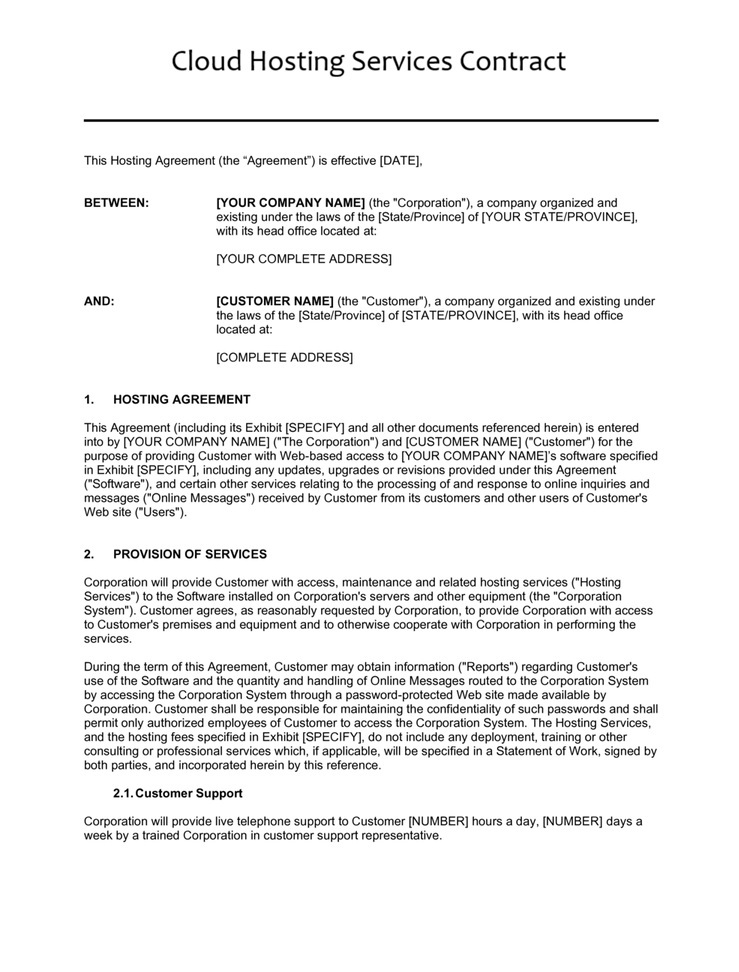
This article will explore why such a contract is essential, detail the key components every template should include, and even provide a structured sample to guide you. By understanding these elements, you can better navigate the complexities of cloud partnerships and safeguard your enterprise.
Why a Robust Cloud Hosting Services Contract Template is Essential
Engaging cloud hosting services without a clear legal framework is akin to building a house without blueprints. A well-defined **cloud hosting services contract template** provides clarity, minimizes risks, and sets the stage for a successful long-term partnership with your provider. It’s about more than just legal compliance; it’s about operational certainty.
Mitigating Risks and Ensuring Service Continuity
One of the primary reasons to use a comprehensive contract template is to proactively mitigate potential risks. These can range from unexpected service downtime to security vulnerabilities that compromise sensitive data. A robust agreement clearly defines the provider’s responsibilities in maintaining uptime and implementing security measures.
For example, a contract should specify how the provider will handle data backups, disaster recovery, and incident response. This ensures that your business can quickly recover from unforeseen events, minimizing financial losses and reputational damage. It creates a safety net, guaranteeing that your operations can continue even when challenges arise.
Defining Service Level Agreements (SLAs)
The Service Level Agreement, or SLA, is a critical component within any cloud hosting contract. It quantifies the performance and reliability expectations for the cloud services you receive. Without a detailed SLA, it can be challenging to hold providers accountable for substandard performance.
An effective SLA will specify key metrics such as guaranteed uptime percentages (e.g., 99.9% availability), response times for support requests, and data processing speeds. It should also outline the remedies or service credits you are entitled to if these agreed-upon levels are not met. This ensures you receive the quality of service you pay for and provides recourse if expectations are not fulfilled.
Protecting Your Data and Intellectual Property
When you entrust your data to a third-party cloud provider, data security and privacy become paramount. A strong **cloud hosting services contract template** must clearly address data ownership, confidentiality, and compliance with relevant regulations. This protects your sensitive information from unauthorized access and misuse.
The contract should detail the provider’s security protocols, including encryption methods, access controls, and regular security audits. It must also outline how the provider will handle personal data to comply with regulations like GDPR or CCPA, ensuring your business remains compliant. Furthermore, it clarifies that your intellectual property remains yours, even when hosted on a provider’s infrastructure.
Key Components of a Comprehensive Cloud Hosting Agreement
Drafting an effective cloud hosting agreement requires attention to numerous details, each playing a vital role in protecting both parties. Understanding the core elements of a **cloud hosting services contract template** helps ensure that no critical aspect is overlooked, providing a solid foundation for your cloud partnership.
Scope of Services and Responsibilities
This section defines exactly what cloud services the provider will deliver and what responsibilities fall on each party. It’s crucial to be as specific as possible to avoid any ambiguity regarding service offerings. This might include details about infrastructure as a service (IaaS), platform as a service (PaaS), or software as a service (SaaS).
The contract should clearly delineate who is responsible for specific tasks, such as server maintenance, software updates, data backups, and security configurations. For instance, the provider typically manages the underlying hardware, while the client might be responsible for application-level security and data integrity. Clarity here prevents finger-pointing and ensures smooth operations.
Pricing, Payment Terms, and Termination Clauses
Financial transparency and clear exit strategies are fundamental. This part of the contract template details the costs associated with the cloud services, including pricing models (e.g., pay-as-you-go, fixed subscriptions), billing cycles, and any potential fees for exceeding usage limits. It’s essential to understand how pricing may change over time.
Equally important are the termination clauses, which outline the conditions under which either party can end the agreement. This includes notice periods, procedures for data retrieval and deletion upon termination, and any penalties for early cancellation. A well-defined termination process protects your data and ensures a smooth transition if you decide to switch providers.
Data Security, Privacy, and Compliance
Given the sensitive nature of data stored in the cloud, this section is non-negotiable. It must detail the security measures the cloud provider has in place, such as encryption standards, multi-factor authentication, and physical security of data centers. It also addresses how the provider will protect the privacy of your data.
Compliance with industry-specific regulations (e.g., HIPAA for healthcare, PCI DSS for payment data) and international data protection laws is also typically covered here. The contract should grant you audit rights to verify the provider’s compliance and security practices. This ensures your business meets its own regulatory obligations while using cloud services.
Dispute Resolution and Indemnification
Even with the best intentions, disputes can arise. A robust contract template includes clear mechanisms for resolving disagreements, such as mediation, arbitration, or litigation in a specified jurisdiction. This helps avoid costly and time-consuming legal battles.
Indemnification clauses protect both parties from financial losses resulting from specific events. For instance, the provider might indemnify the client against claims arising from intellectual property infringement by the cloud service. Conversely, the client might indemnify the provider for issues caused by client data or usage. These clauses allocate risk and liability, providing a measure of financial security.
Sample Cloud Hosting Services Contract Template Structure
While a full legal document requires professional drafting, understanding the typical structure of a **cloud hosting services contract template** can guide your discussions and negotiations. This sample provides a framework, highlighting the key sections commonly found in such agreements. Each part serves a specific purpose, ensuring comprehensive coverage of the relationship between client and provider.
Here is a simplified outline of what a comprehensive cloud hosting agreement typically includes:
-
Parties Involved: This section identifies the full legal names and addresses of both the Cloud Service Provider (“Provider”) and the Client (“Client”) entering into the agreement.
-
Recitals/Background: Briefly explains the purpose of the agreement, stating that the Client wishes to procure cloud hosting services and the Provider is equipped to offer them.
-
Definitions: Provides clear definitions for key terms used throughout the contract (e.g., “Cloud Services,” “Service Level Agreement,” “Confidential Information,” “Downtime”).
-
Scope of Services:
- Detailed description of the specific cloud hosting services to be provided (e.g., virtual machines, storage, networking, managed services).
- Any limitations, exclusions, or optional add-on services.
- Service commencement date and duration.
-
Service Level Agreement (SLA):
- Guaranteed uptime percentages and performance metrics.
- Response and resolution times for support tickets.
- Availability of technical support (e.g., 24/7, business hours).
- Remedies or service credits for failure to meet SLA commitments.
-
Data Security and Privacy:
- Provider’s security measures (e.g., encryption, firewalls, access controls).
- Data processing terms, including compliance with relevant data protection laws (e.g., GDPR, CCPA).
- Data ownership, backup, and recovery policies.
- Procedures for data breach notification.
-
Intellectual Property:
- Confirmation of data ownership remaining with the Client.
- Licensing of Provider’s software or services, if applicable.
- Clauses regarding third-party software and open-source components.
-
Fees and Payment:
- Detailed pricing structure (e.g., fixed fee, usage-based, tiered).
- Billing frequency and payment terms.
- Late payment penalties and dispute procedures for invoices.
- Review and adjustment mechanisms for fees.
-
Term and Termination:
- Initial term of the agreement and renewal options.
- Conditions for termination by either party (e.g., breach of contract, insolvency).
- Notice periods for termination.
- Post-termination obligations, including data return or deletion.
-
Confidentiality: Outlines obligations to protect confidential information shared between the parties.
-
Limitation of Liability: Sets monetary caps on the liability of each party in case of damages or breaches, often with specific exclusions (e.g., gross negligence, willful misconduct).
-
Indemnification: Clauses detailing how each party will protect the other from specific third-party claims (e.g., intellectual property infringement, data breach due to negligence).
-
Force Majeure: Defines events beyond reasonable control (e.g., natural disasters, acts of war) that may excuse performance under the contract.
-
Governing Law and Dispute Resolution: Specifies the jurisdiction whose laws will govern the contract and the preferred methods for resolving disputes (e.g., negotiation, mediation, arbitration, litigation).
-
Miscellaneous Provisions: Includes standard legal clauses such as entire agreement, severability, assignment, and waivers.
This structure provides a robust starting point, ensuring all critical aspects of cloud hosting services are addressed. Each section, when properly detailed, contributes to a clear and legally sound agreement, preventing future disputes and safeguarding your digital assets.
Navigating the complexities of cloud hosting agreements doesn’t have to be daunting. By understanding the core components and leveraging a comprehensive cloud hosting services contract template, businesses can secure their digital future with confidence. Such a document transforms potential risks into manageable terms, ensuring that your cloud infrastructure supports your business objectives without unnecessary legal headaches.
Remember, while a template offers an excellent foundation, it’s always advisable to consult with legal professionals specializing in technology contracts. They can tailor the document to your specific needs, jurisdictional laws, and the unique services you are procuring. Taking this step ensures that your cloud hosting agreement is not only robust but also perfectly aligned with your business strategy and compliance requirements.