In the fast-paced world of public relations, clear communication extends beyond media outreach to the very foundation of client-agency relationships. A robust public relations agency contract template is not just a formality; it’s the bedrock upon which successful campaigns and mutual understanding are built. It safeguards both parties, defining expectations, deliverables, and the scope of work from the outset.
Navigating client agreements can be complex, but having a professional, legally sound framework simplifies the process significantly. This article will explore the essential elements of an effective PR agency agreement, discuss its benefits, and provide insights into crafting your own comprehensive document to ensure your partnerships thrive.
Key Components of an Effective PR Agency Agreement
A well-structured public relations agency contract template serves as a comprehensive roadmap for the entire engagement. It leaves no room for ambiguity, ensuring both the agency and the client understand their roles, responsibilities, and the parameters of the partnership. Laying out these details upfront prevents misunderstandings and potential disputes down the line, fostering a productive working environment.
Several critical clauses must be included to make the agreement enforceable and fair. These elements define the core of the service, the financial arrangements, and the legal protections for both parties. Overlooking any of these components could lead to significant challenges during the course of the PR campaign or even after its completion.
- Scope of Services: Clearly outline the specific public relations activities the agency will undertake. This might include media relations, content creation, social media management, crisis communication, or event planning. Be as detailed as possible to set clear expectations.
- Term and Termination: Specify the duration of the contract, whether it’s project-based or an ongoing retainer. Detail the conditions under which either party can terminate the agreement, including notice periods and any associated fees.
- Fees and Payment Terms: State the total compensation, hourly rates, retainer structure, or project-based fees. Include the payment schedule, accepted methods, late payment penalties, and provisions for out-of-pocket expenses.
- Confidentiality: Establish a non-disclosure clause to protect sensitive client information and proprietary agency strategies. This ensures that all shared data remains private and secure.
- Intellectual Property: Define who owns the rights to content created during the engagement, such as press releases, articles, or social media posts. Typically, rights transfer to the client upon full payment.
- Performance Metrics and Reporting: Outline how success will be measured and the frequency of performance reports. This could involve media mentions, reach, engagement rates, or website traffic, providing clear accountability.
- Indemnification: Protect both parties from potential legal claims arising from the contract’s execution. This clause clarifies responsibility for damages or losses.
Why a Standardized PR Service Agreement Protects Both Parties
Utilizing a standardized public relations agency contract template provides invaluable security and clarity for both the PR agency and its clients. It acts as a professional framework, ensuring that all aspects of the engagement are formally documented and agreed upon before work commences. This proactive approach significantly reduces risks and builds a foundation of trust.
For agencies, a consistent agreement streamlines the onboarding process and ensures that legal requirements are met across all client relationships. It minimizes the time spent drafting new contracts from scratch for each client, allowing more focus on delivering excellent PR results. Furthermore, it clearly defines payment schedules and service boundaries, protecting the agency’s financial interests and resources.
Clients also benefit immensely from a well-defined PR service agreement. It gives them a transparent understanding of the services they will receive, the costs involved, and the expected outcomes. This transparency helps clients budget effectively and hold the agency accountable for agreed-upon deliverables. A clear agreement ensures that their brand’s reputation and sensitive information are legally protected.
Ultimately, a robust agreement fosters a more collaborative and professional relationship. By outlining responsibilities, dispute resolution processes, and termination clauses, both parties can enter into the partnership with confidence. This mutual understanding leads to fewer misunderstandings and a more efficient workflow, driving better results for everyone involved.
Sample Public Relations Agency Contract Template Structure
Creating a functional public relations agency contract template doesn’t require complex legal jargon, but it does demand a structured approach. The goal is to present information clearly, ensuring both the agency and the client understand every clause. While this is a sample structure, always consult with legal professionals to tailor it to your specific needs and local regulations.
The following outline represents the core sections typically found in a comprehensive PR service agreement. Each section should be detailed enough to prevent ambiguities yet concise enough to remain readable. Remember to customize the specifics for each client engagement, reflecting their unique project scope and objectives.
Agreement Header
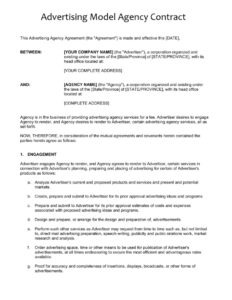
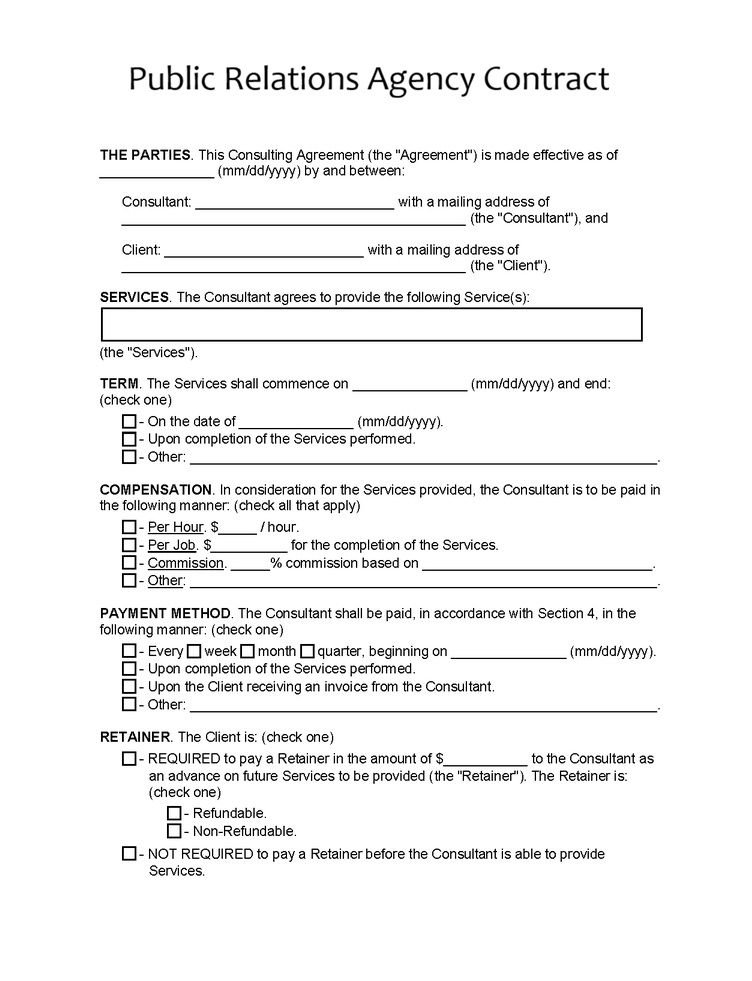
This section typically includes the formal name of the document, the effective date, and the full legal names and addresses of both the Public Relations Agency (referred to as “Agency”) and the Client. It sets the official beginning of the contractual relationship.
Recitals/Background
A brief introductory paragraph explaining the purpose of the agreement, stating that the Client wishes to engage the Agency for public relations services, and the Agency agrees to provide such services under the terms herein. This provides context for the entire document.
Terms and Conditions
This is the main body of the contract, broken down into various clauses:
- Services Provided: A detailed description of the specific PR services, deliverables, and objectives.
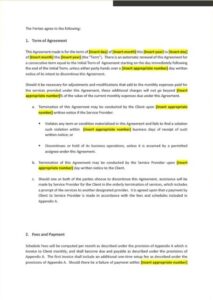
- Term: Start and end dates, or conditions for ongoing service.
- Compensation and Payment: Fee structure, invoicing schedule, expenses, and late payment policies.
- Client Responsibilities: What the client is expected to provide (e.g., information, approvals).
- Confidentiality: Non-disclosure obligations for both parties.
- Intellectual Property: Ownership of work products and content.
- Termination: Conditions and notice periods for ending the agreement.
- Limitation of Liability: Defines the extent of each party’s financial liability.
- Indemnification: Protection against third-party claims.
- Governing Law: Which jurisdiction’s laws will apply to the contract.
- Dispute Resolution: How disagreements will be handled (e.g., mediation, arbitration).
- Force Majeure: Provisions for unforeseen circumstances.
- Entire Agreement: States that this document constitutes the complete agreement.
Signatures
Spaces for authorized representatives of both the Agency and the Client to sign and date the agreement, along with their printed names and titles. This formalizes the acceptance of all terms.
Implementing a well-crafted public relations agency contract template is a strategic move for any PR firm looking to professionalize its client engagements. It provides clarity, sets expectations, and protects both parties from potential misunderstandings. By defining the scope, compensation, and legal framework upfront, agencies can focus on delivering exceptional results while clients gain peace of mind knowing their investment is secured.
While using a template offers a strong starting point, always remember to customize it to the unique needs of each client and seek legal counsel to ensure compliance with relevant laws. This proactive approach ensures your client relationships are built on a solid, legally sound foundation, fostering long-term success and mutual trust. Take the time to refine your agreement, and watch your partnerships flourish.