Establishing a clear and professional working relationship is paramount in the sensitive field of childcare. Whether you are a family hiring a nanny, a director managing a daycare center, or a professional caregiver seeking employment, a well-drafted agreement sets the foundation for success. This document ensures that all parties understand their roles, responsibilities, and expectations from the outset. Without such clarity, misunderstandings can easily arise, leading to potential disputes and dissatisfaction.
A comprehensive child care employment contract template serves as an indispensable tool for formalizing these crucial arrangements. It provides a legal framework that protects both the employer and the employee, outlining everything from daily duties to compensation and termination clauses. Utilizing a standardized yet adaptable template helps streamline the hiring process and ensures that no critical details are overlooked, fostering trust and transparency.
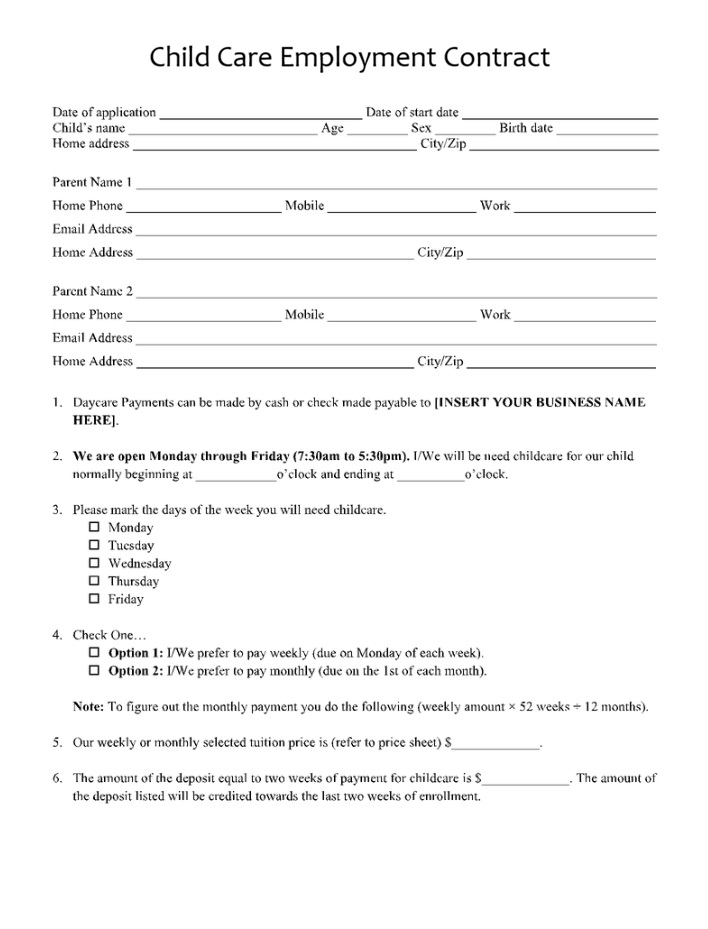
In this article, we will explore the essential elements that comprise an effective childcare employment agreement. We will delve into why these contracts are vital, what key provisions they should include, and even provide a sample child care employment contract template to guide you. By understanding these components, you can ensure a stable and professional environment for everyone involved in providing nurturing care to children.
Why a Child Care Employment Agreement is Essential
The world of childcare involves significant trust and responsibility, making formal agreements more important than ever. A detailed employment agreement offers a clear point of reference for all aspects of the working relationship. It helps prevent ambiguities that can lead to miscommunication and potential conflict down the line.
Having a written contract demonstrates professionalism and a commitment to fair employment practices. It provides a sense of security for both the employer and the employee, knowing that their rights and obligations are clearly documented. This foundational document contributes significantly to a stable and respectful working environment for everyone involved.
Protecting Both Employer and Employee
A robust child care employment agreement acts as a safeguard for all parties. For employers, it clearly defines the caregiver’s duties, hours, and expected conduct, minimizing the risk of unmet expectations or negligence. It also outlines procedures for addressing performance issues or, if necessary, terminating the employment fairly.
For employees, the contract guarantees compensation, benefits, and clearly defined working conditions. It protects them from arbitrary changes to their role or pay and ensures they have a clear understanding of their job security. This mutual protection fosters a sense of fairness and reduces the likelihood of legal disputes.
Establishing Clear Roles and Responsibilities
One of the primary benefits of an employment contract is its ability to define roles and responsibilities with precision. Ambiguity in daily tasks or expectations can quickly lead to frustration for both sides. The contract meticulously details what the childcare provider is expected to do, preventing assumptions and clarifying the scope of their work.
This includes outlining specific childcare duties, light household tasks, transportation responsibilities, and communication protocols. When every expectation is laid out in writing, it creates a transparent framework for operations. This clarity allows the employee to perform their job effectively and the employer to assess performance objectively.
Key Components of a Robust Child Care Provider Contract
Crafting an effective child care employment contract involves incorporating several crucial elements that address all aspects of the working relationship. These components ensure that both parties have a complete understanding of their commitments. A well-structured contract leaves little room for misunderstanding, promoting a harmonious arrangement.
From financial details to daily operations and professional conduct, each section plays a vital role. Taking the time to clearly define these areas within your child care employment agreement can prevent future disagreements. This thoroughness is a hallmark of a professional and responsible approach to hiring.
Defining Compensation and Benefits
Clear articulation of compensation is fundamental to any employment contract. This section should detail the agreed-upon hourly wage or salary, the frequency of payments (e.g., weekly, bi-weekly), and the method of payment. It’s also crucial to address overtime pay according to local labor laws, especially for caregivers working irregular hours.
Furthermore, any benefits offered, such as paid time off, sick days, holidays, or health insurance contributions, must be explicitly stated. If there are provisions for annual raises, performance bonuses, or reimbursement for work-related expenses, these should also be included. Transparency in financial terms builds trust and prevents future pay-related disputes.
Work Schedule, Duties, and Expectations
This critical section outlines the precise hours of work, including start and end times, and days of the week. It should also specify if the role requires occasional evenings, weekends, or travel. Flexibility requirements, such as willingness to adapt to changes in the family’s schedule, should be noted here.
A comprehensive list of duties and responsibilities is essential. This might include:
- Supervising children’s activities and ensuring their safety.
- Preparing meals and snacks.
- Assisting with homework.
- Engaging children in educational and recreational activities.
- Performing light household chores related to childcare.
- Managing children’s laundry.
- Transporting children to and from school or appointments.
Confidentiality and Termination Clauses
Given the personal nature of in-home childcare, confidentiality is a paramount concern for many families. The contract should include a clause stating that the employee agrees to keep all information about the family and children private. This protects sensitive personal data and ensures the family’s privacy is respected.
The termination clause outlines the conditions under which either party can end the employment relationship. This typically includes a required notice period from both sides (e.g., two weeks). It should also specify grounds for immediate termination without notice, such as gross misconduct or negligence. Details regarding final pay, unused vacation time, and the return of company property should also be covered.
Sample Child Care Employment Contract Template
Below is a simplified outline of what a child care employment contract template might include. This sample is for illustrative purposes to show the structure and types of information generally covered. Always consult with a legal professional to draft a contract that complies with your local laws and specific needs.
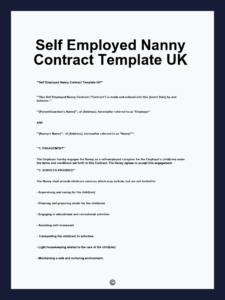
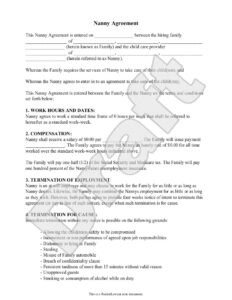
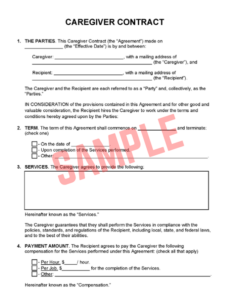
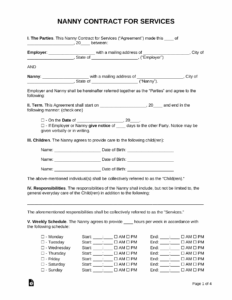
**CHILD CARE EMPLOYMENT AGREEMENT**

This Child Care Employment Agreement ("Agreement") is made effective as of [Date], by and between:

**EMPLOYER:**
[Employer's Full Name(s)]
[Employer's Address]
("Employer")

**EMPLOYEE:**
[Employee's Full Name]
[Employee's Address]
[Employee's Phone Number]
[Employee's Email Address]
("Employee" or "Caregiver")

**1. EMPLOYMENT POSITION:**
The Employer hereby employs the Employee as a [Job Title, e.g., Nanny, Child Care Provider, Daycare Assistant] to provide childcare services for the Employer's child(ren) [Child(ren)'s Name(s) and Age(s)].

**2. TERM OF EMPLOYMENT:**
This Agreement shall commence on [Start Date] and shall continue [e.g., on a month-to-month basis, for a fixed term until [End Date], or until terminated as per Section 7].

**3. DUTIES AND RESPONSIBILITIES:**
The Employee's primary duties include, but are not limited to:
*   Providing direct supervision and care for the child(ren).
*   Planning and engaging in age-appropriate activities.
*   Preparing healthy meals and snacks for the child(ren).
*   Assisting with homework and educational activities.
*   Performing light household chores related to the child(ren) (e.g., tidying play areas, child(ren)'s laundry).
*   Transporting child(ren) to and from school/activities as needed.
*   Maintaining a safe and stimulating environment.
*   [Add any other specific duties]

**4. COMPENSATION:**
a.   **Hourly Rate/Salary:** The Employee shall be compensated at a rate of $[Amount] per [Hour/Week/Month], payable [e.g., bi-weekly] on [Payment Day].
b.   **Overtime:** Overtime hours shall be compensated at [e.g., 1.5 times the regular hourly rate] for hours worked in excess of [e.g., 40] per week, in accordance with applicable labor laws.
c.   **Benefits:** [List any benefits, e.g., Paid Time Off (X days per year), Sick Leave (X days per year), Paid Holidays (List specific holidays), Health insurance stipend].

**5. WORK SCHEDULE:**
The Employee's regular work schedule shall be:
*   Days: [e.g., Monday to Friday]
*   Hours: [e.g., 8:00 AM - 5:00 PM]
*   Total Hours per Week: [e.g., 45 hours]
Any changes to this schedule must be mutually agreed upon in advance.

**6. CONFIDENTIALITY:**
The Employee agrees to keep all information regarding the Employer's family, personal life, finances, and the child(ren)'s medical or educational information strictly confidential. This obligation shall survive the termination of this Agreement.

**7. TERMINATION OF EMPLOYMENT:**
Either party may terminate this Agreement by providing [e.g., two (2) weeks'] written notice to the other party. The Employer may terminate this Agreement immediately for cause, including but not limited to gross misconduct, negligence, theft, or violation of confidentiality.

**8. GOVERNING LAW:**
This Agreement shall be governed by and construed in accordance with the laws of the State of [State].

**9. ENTIRE AGREEMENT:**
This Agreement constitutes the entire agreement between the Employer and the Employee, superseding all prior discussions, negotiations, and agreements.

**IN WITNESS WHEREOF,** the parties have executed this Agreement on the date first written above.

_________________________                 _________________________
Employer Signature                          Employee Signature

_________________________                 _________________________
Printed Name (Employer)                     Printed Name (Employee)
Customizing Your Child Care Employment Agreement
While a child care employment contract template provides an excellent starting point, it’s rare that a one-size-fits-all document will perfectly meet every unique situation. Customization is key to ensuring the agreement accurately reflects the specific needs and expectations of both the employer and the caregiver. This adaptability makes the contract a truly effective tool.
Taking the time to personalize the agreement demonstrates a thoughtful approach to the employment relationship. It also helps to prevent future misunderstandings by addressing particular circumstances upfront. Think of the template as a robust framework that you then tailor with specific details relevant to your arrangement.
Adapting for Specific Childcare Settings
The specifics of childcare can vary widely, from an individual nanny working in a private home to a caregiver assisting in a licensed family daycare. Each setting will have distinct requirements that need to be reflected in the contract. For instance, a nanny contract might detail travel arrangements or specific dietary needs for children.
A contract for a daycare center employee might focus more on group supervision ratios, curriculum implementation, and adherence to licensing regulations. Consider the unique environment and responsibilities when adapting your child care employment contract template. This ensures the document is practical and legally sound for your particular situation.
Seeking Professional Legal Counsel
While a child care employment contract template is a valuable resource, it is not a substitute for professional legal advice. Labor laws, compensation regulations, and employment standards can vary significantly by state, province, or country. What works in one jurisdiction might not be compliant in another.
Consulting with an attorney specializing in employment law is highly recommended. A lawyer can review your customized child care employment agreement to ensure it is legally enforceable, protects your interests, and complies with all relevant local, state, and federal regulations. This expert review provides peace of mind and significantly mitigates potential legal risks for both parties.
Crafting a thorough and legally sound employment contract is a crucial step for anyone involved in childcare. It provides clarity, sets expectations, and protects the interests of both the employer and the employee, fostering a professional and harmonious working relationship. By utilizing a reliable child care employment contract template as a foundation and customizing it to fit specific needs, you lay the groundwork for a successful partnership built on mutual understanding and respect. Remember, a well-defined agreement is an investment in stability and peace of mind within the vital realm of child care.