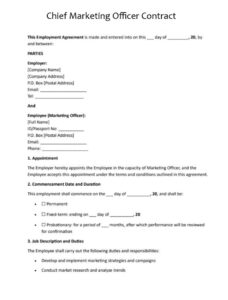
Hiring a Chief Operating Officer (COO) is a pivotal moment for any organization. This executive role is critical for aligning daily operations with strategic goals, driving efficiency, and ensuring the business runs smoothly. Yet, the foundation of this crucial relationship – the employment contract – is often underestimated in its complexity and importance. A well-drafted chief operating officer contract template is not just a formality; it’s a strategic document that defines expectations, mitigates risks, and protects both the company and the incoming executive.
This article delves into the essential components of a robust COO employment agreement, offering insights into what makes these documents effective. We will explore key provisions, legal considerations, and practical advice for tailoring a comprehensive contract. Understanding these elements is vital for any company looking to secure top-tier operational leadership and ensure a clear, mutually beneficial working relationship from day one. By the end, you will have a clearer understanding of how to approach or utilize a strong chief operating officer contract template.
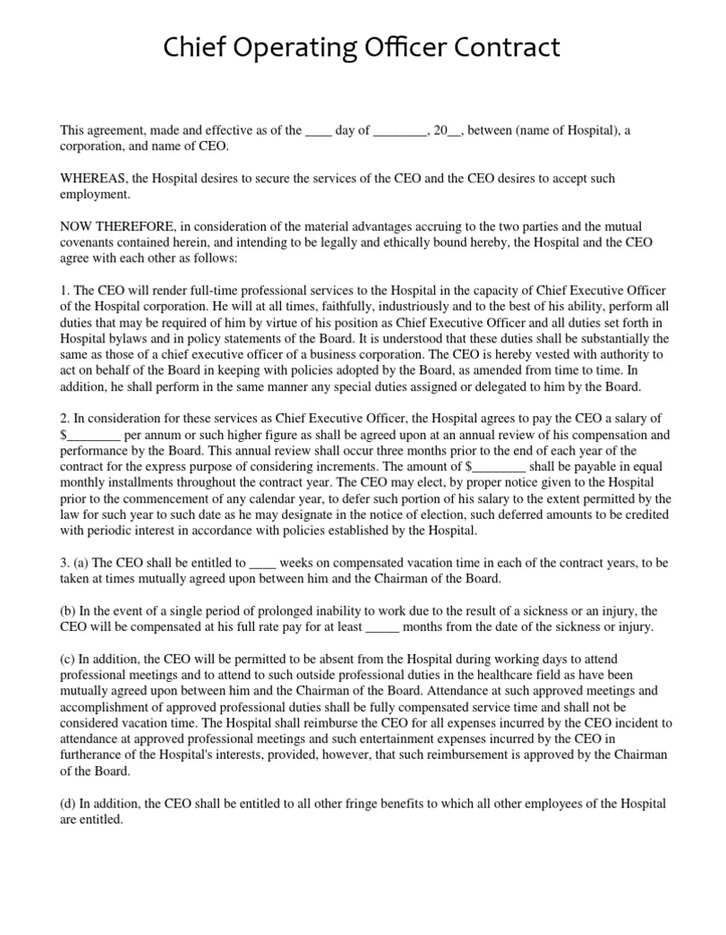
Key Elements of a Robust COO Employment Agreement
A comprehensive employment agreement for a Chief Operating Officer extends far beyond salary details. It lays out the intricate framework for the executive’s role, responsibilities, and the terms of their engagement with the company. Neglecting specific clauses can lead to misunderstandings or costly disputes down the line, highlighting the importance of a detailed and legally sound document.
Defining Scope of Responsibilities and Authority
Clarity regarding the COO’s duties is paramount to prevent overlap with other executive roles and ensure accountability. This section should precisely outline the operational areas the COO will oversee, such as supply chain management, human resources, IT, or day-to-day business processes. It also defines their reporting structure, typically to the CEO, and their authority to make decisions, hire staff, or approve expenditures within defined limits.
For example, a COO’s responsibilities might include:
- Overseeing daily business operations and administrative functions.
- Implementing strategic plans developed by the CEO and senior leadership.
- Managing and optimizing organizational efficiency and productivity.
- Developing and enforcing company policies and procedures.
- Leading departmental heads and fostering cross-functional collaboration.
- Reporting operational performance to the CEO and Board of Directors.
A clearly articulated job description within the contract sets precise expectations and measurable goals. This reduces ambiguity and helps the COO understand their contribution to the company’s success from the outset.
Compensation, Benefits, and Equity Structure
The financial package for a COO is typically multifaceted, reflecting the seniority and impact of the role. Beyond the base salary, which should be clearly stated, the contract must detail any performance-based bonuses, incentive programs, and long-term equity grants. These incentives are often tied to specific operational KPIs or overall company performance.
Furthermore, a robust COO contract will outline comprehensive benefits, including health insurance, retirement plans, paid time off, and other perquisites like executive expense accounts or car allowances. Equity components, such as stock options, restricted stock units (RSUs), or phantom stock, need careful articulation regarding vesting schedules, exercise prices, and post-termination treatment. Statistics suggest that executive compensation packages with clear equity incentives can significantly boost long-term retention and performance alignment, with studies often showing that 70-80% of executive pay is performance-based.
Protection Clauses: Confidentiality and Non-Compete
To safeguard the company’s proprietary information and competitive advantage, strong protective clauses are essential in any executive employment agreement. A confidentiality clause prevents the COO from disclosing sensitive company information, trade secrets, and customer data both during and after their employment. This is crucial for businesses operating in competitive markets.
Similarly, a non-compete clause restricts the COO from joining a competitor or starting a competing business within a specified geographic area and timeframe after leaving the company. While enforceability varies by jurisdiction, a well-crafted non-compete, alongside non-solicitation clauses (preventing the poaching of employees or clients), provides vital protection. It’s important to ensure these clauses are reasonable in scope to increase their likelihood of legal enforceability.
Structuring Your Chief Operating Officer Contract Template
Developing a comprehensive chief operating officer contract template involves more than just filling in blanks. It requires a thoughtful arrangement of clauses to create a clear, legally sound, and mutually beneficial agreement. This section outlines the typical structure and key components you would find in such a template, explaining what each part aims to achieve.
Initial Provisions: Parties and Effective Date
The very beginning of any executive contract, including a chief operating officer contract template, establishes the fundamental parties involved and the agreement’s commencement. This typically includes the legal names and addresses of both the company (the “Employer”) and the individual being hired (the “Employee” or “COO”). It is crucial to use correct legal names to avoid future disputes regarding identity.
Furthermore, this section clearly states the effective date of the agreement. This date marks when the contract officially begins and when the terms and conditions outlined within it become legally binding. Sometimes, a probationary period might also be mentioned here or in a subsequent clause, setting an initial trial period for the employment.
Essential Terms: Compensation and Duties
This core part of the agreement details the financial remuneration and the specific job scope. As previously discussed, the compensation section will itemize the base salary, bonus structure, equity grants, and a complete breakdown of benefits. This ensures no ambiguity regarding what the COO will earn and receive for their service.
Following compensation, the template will articulate the COO’s job title, primary duties, responsibilities, and reporting relationships. This clear definition prevents misunderstandings about the executive’s role within the organizational hierarchy and their expected contributions. It also often includes a provision stating that duties may evolve or be assigned from time to time by the CEO or Board, reflecting the dynamic nature of senior executive roles.
End Game: Termination and Post-Employment Covenants
No employment is perpetual, and a robust chief operating officer contract template must meticulously detail the conditions under which the employment relationship can conclude. This includes provisions for both “for cause” and “without cause” termination, outlining what constitutes each and the corresponding severance packages. Severance pay, benefits continuation, and outplacement services are common elements of a “without cause” termination.
Additionally, this section reinforces the post-employment obligations, such as the aforementioned confidentiality, non-compete, and non-solicitation clauses. It also addresses the return of company property, intellectual property assignment, and dispute resolution mechanisms like arbitration. A well-defined termination clause protects both parties by providing clear guidelines and reducing potential legal battles in the event of separation.
A well-crafted chief operating officer contract template acts as an indispensable tool for both companies and executive candidates. It provides a clear roadmap for the working relationship, addressing everything from day-to-day responsibilities to long-term incentives and eventual separation terms. By utilizing a comprehensive template and tailoring it to specific needs, businesses can establish a strong, legally sound foundation for their operational leadership. Remember, consulting with legal counsel specializing in employment law is always recommended to ensure the contract complies with all relevant regulations and effectively serves the interests of both parties.