Deciding to move on from a job or a rental property is a significant step, and how you communicate this decision speaks volumes about your professionalism. Providing a proper two weeks notice is not just a courtesy; it’s a vital part of maintaining positive relationships and ensuring a smooth transition. This article will guide you through the process, offering a ready-to-use proper two weeks notice template and essential tips to help you part ways gracefully, whether from an employer or a landlord.  Understanding the nuances of professional communication during a transition can save you future headaches and even open doors to new opportunities. We’ll cover the key elements of an effective notice, how to adapt it for different scenarios, and why adhering to a proper notice period is always in your best interest. Get ready to arm yourself with the knowledge and tools to handle your next departure with confidence and respect.
Crafting a Professional Two Weeks Notice Letter
A well-crafted two weeks notice letter serves as a formal declaration of your intent to resign from your position or terminate your tenancy. It’s a critical piece of business documentation that reflects your integrity and commitment to professionalism. This formal communication helps ensure that your departure is handled efficiently and without unnecessary disruption for all parties involved. By presenting a clear and concise notice, you set the stage for a positive final impression.
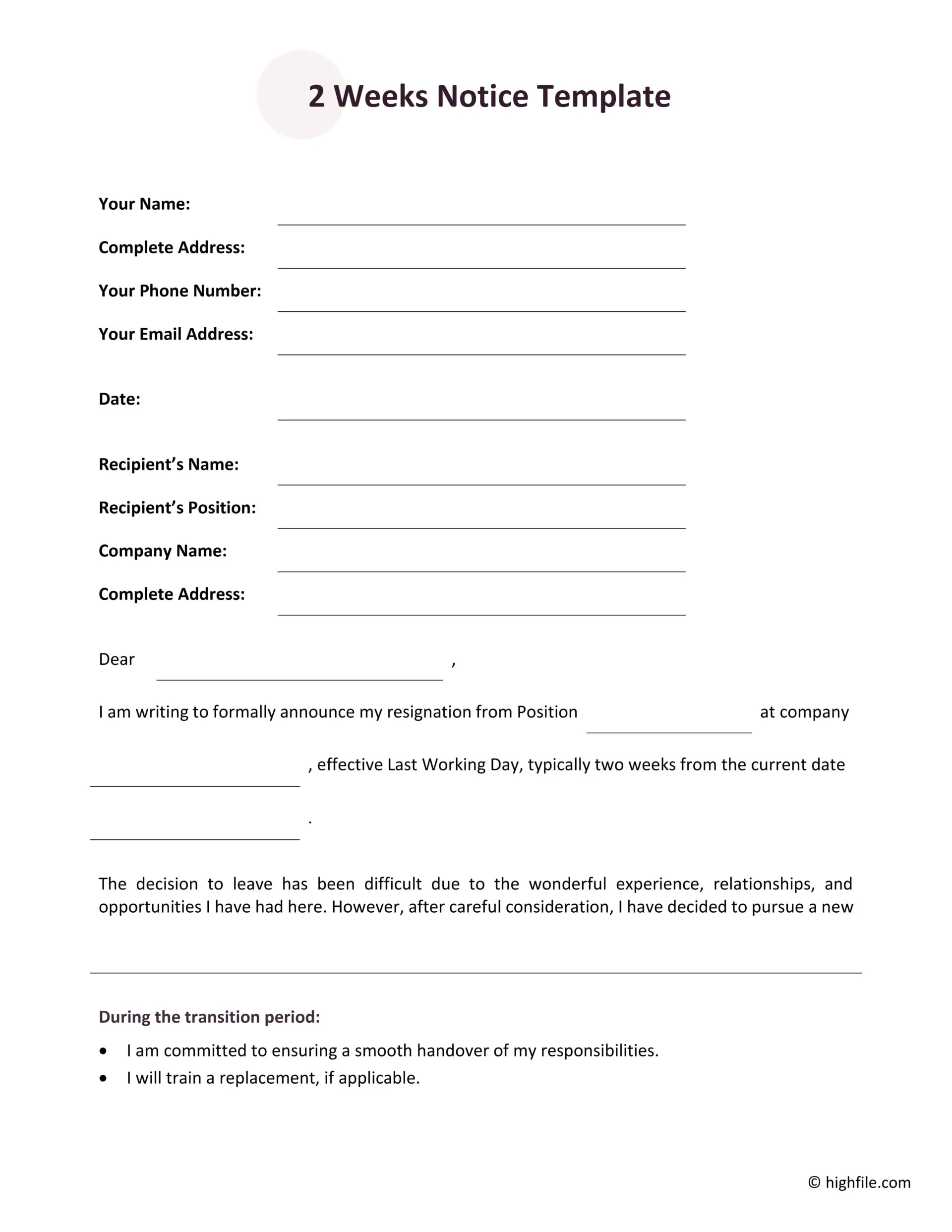
Whether you’re ending an employment chapter or concluding a lease agreement, the core principles of a proper two weeks notice remain consistent. It’s about clear communication, respect for established agreements, and facilitating a seamless handover. Taking the time to prepare an appropriate notice demonstrates your reliability and professionalism, leaving a lasting positive impact. This small effort can significantly influence future recommendations or references.
Essential Elements of Your Notice
To ensure your notice is comprehensive and effective, it should include several key pieces of information. These elements provide clarity and prevent misunderstandings regarding your departure. Adhering to this structure makes your proper two weeks notice template both formal and easily understood by the recipient. It leaves no room for ambiguity about your intentions or timeline. Here are the critical components to include in your resignation or tenancy termination letter:
- Your Full Name and Contact Information: Clearly state who the notice is from and how you can be reached.
- Current Date: This establishes when the notice was officially given, which is crucial for calculating the notice period.
- Recipient’s Full Name and Title/Role: Address the letter to the appropriate individual (e.g., your manager, HR department, or landlord).
- Clear Statement of Intent: Unequivocally state your decision to resign or terminate your tenancy.
- Your Last Day of Employment or Tenancy: Specify the exact date your employment or lease will conclude. This should be two weeks from the date of the notice.
- Offer to Assist with Transition (for employment): Politely offer to help with training replacements or completing outstanding tasks.
- Professional Closing: Use a polite closing such as “Sincerely” or “Respectfully.”
- Your Signature: A handwritten signature adds a layer of authenticity to the formal document.
A Sample Proper Two Weeks Notice Template for Employment
Utilizing a structured format ensures all necessary information is conveyed clearly and professionally. This sample proper two weeks notice template provides a solid foundation that you can customize to fit your specific situation. Remember to replace the bracketed information with your personal details to make it your own. It’s designed to be straightforward and effective for a variety of professional contexts. 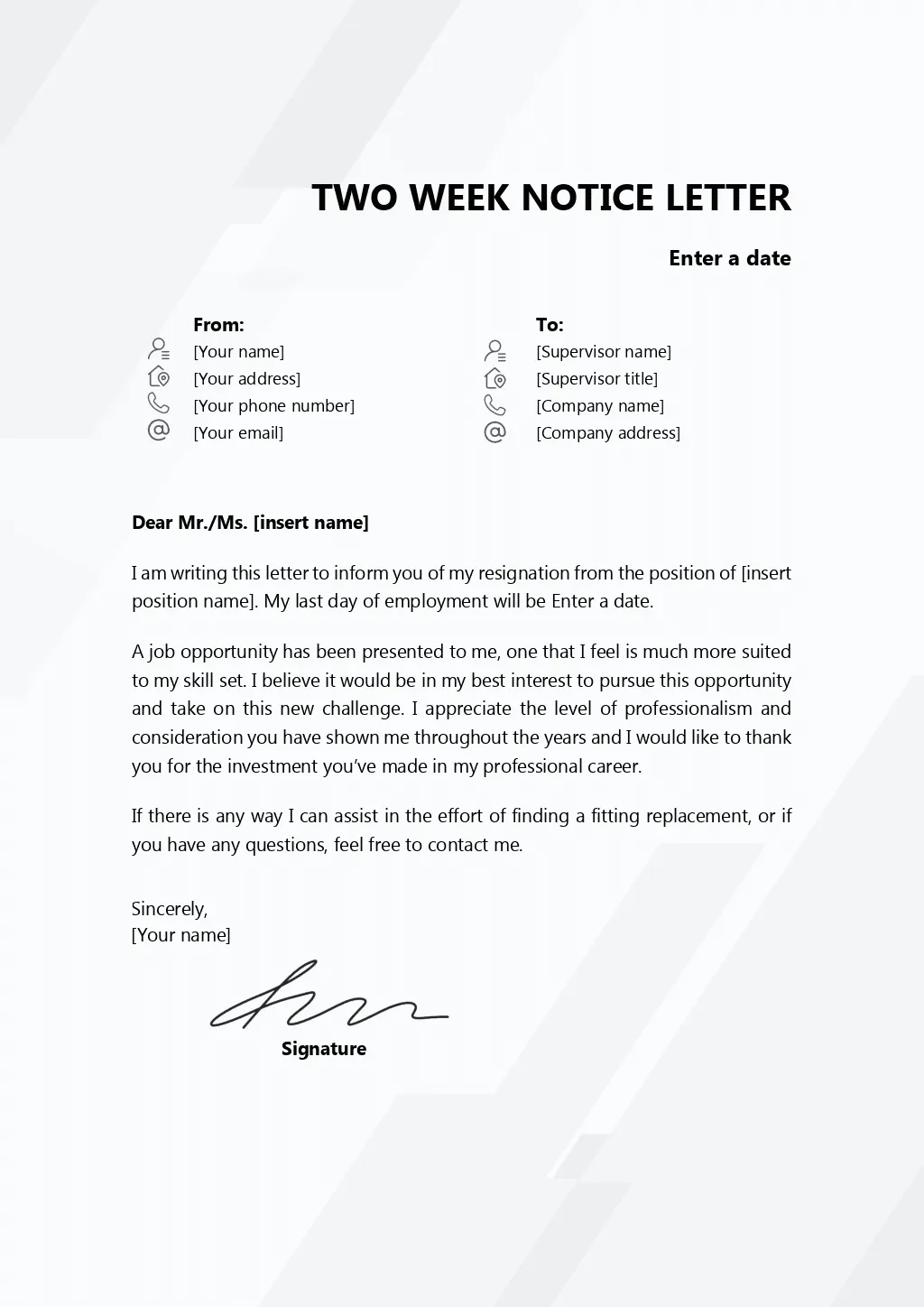
[Your Full Name]
[Your Address]
[Your City, State, Zip Code]
[Your Phone Number]
[Your Email Address]

[Date]

[Recipient's Full Name]
[Recipient's Title]
[Company/Property Name]
[Company/Property Address]
[Company/Property City, State, Zip Code]

Dear [Mr./Ms./Mx. Last Name],

Please accept this letter as formal notification that I am resigning from my position as [Your Job Title] at [Company Name]. My last day of employment will be two weeks from today, [Your Last Day of Employment Date].

I want to express my gratitude for the opportunity to have worked at [Company Name] for the past [Number] years/months. I have valued my time here and appreciate the experience I've gained.

I am committed to ensuring a smooth transition during my remaining time. I am happy to assist in training my replacement and completing any outstanding tasks to the best of my ability.

I wish [Company Name] continued success in the future.

Sincerely,

[Your Signature (if submitting a hard copy)]

[Your Typed Name]
Adapting Your Notice for Different Situations
While the core structure of a proper two weeks notice template remains consistent, the specific details and emphasis can change based on your circumstances. Understanding these variations ensures your notice is always appropriate and effective. Whether you are leaving a job or ending a lease, a tailored approach enhances clarity. This adaptability is key to professional communication in diverse scenarios.
For Job Resignations
When resigning from a job, your notice should focus on facilitating a smooth handover of your responsibilities. Offering to assist with training new staff or wrapping up projects is a strong professional gesture. It’s also wise to keep your letter concise and avoid listing grievances, maintaining a positive tone. Always check your employment contract or company policy for any specific notice period requirements.
For Tenancy Terminations
If you are a tenant providing notice to your landlord, ensure your proper two weeks notice template clearly states your intent to vacate the property. Referencing your lease agreement regarding notice periods is crucial, as some leases may require longer than two weeks. Always verify local landlord-tenant laws, as these can impact the validity and timing of your notice. Providing a move-out date and requesting information on the return of your security deposit are also important details.
Why a Proper Notice Period Matters
Giving a proper two weeks notice is more than just a formality; it’s a strategic move that benefits you in numerous ways. This period allows your employer or landlord adequate time to prepare for your departure, minimizing disruption. It demonstrates your respect for the professional relationship and the responsibilities you held. This consideration is often reciprocated in positive ways, such as favorable references.
Furthermore, a well-handled departure protects your professional reputation, which is an invaluable asset in any career path. Future employers often contact previous ones, and leaving on good terms ensures positive feedback. For tenants, respecting your lease’s notice period can prevent potential legal issues, ensure the timely return of your security deposit, and maintain a good rental history. Always prioritize a courteous and organized exit.
Providing a proper two weeks notice template is an essential part of professional conduct, ensuring you leave any situation on a positive and respectful note. By using a clear and concise template, you communicate your intentions effectively and facilitate a smooth transition for all parties involved. This small act of professionalism can significantly impact your future references and relationships, opening doors rather than closing them.
Always remember that your professional reputation is one of your most valuable assets. Taking the time to craft and deliver a thoughtful notice, whether for employment or tenancy, reinforces your commitment to ethical behavior and respect. Use the guidance and the proper two weeks notice template provided here to navigate your next transition with confidence, ensuring you always leave a lasting, positive impression.