Navigating the landlord-tenant relationship requires a delicate balance of responsibilities, rights, and respectful communication. One of the most frequent areas where misunderstandings can arise is when a landlord needs to access a tenant’s rented home. While landlords retain certain entry rights, tenants also have a fundamental right to privacy and peaceful enjoyment of their dwelling.
To ensure a smooth process that respects both parties and complies with legal requirements, a formal notice is indispensable. Using a well-crafted notice to enter rental property template is not just a best practice; it’s often a legal necessity that helps prevent disputes and maintain a positive relationship. This article will guide you through the essential components of such a notice, the legal frameworks governing entry, and provide a practical template you can adapt.
Understanding when and how to properly notify your tenants of your intent to enter their property can save considerable time, stress, and potential legal troubles. We’ll explore the various reasons for entry, the specific information required in your notice, and provide a clear sample to help you communicate effectively and lawfully.
Understanding Landlord Entry Rights And Tenant Privacy
Landlord-tenant laws are designed to protect both parties, and a significant portion of these regulations pertains to a tenant’s right to privacy versus a landlord’s need to access the property. While tenants have a right to quiet enjoyment, landlords also need to ensure their investment is maintained and managed effectively. The key to balancing these often-conflicting interests lies in clear communication and adherence to legal protocols.
Properly informing your tenants before entering their home demonstrates professionalism and respect, fostering a trusting relationship. Ignoring these protocols can lead to serious legal consequences, including fines, lease termination by the tenant, or even civil lawsuits for invasion of privacy. Therefore, knowing your state and local laws is paramount for any landlord.
Legal Requirements For Entry Notifications
Most jurisdictions mandate that landlords provide advance notice before entering a rental property. The specific duration of this notice can vary significantly, often ranging from 24 to 48 hours, but some areas may have different stipulations. It’s crucial for landlords to research and understand the specific laws applicable to their rental properties.
The notice must typically be in writing and clearly state the reason for entry, along with the specific date and approximate time window. While some states might allow verbal notice in certain circumstances, a written notice offers undeniable proof of compliance and is always the recommended approach. Always refer to your lease agreement and local ordinances for precise requirements.
- Most states require 24-48 hours’ written notice.
- Some areas might permit shorter notice for specific issues, or longer notice.
- Emergency situations are typically exempt from notice requirements.
- The notice must specify the date and approximate time of entry.
Valid Reasons For Landlord Entry
Landlords generally have a limited set of legally recognized reasons to enter a tenant’s occupied property. These reasons are designed to protect the landlord’s interest in the property and ensure the tenant’s safety and well-being. Any entry outside these specified reasons, without explicit tenant consent, could be deemed unlawful and an invasion of privacy.
Common valid reasons include performing necessary repairs or maintenance, conducting routine inspections, showing the property to prospective tenants or buyers (usually towards the end of a lease term), or assessing damage after a reported issue. Additionally, entry is typically permitted in cases of emergency, such as a fire or a burst pipe, where immediate action is required to prevent further damage or ensure safety. Understanding these permissible grounds is crucial when preparing your notice to enter rental property template.
- Performing routine maintenance or repairs.
- Conducting property inspections (e.g., annual safety checks).
- Showing the property to prospective tenants, purchasers, or lenders.
- Addressing an emergency that poses an immediate threat (e.g., fire, flood).
- If the tenant has abandoned the property.
- As required by court order.
Consequences Of Improper Entry
Disregarding notice requirements or entering a property without a valid reason can lead to severe repercussions for landlords. Tenants have a legal right to privacy, and any unauthorized intrusion can be considered a breach of their lease agreement and an invasion of their rights. This can seriously damage the landlord-tenant relationship, eroding trust and leading to a hostile living environment.
Legally, tenants may have grounds to sue for damages, seek a court order to prevent future unauthorized entries, or even terminate their lease prematurely without penalty. In some jurisdictions, repeated unauthorized entries could result in significant fines imposed by housing authorities. Therefore, utilizing a proper entry notice is not just courteous, but a vital protective measure for landlords.
Crafting An Effective Notice To Enter Rental Property Template
A well-drafted notice to enter serves as a clear, professional, and legally compliant communication tool. It removes ambiguity, sets expectations, and provides a documented record of the landlord’s intent. While the specific wording may vary slightly based on jurisdiction, certain core elements are universally essential for an effective notice.
Taking the time to create a comprehensive and accurate notice can prevent misunderstandings and legal challenges. This section will guide you through the critical information to include and best practices for delivery to ensure your notice is both valid and effective. Remember, clarity and precision are your best allies in this process.
Essential Elements Of A Formal Notice
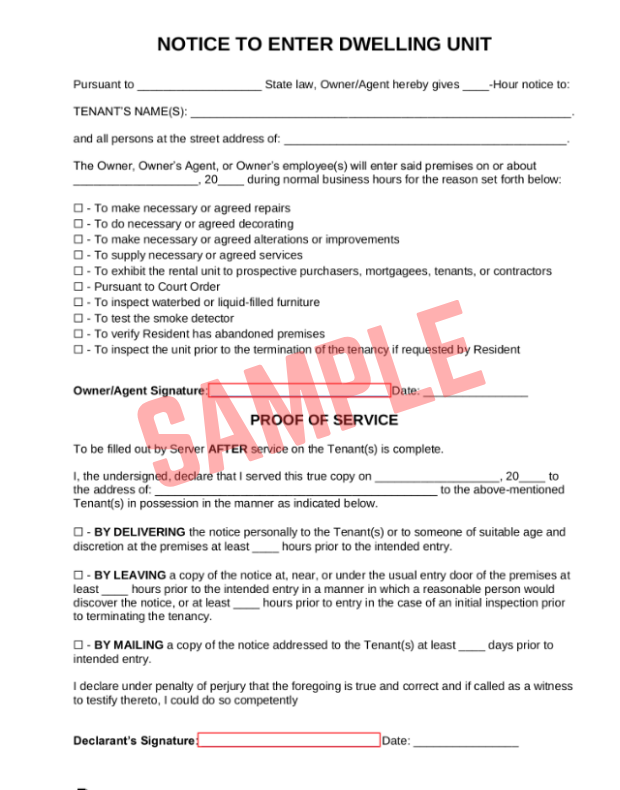
Every formal notice to enter should contain specific information to be legally sound and easily understood by the tenant. This includes identifying information for both the landlord and tenant, the precise location of the rental property, and a clear statement of intent. Ambiguity in any of these areas can lead to confusion or invalidate the notice.
It is paramount to state the exact date and a reasonable time window for the intended entry, giving the tenant sufficient opportunity to prepare or be present if they choose. The reason for entry must also be explicitly stated, aligning with the legally permissible grounds discussed earlier. Providing landlord contact information for questions or rescheduling further enhances professionalism and communication.
- **Date of Notice:** When the notice was prepared and sent.
- **Tenant’s Name(s):** All tenants listed on the lease.
- **Property Address:** The full address of the rental unit.
- **Date of Entry:** The specific date(s) the landlord intends to enter.
- **Time of Entry:** A reasonable window (e.g., “between 9:00 AM and 1:00 PM”).
- **Reason for Entry:** A clear and concise explanation (e.g., “to perform routine maintenance on the HVAC system,” “to conduct an annual smoke detector inspection”).
- **Landlord/Agent Contact Information:** A phone number or email for tenant inquiries.
- **Signature:** The landlord’s or authorized agent’s signature.
Delivering The Notice Legally And Professionally
The method of delivery for your notice is almost as important as its content. Most state laws specify acceptable methods, which often include hand-delivery to the tenant, mailing via first-class mail, or posting the notice conspicuously on the main entry door. Some jurisdictions may also permit email if it’s explicitly agreed upon in the lease agreement.
Using certified mail with a return receipt requested provides undeniable proof that the tenant received the notice, which can be invaluable in case of future disputes. Always retain a copy of the notice for your records, along with any proof of delivery. Maintaining a professional and respectful tone throughout the communication process, regardless of the delivery method, reinforces good landlord-tenant relations.
Customizing Your Notice For Specific Situations
While a general notice to enter rental property template provides a solid foundation, tailoring the notice to the specific situation is essential. For instance, a notice for a routine annual inspection might have slightly different wording than a notice for pest control or showing the unit to prospective tenants. The core elements remain, but the details should reflect the precise need for entry.
For repairs, specify the nature of the repair if possible. When showing the property, you might include a note about the expected duration of visits. Being specific helps manage tenant expectations and ensures they are fully informed about what to anticipate. Always ensure your customized notice still adheres to all local and state legal requirements.
Sample Notice To Enter Rental Property Template
Below is a general sample notice to enter rental property template that landlords can adapt for their specific needs. Remember to fill in the bracketed information with your details and consult local regulations to ensure full compliance. This template covers the essential legal and practical elements for a standard entry notification.
This sample is intended as a guide and should be reviewed against your state and local landlord-tenant laws. Depending on your jurisdiction, additional clauses or specific phrasing might be required. Always prioritize legal accuracy over general convenience.
[Your Full Name/Company Name]
[Your Address]
[Your City, State, Zip Code]
[Your Phone Number]
[Your Email Address]
Date: [Current Date]
Tenant Name(s): [Tenant’s Full Name(s)]
Property Address: [Rental Property Street Address]
Unit Number (if applicable): [Unit #]
Subject: Notice of Intent to Enter Rental Property
Dear [Tenant’s Full Name(s)],
Please be advised that pursuant to the terms of your lease agreement and [State/Local Law Governing Landlord Entry, e.g., ‘your state’s landlord-tenant laws’], I/we intend to enter your rental property located at the address above.
The purpose of this entry is:
- [Clearly state the specific reason, e.g., “To perform routine maintenance and inspection of the HVAC system.”]
- [Or, “To conduct a required annual smoke detector and carbon monoxide detector check.”]
- [Or, “To assess damage reported in your recent maintenance request regarding a leaky faucet in the bathroom.”]
- [Or, “To show the property to prospective tenants/buyers, as your lease agreement permits.” (If applicable, state “Accompanied by a real estate agent.”)]
The entry is scheduled for:
Date of Entry: [Month Day, Year]
Time of Entry: [Start Time, e.g., 10:00 AM] to [End Time, e.g., 12:00 PM] (a two-hour window is recommended)
We will do our best to be prompt and efficient during our visit. You are welcome to be present during this time, though it is not required. If this date or time presents a significant conflict, please contact us immediately to discuss alternative arrangements. Please note that rescheduling may not always be possible, especially for urgent matters.
If you have any questions or require further clarification, please do not hesitate to contact us at the phone number or email provided above.
Thank you for your cooperation and understanding.
Sincerely,
[Your Signature]
[Your Printed Name/Company Name]
[Your Title, e.g., Landlord/Property Manager]
Maintaining a positive landlord-tenant relationship hinges on clear communication and mutual respect for rights and responsibilities. By consistently using a properly structured notice for property access, landlords demonstrate professionalism and uphold their legal obligations. This proactive approach minimizes misunderstandings and reinforces trust, contributing to a smoother tenancy for everyone involved.
Always ensure that any notice to enter rental property template you use is fully compliant with your local and state laws. While this guide provides comprehensive information, legal requirements can vary significantly by jurisdiction. When in doubt, consulting with a legal professional specializing in landlord-tenant law can provide invaluable peace of mind and help avoid potential legal pitfalls. A little diligence upfront can prevent major issues down the road.