In today’s evolving care landscape, many individuals choose the flexibility and autonomy of becoming a self-employed carer. This growing trend empowers dedicated professionals to offer personalized support directly to clients. However, with independence comes the crucial need for clear, legally sound agreements to protect both the carer and the client. A well-crafted self employed carer contract template is not just paperwork; it’s the foundation of a professional, transparent, and mutually beneficial relationship.
This comprehensive guide will walk you through everything you need to know about creating and utilizing an effective self-employed carer contract. We will explore its essential components, legal considerations, and practical tips to ensure clarity, prevent misunderstandings, and safeguard all parties involved. By the end, you’ll understand how to confidently establish your professional caregiving services with a robust agreement.
Why a Self-Employed Carer Contract is Essential
Entering into a caregiving arrangement, whether as a self-employed carer or a client, is a significant step. A formal contract serves as a vital tool to clearly define the terms of the engagement. It outlines responsibilities, expectations, and agreed-upon conditions, leaving no room for ambiguity.
Without a written agreement, both parties are vulnerable to misunderstandings, disputes, and potential legal complications. A contract establishes a professional framework, fostering trust and ensuring that everyone involved is on the same page from the outset. This protects the self-employed carer’s rights and sets clear boundaries for the client and their family.
Protecting Both Carer and Client Interests
For the self-employed carer, a contract provides legal protection regarding payment, working hours, and the scope of duties. It ensures that services are compensated fairly and on time, and that the carer is not expected to perform tasks outside the agreed-upon responsibilities.
For clients and their families, the contract offers peace of mind by clearly detailing the services to be provided, the schedule, and emergency procedures. It helps manage expectations and ensures that the care recipient receives the specific support they need, while also establishing protocols for situations like illness or holiday cover.
Clarifying Employment Status and Tax Obligations
A crucial aspect of a self-employed carer contract is the explicit definition of the carer’s independent contractor status. This distinction is vital for tax purposes and clarifies that the client is not an employer, avoiding employer-related responsibilities like payroll taxes and workers’ compensation.
The contract should state that the self-employed carer is responsible for their own taxes (income tax, National Insurance), insurance, and business expenses. This helps both parties understand their financial obligations and prevents future disagreements with tax authorities.
Key Elements of a Robust Carer Agreement
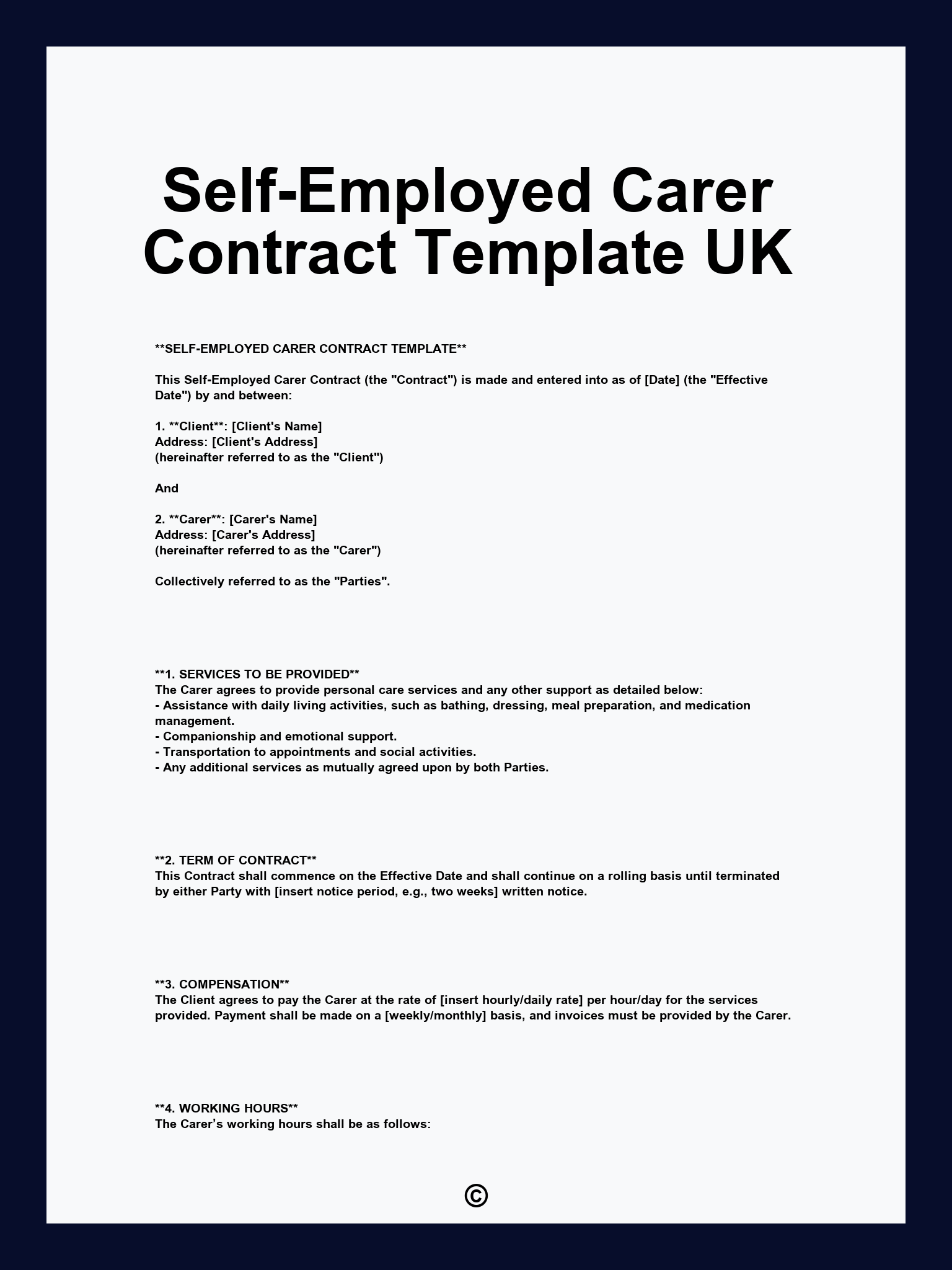
A comprehensive self-employed carer contract template should include several crucial sections to be legally sound and effective. These elements ensure that all aspects of the caregiving arrangement are clearly documented and agreed upon by both the self-employed carer and the client.
Tailoring these sections to each unique care situation is essential. While templates provide a solid starting point, customization is key to reflecting the specific needs and agreements of the parties involved.
Defining the Scope of Services and Duties
This section is paramount. It must explicitly list all agreed-upon caregiving tasks and services, such as personal care, meal preparation, medication management, light housekeeping, transportation, and companionship. Conversely, it’s also beneficial to list tasks that are *not* included to prevent scope creep.
Being highly specific here avoids misunderstandings about the carer’s role. For example, instead of “housekeeping,” specify “light tidying of common areas and laundry once a week.” This clarity protects both parties and sets realistic expectations.
Payment Terms, Schedule, and Reimbursements
The contract must clearly outline the carer’s hourly rate or fixed fee, the payment frequency (e.g., weekly, bi-weekly, monthly), and the preferred payment method. It should also address rates for bank holidays, overtime, or complex care, if applicable.
Provisions for reimbursement of out-of-pocket expenses, such as mileage for transport or costs for groceries, should also be detailed. This ensures the carer is properly compensated for all expenditures related to their duties.
Working Hours, Breaks, and Termination Clauses
The agreed-upon schedule, including specific days, times, and the duration of visits, must be documented. Details regarding breaks, rest periods, and how holiday or sick leave will be managed are also vital for the self-employed carer.
A clear termination clause is essential, outlining the notice period required by both parties to end the agreement. It should also specify conditions under which the contract might be terminated immediately, such as breach of terms.
Navigating Legalities and Compliance
Operating as a self-employed carer involves adherence to various legal requirements and best practices. A robust self employed carer contract template will integrate these considerations, ensuring compliance and minimizing risks for both the carer and the client. Understanding these legal aspects is fundamental to professional caregiving.
It’s important to remember that while a template is a valuable starting point, legal advice from a solicitor specializing in elder law or employment law is often recommended to ensure the contract is fully compliant with local regulations and tailored to specific circumstances.
Understanding Independent Contractor Status
The distinction between an independent contractor and an employee is critical. An independent contractor has more control over how and when they perform their services, uses their own equipment, and is responsible for their own taxes and insurance. Clients hiring self-employed carers are generally not responsible for employee benefits, tax withholdings, or workers’ compensation.
Care must be taken to ensure the working relationship truly reflects an independent contractor status, as misclassification can lead to significant legal and financial penalties for the client. The contract should explicitly state the independent contractor relationship.
Insurance, Confidentiality, and Data Protection
Self-employed carers should maintain appropriate insurance coverage, such as public liability insurance, to protect against claims of injury or damage. The contract can stipulate this requirement, offering reassurance to clients.
Confidentiality clauses are crucial to protect the client’s sensitive personal, medical, and financial information. Adherence to data protection regulations, like GDPR in the UK, should also be explicitly stated.
Health & Safety and Emergency Protocols
The contract should include provisions for health and safety, outlining how risks will be assessed and managed within the care environment. It should also detail emergency procedures, including who to contact in medical emergencies and how to access relevant health information.
Having clear guidelines in place ensures that the self-employed carer can act effectively and responsibly in unforeseen circumstances, safeguarding the well-being of the care recipient. Regular review of these protocols is also important.
Customizing Your Carer Contract Template
While a general self employed carer contract template provides a foundational structure, effective care agreements are always tailored to the unique needs of each client and carer. Personalization ensures that the document accurately reflects the specific care plan and working relationship.
Failing to customize can lead to ambiguities or omissions that might cause conflict down the line. Investing time in adapting the template guarantees clarity and mutual understanding for all involved parties.
Personalizing the Care Plan
No two care situations are exactly alike. The contract should detail the specific care plan, listing daily routines, preferences, and any particular support required. This might include dietary needs, mobility assistance, or engagement in specific activities.
This detailed customization ensures the carer delivers truly person-centered care. It also provides a clear reference point for both the carer and the client to review and adjust as needs evolve over time.
Adjusting for Live-in vs. Hourly Care
The nature of caregiving – whether it’s live-in or hourly support – significantly impacts contract terms. A live-in carer contract template would need additional clauses covering room and board provisions, rest periods within the client’s home, house rules, and expectations regarding personal space and privacy.
For hourly care, the emphasis will be more on precise scheduling, travel time between clients, and perhaps clauses related to minimum visit lengths or cancellation policies. Each model requires specific attention to detail in the agreement.
Incorporating Review and Amendment Procedures
Care needs can change, so the contract should include a clear process for reviewing and amending the agreement. This might specify annual reviews or trigger points for reassessment, such as a significant change in the client’s health.
Any modifications should always be made in writing and signed by both the self-employed carer and the client, ensuring that all changes are officially documented and agreed upon. This flexibility maintains the contract’s relevance and effectiveness over time.
Comparison of Caregiving Arrangement Types
Understanding the different types of caregiving arrangements helps clarify why a specific self employed carer contract template is vital for independent professionals. The table below highlights key distinctions between hiring an agency, directly employing a carer, and engaging a self-employed carer.
| Feature | Care Agency | Directly Employed Carer | Self-Employed Carer |
|---|---|---|---|
| Employer/Contracting Party | Client contracts with agency | Client is the employer | Client contracts directly with carer |
| Worker Status | Carer is an agency employee | Carer is a household employee | Carer is an independent contractor |
| Payroll & Taxes | Handled by agency | Client responsible (PAYE, NI) | Carer responsible for own taxes (Self Assessment) |
| Insurance | Provided by agency | Client may need Workers’ Comp/Liability | Carer responsible for own Public Liability |
| Training & Supervision | Provided by agency | Client responsible for oversight | Carer responsible for own professional development |
| Contract Type | Service agreement with agency | Employment contract | Independent Contractor Agreement / Self Employed Carer Contract Template |
| Flexibility | Varies by agency, less direct control | More control, but higher administrative burden | High flexibility, direct communication |
| Backup Care | Usually arranged by agency | Client responsible | Carer may arrange or client responsible for finding cover |
Expert Tips for Using Your Self-Employed Carer Contract Template
Developing a strong self employed carer contract template is only the first step. Effectively utilizing and managing this document requires practical strategies to ensure ongoing clarity and legal compliance. These tips will help both self-employed carers and clients maintain a professional and harmonious relationship.
- Always put it in writing: A verbal agreement is harder to enforce and can lead to misunderstandings. Ensure all terms are clearly written and signed by both parties before care begins.
- Be specific with duties: Ambiguity in the scope of work is a primary cause of disputes. Detail every task, including any limitations or exclusions. This manages expectations effectively.
- Discuss payment upfront: Clearly establish the hourly rate, payment schedule, and how expenses will be handled. Transparent financial terms prevent awkward conversations later.
- Review regularly: Care needs and circumstances can change. Schedule periodic reviews (e.g., annually) of the contract to ensure it remains accurate and relevant.
- Seek legal advice for complex cases: While templates are helpful, complex care situations or significant financial arrangements may benefit from review by an elder law attorney to ensure full legal compliance.
- Maintain detailed records: Keep accurate logs of hours worked, services provided, and any reimbursed expenses. This documentation is crucial for accountability and tax purposes.
- Address emergency protocols: Clearly outline steps to take in an emergency, including contact persons, medical information access, and any specific instructions.
- Ensure appropriate insurance: Self-employed carers must have their own public liability insurance. Clients should confirm this is in place for their protection.
- Include a dispute resolution process: A clause outlining how disagreements will be handled (e.g., mediation) can save time and stress if issues arise.
A well-drafted and properly utilized self employed carer contract template is indispensable for any independent care provider. It establishes clear boundaries, protects legal rights, and fosters a professional relationship built on transparency and mutual understanding. This commitment to formal agreements elevates the quality and reliability of self-employed care services, benefiting everyone involved.
By taking the time to create a comprehensive and customized contract, self-employed carers can confidently offer their valuable services, while clients can receive the peace of mind that comes with a clearly defined and legally sound care arrangement. Embrace the power of a professional contract to secure your caregiving future.