Navigating challenging living situations, especially when an occupant overstays their welcome, can be incredibly stressful and emotionally taxing. Whether it’s an extended family member, a former partner, or a friend who has become an unwanted guest, regaining control of your property requires a clear, legal approach. Understanding how to formally address these situations is crucial for protecting your rights and property. This article provides essential guidance and an “unwanted guests family member roommate eviction notice template” to help you through this difficult process.

Addressing these delicate dynamics legally can seem daunting, but having the right documentation is key. We’ll explore the distinctions between different types of occupants, the legal framework surrounding their removal, and provide a practical unwanted guests family member roommate eviction notice template. Our goal is to empower property owners and tenants with the knowledge to handle these sensitive situations professionally and effectively.
Navigating Difficult Occupancy Situations
Dealing with an individual who has become an unwelcome presence in your home requires careful consideration and adherence to proper procedures. These situations can range from a guest who simply won’t leave to a family member or former roommate contributing to a hostile environment. Many property owners and primary tenants face confusion about their rights and the legal steps required to remove such occupants.
It is paramount to approach these matters with formal documentation to establish a clear timeline and legal standing. Relying on verbal agreements or repeated requests can often complicate matters further down the line. A written notice serves as undeniable proof of communication and intent, which is vital should legal action become necessary.
Distinguishing Between Occupants and Tenants
The legal process for removing someone from your property largely depends on their legal status. A “tenant” typically has a lease agreement, pays rent, and possesses clearly defined legal protections under landlord-tenant laws. An “occupant” or “guest,” however, might not have a formal agreement or pay rent, yet they can still gain certain rights if they’ve established residency.
Even without a formal lease, someone living in your home for an extended period might be considered a “tenant at will” or “licensee.” This distinction often means you cannot simply change the locks or force them out without due process. Local laws determine what constitutes residency and the required notice period for removal.
The Importance of a Formal Notice
Issuing a formal written notice is the first critical step in legally removing an unwanted individual from your premises. This document clearly communicates your expectations, the reason for their departure, and a deadline for them to vacate. It serves as a foundational piece of evidence if the situation escalates to court.
A well-crafted notice helps prevent misunderstandings and provides a clear record of your efforts to resolve the situation amicably. It also demonstrates your awareness of legal protocols, which can strengthen your position. Always retain a copy of the notice and proof of delivery, such as certified mail receipts.
Crafting Your Unwanted Guests Family Member Roommate Eviction Notice Template
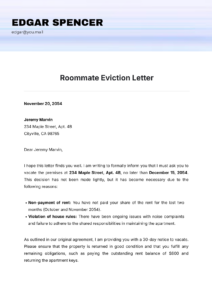
When creating a notice to vacate for an unwanted guest, family member, or roommate, precision and clarity are essential. While it might not always be a formal “eviction notice” in the traditional sense, especially for non-tenants, it serves the same purpose of initiating the legal process of removal. The goal is to provide a comprehensive, legally sound document that leaves no room for misinterpretation.
An effective notice should clearly state who it is addressed to, the property in question, the reason for the notice, and the deadline for vacating. It also needs to inform the recipient of potential consequences if they fail to comply. Utilizing a structured unwanted guests family member roommate eviction notice template ensures you cover all necessary points.
Here are the essential components to include in your notice:
- Date: The exact date the notice is issued.
- Recipient’s Name and Address: Clearly identify the individual you are serving the notice to.
- Property Address: The full address of the property they must vacate.
- Reason for Notice: A brief, clear explanation (e.g., “Guest overstaying,” “Violation of house rules,” “Termination of living arrangement”).
- Vacate Date/Deadline: The specific date by which they must move out. This must comply with local laws (e.g., 30-day notice).
- Statement of Intent: Clearly state that failure to vacate will result in further legal action.
- Signatures: Your signature and printed name, along with the date.
- Delivery Method: Note how the notice was served (e.g., personally delivered, certified mail).
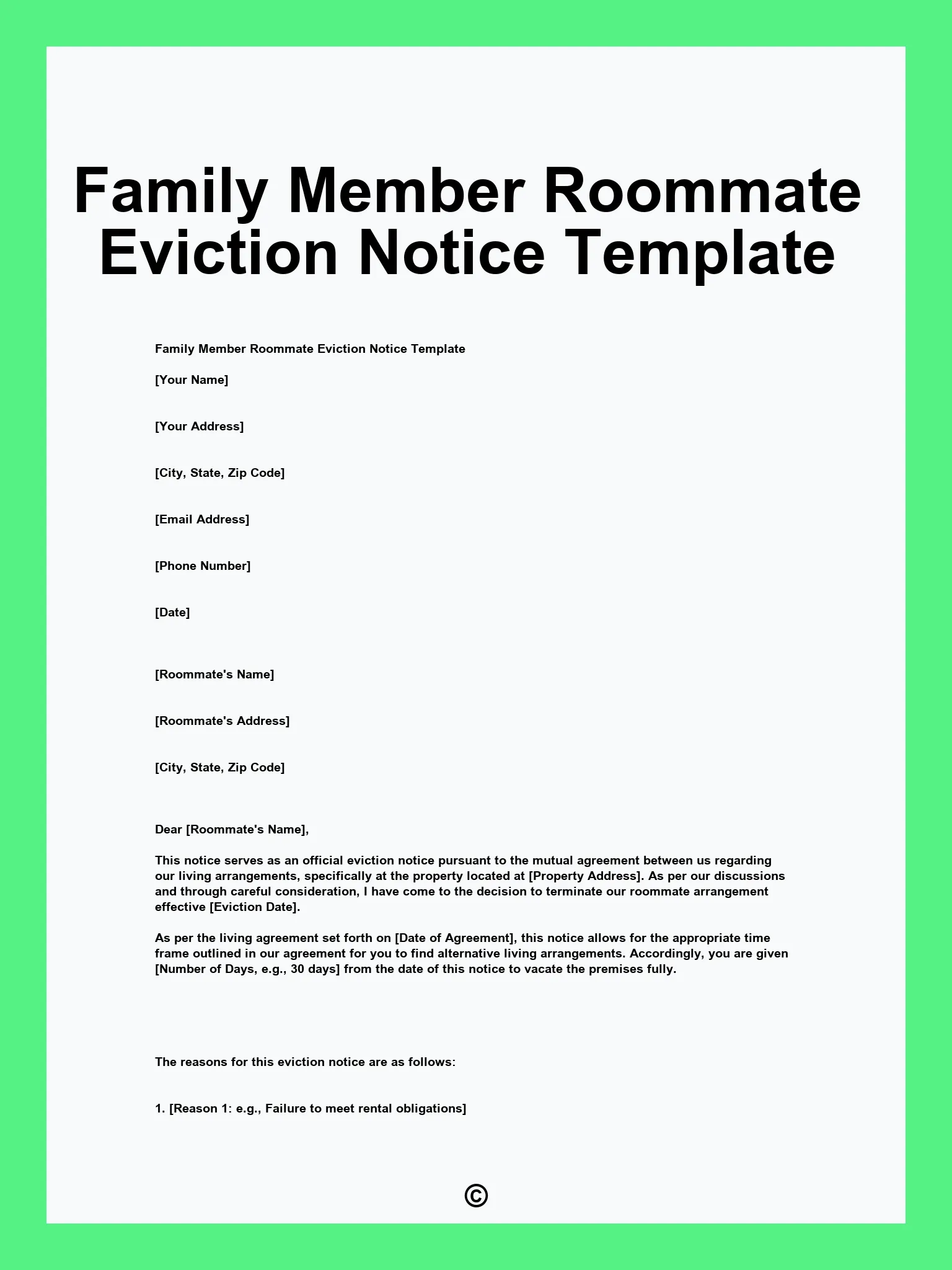
Here is a sample unwanted guests family member roommate eviction notice template to guide you:
[Your Full Name]
[Your Address]
[Your City, State, Zip Code]
[Your Phone Number]
[Your Email Address]

[Date]

[Recipient's Full Name]
[Recipient's Address, if different, or "Current Occupant"]
[Recipient's City, State, Zip Code]

Subject: Notice to Vacate Premises

Dear [Recipient's Full Name],

This letter serves as a formal notice that you are required to vacate the premises located at [Full Property Address] by no later than [Specific Date, e.g., Month Day, Year]. This date provides you with [Number] days' notice, as required or advised by local regulations and in accordance with our previous discussions/arrangements.

The reason for this notice to vacate is [Clearly and concisely state the reason, e.g., "the termination of your guest privileges," "violation of our shared living agreement," or "the need for the property for my own use"]. This decision is final, and your cooperation in adhering to this timeline is expected.

Please ensure all your personal belongings are removed from the property by the specified vacate date. Failure to vacate the premises by [Specific Date] may result in legal action, including but not limited to the initiation of formal eviction proceedings through the appropriate court system. This could lead to further legal and financial consequences.

We encourage you to make arrangements for your relocation promptly.

Sincerely,

[Your Signature]
[Your Printed Full Name]
Remember to customize this unwanted guests family member roommate eviction notice template with all pertinent details specific to your situation. Ensure that the vacate date provides adequate notice as stipulated by your local laws, which can vary significantly by state, county, or even city.
Legal Considerations and Next Steps
Understanding the legal landscape surrounding occupant removal is critical. While a written notice is a strong initial step, it is imperative to be aware of state and local landlord-tenant laws. These regulations often dictate minimum notice periods, acceptable reasons for removal, and the proper procedure for serving such notices. Ignoring these laws can lead to significant delays and legal complications.
Many jurisdictions have specific rules for removing non-tenants, sometimes referred to as “unlawful detainer” actions. These processes can differ from standard tenant evictions, but they still require a formal legal approach. Seeking advice from a qualified legal professional is highly recommended to ensure compliance and protect your rights throughout the process.
State and Local Laws Governing Eviction
Eviction laws are primarily state and local matters, meaning what is permissible in one city might be illegal in another. Some areas, for example, have stricter tenant protection laws, even for those without formal leases. These laws can influence the length of notice required and the specific language that must be included in any official communication.
Always research your specific state and local ordinances before drafting and serving any notice. Information is often available through your local housing authority, court clerk’s office, or state bar association websites. Proper compliance with these regulations is non-negotiable for a successful resolution.
Seeking Professional Legal Advice
For complex situations involving uncooperative individuals, potential threats, or significant property damage, consulting an attorney specializing in landlord-tenant or property law is invaluable. A legal professional can review your specific circumstances, advise on the best course of action, and help prepare or review your unwanted guests family member roommate eviction notice template. They can also represent you in court if formal proceedings become necessary.
An attorney can provide guidance on potential pitfalls, ensure you avoid any actions that could be construed as illegal eviction, and help navigate the emotional challenges of removing someone from your home. Investing in legal counsel early can save you considerable time, stress, and expense in the long run.
Taking decisive, legally sound action is paramount when an unwanted guest, family member, or roommate disrupts your living situation. A carefully prepared “unwanted guests family member roommate eviction notice template” serves as your initial line of defense, providing clarity and establishing a formal record of your intent. Remember that local laws vary, making it crucial to tailor any template to fit specific regulations and circumstances.
By arming yourself with knowledge and utilizing appropriate documentation, you can navigate these challenging personal and legal waters effectively. Protect your property rights and ensure a peaceful living environment by taking informed steps, seeking legal counsel when needed, and acting with precision and adherence to the law.