The modern music industry presents a complex landscape for artists seeking to turn their passion into a career. Navigating record deals, publishing agreements, and various revenue streams can be daunting. One of the most prevalent and often misunderstood agreements is the “360 deal,” a comprehensive contract designed to encompass an artist’s entire career.
Understanding the intricacies of such a deal is paramount for any musician looking to sign on the dotted line. This article will demystify 360 deals, explore their core components, and guide you through the process of developing a robust 360 deal music contract template that can serve as a foundation for your negotiations and protect your interests.
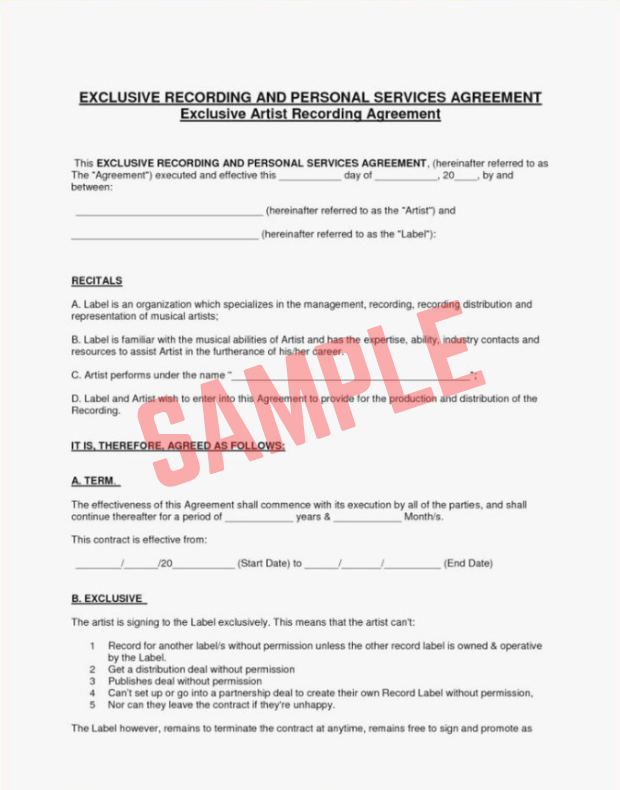
Whether you’re an emerging artist, an independent label, or just curious about music business law, preparing with a solid understanding and a practical template is your first step towards a fair and beneficial partnership in the dynamic music world.
What Exactly Is a 360 Deal in Music?
A 360 deal, also known as an “all-rights” deal, is a recording contract where the record label earns a percentage of various income streams beyond traditional record sales. Unlike older models that primarily focused on music royalties, these comprehensive agreements extend to areas like touring, merchandise, publishing, endorsements, and even acting or branding deals.
This holistic approach means the label invests more heavily in an artist’s overall career development. In return for this broader support and financial backing, they seek a share of all revenue generated by the artist. This model emerged as a direct response to declining album sales and the shift towards digital music consumption, forcing labels to find new ways to recoup their investments.
Key Components of a Modern 360 Deal
A typical 360 deal encompasses several critical revenue streams that labels seek to share. These usually include income from the sale of recorded music, whether physical or digital. However, the scope extends far beyond this traditional source.
Artists typically grant the label a percentage of their earnings from live performances, including ticket sales and appearance fees. Merchandising, such as t-shirts, posters, and other branded items, also falls under the umbrella. Furthermore, a share of publishing royalties, derived from songwriting and composition, is often included.
Beyond these, labels may also take a cut from endorsement deals, sponsorships, and even income from film, television, or book deals involving the artist’s persona. The specific percentages can vary widely, but non-record revenue splits often range from 10% to 25% of the artist’s net income from these sources.
Why Record Labels Offer 360 Deals
Record labels moved towards 360 deals primarily due to the dramatic changes in the music industry’s economic landscape. With physical album sales significantly declining over the past two decades and digital streaming offering lower per-unit returns, labels needed new avenues for profitability.
These deals allow labels to diversify their income sources and better manage the financial risks associated with artist development. By sharing in a wider range of an artist’s revenue, labels can justify larger advances, more extensive marketing campaigns, and greater long-term investment in an artist’s career. It’s a strategy to maximize return on their substantial investment.
Artist Perspectives and Negotiations
From an artist’s perspective, 360 deals come with both potential benefits and significant drawbacks. On the positive side, artists can gain access to substantial financial backing, marketing expertise, and comprehensive career development resources they might not otherwise afford.
The label’s broad involvement can provide a strong foundation for launching and sustaining a career. However, the downside is a significant reduction in an artist’s overall earning potential, as a larger portion of their hard-earned income is shared. Artists also risk giving up more creative or business control.
Therefore, negotiation is absolutely crucial. Artists should always seek to limit the scope of the label’s involvement, cap percentages, and ensure transparent accounting. Understanding every clause before signing is non-negotiable for a fair agreement.
Crafting Your Own 360 Deal Music Contract Template
Creating or reviewing a 360 deal music contract template is a vital step for any artist or small label. A well-structured template provides a clear framework, ensures all essential clauses are considered, and helps you understand the commitments involved. It acts as a guide during discussions, highlighting areas for negotiation.
Having a template empowers you to approach discussions with confidence, knowing the key legal and financial aspects that need to be addressed. It’s not just a document; it’s a strategic tool for safeguarding your artistic and financial future.
Essential Clauses for Your Template
A comprehensive 360 deal music contract template should include several fundamental clauses. These provisions define the scope of the agreement, the responsibilities of each party, and how revenues will be shared. Without these, the contract lacks clarity and enforceability.
Key clauses to include are:
- Term: Defines the duration of the agreement, often tied to a number of albums or years.
- Territory: Specifies the geographical regions where the contract applies (e.g., worldwide).
- Artist Services: Outlines the artist’s obligations, such as recording, touring, and promotional activities.
- Label Services: Details the label’s commitments, including funding, marketing, and distribution.
- Compensation and Royalties: Specifies advances, recording budgets, and royalty rates for traditional music sales.
- Revenue Splits: Crucially, this section defines the percentages the label will receive from non-record income streams like touring, merchandise, and publishing.
- Accounting and Audits: Establishes how financial statements will be provided and the artist’s right to audit those statements.
- Intellectual Property: Addresses ownership and licensing of copyrights, trademarks, and master recordings.
- Dispute Resolution: Outlines processes for resolving conflicts, often including mediation or arbitration.
- Termination: Details conditions under which either party can end the agreement early.
Each of these clauses requires careful thought and tailoring to the specific circumstances of the deal.
Customizing Your Template for Specific Needs
While a general 360 deal music contract template provides a strong foundation, customization is key. Every artist and every deal is unique. An independent artist signing with a smaller label will have different needs and leverage than an established artist negotiating with a major record company.
Consider the specific revenue streams relevant to the artist’s career. If an artist primarily earns from touring, ensure the touring clause is meticulously detailed. If they have strong branding potential, focus on endorsements. Tailoring the language to reflect specific career goals and existing assets makes the template far more effective and protective.
Seeking Legal Counsel for Your Agreement
Even with the most meticulously crafted 360 deal music contract template, professional legal advice is indispensable. Music attorneys specialize in these complex agreements and can identify hidden pitfalls or unfavorable terms that an artist might overlook. They bring years of experience navigating the nuances of industry contracts.
A lawyer can help negotiate more favorable terms, clarify ambiguous language, and ensure the contract aligns with an artist’s long-term career objectives. Investing in legal counsel from the outset can save artists significant financial and legal headaches down the road. It’s an essential step to secure a fair and equitable partnership.
Sample 360 Deal Music Contract Template Clauses
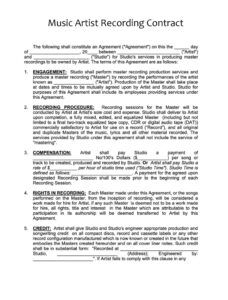
To give you a clearer idea of what a 360 deal music contract template might look like, here are simplified examples of key clauses. These are for illustrative purposes only and should not be used as a substitute for professional legal advice.
Article 1: Parties and Term of Agreement
This Agreement is made effective as of [Date], by and between [Artist Name/Legal Entity] (“Artist”) and [Label Name/Legal Entity] (“Label”).
The initial term of this Agreement (“Initial Term”) shall commence on the Effective Date and continue for a period of [Number] years or until the delivery and commercial release of [Number] album(s), whichever occurs later. The Label shall have [Number] options to extend the Term for additional periods.
Article 2: Artist Services and Obligations
Artist agrees to exclusively provide their services as a recording and performing artist to Label throughout the Term. This includes, but is not limited to, writing, recording, producing, and delivering master recordings of commercially acceptable quality as reasonably requested by Label.
Artist further agrees to participate in all reasonable promotional activities, including interviews, public appearances, and social media engagement, and to undertake touring and live performances as mutually agreed upon by both parties.
Article 3: Label Services and Obligations
Label agrees to provide reasonable financial investment for the production, marketing, and distribution of Artist’s recorded music. This includes funding for recording budgets, marketing campaigns, and securing distribution channels.
Label shall also use commercially reasonable efforts to develop and exploit Artist’s career in all ancillary revenue streams, including but not limited to, securing touring opportunities, merchandise deals, and brand endorsements.
Article 4: Revenue Streams and Splits
4.1 Recorded Music Royalties: Artist shall receive a royalty of [Percentage]% of the net revenue actually received by Label from the sale and licensing of master recordings, after recoupment of recording costs and advances.
4.2 Ancillary Revenue Share: Label shall be entitled to [Percentage]% of the Artist’s Gross Income (as defined herein) derived from the following sources:
- Live Performances (touring income, appearance fees)
- Merchandise Sales (physical and digital)
- Music Publishing Income (songwriter and publisher shares, after deducting direct costs)
- Endorsement and Sponsorship Deals
- Synchronization and Master Use Licensing (beyond standard record royalties)
Artist shall provide full transparency regarding all income and expenses related to these ancillary streams.
Article 5: Intellectual Property
Artist hereby grants to Label, during the Term and throughout the world, an exclusive license to use Artist’s name, likeness, trademarks, and biographical material for the purpose of marketing, promoting, and exploiting Artist’s music and career. All copyrights in master recordings created during the Term shall be owned by [Artist/Label], with appropriate licensing provisions detailed herein.
Article 6: Governing Law
This Agreement shall be governed by and construed in accordance with the laws of the State of [State], without regard to its conflict of laws principles.
Navigating the complexities of a 360 deal in the music industry requires both a keen understanding of its components and a proactive approach to contract negotiation. While these comprehensive agreements offer significant support and investment from labels, they also demand a substantial share of an artist’s diverse income streams.
Therefore, having a well-researched 360 deal music contract template as a starting point is invaluable for any artist or independent entity. It serves as a roadmap, ensuring critical clauses are addressed and paving the way for a more balanced and transparent discussion. Remember, no template replaces the expertise of a professional, but it certainly enhances your preparedness.
Ultimately, your career deserves meticulous care. Always consult with an experienced entertainment attorney before signing any contract to ensure your interests are fully protected and the terms align with your artistic and financial goals. A solid legal foundation is the best rhythm for long-term success.