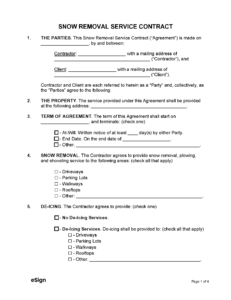
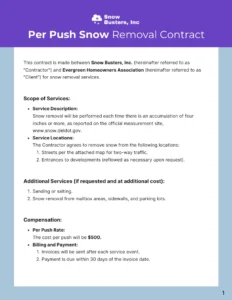
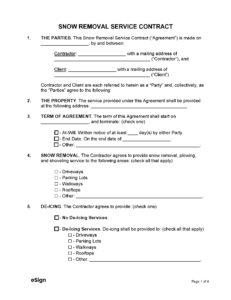
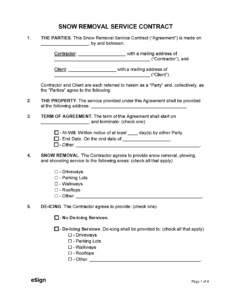
When the first frost hits and the leaves start to disappear from the trees, property owners and service providers alike begin to feel the pressure of the upcoming winter season. Preparing for the snow is not just about getting the machinery ready or buying enough salt; it is about ensuring that expectations are clearly defined between all parties involved. Using a seasonal snow plow contract template can make this process significantly smoother by providing a solid foundation for your professional relationship. Instead of scrambling when the first blizzard hits, having a documented plan allows everyone to move forward with confidence and clarity.
A well-drafted agreement serves as a roadmap for the entire winter season. It helps prevent misunderstandings that often arise during the chaos of a heavy snowfall when communication might be difficult. For contractors, it ensures they are paid fairly for their hard work and equipment wear. For property owners, it provides the peace of mind that their driveways or parking lots will be cleared promptly and safely. Without a formal document, simple details like where to pile the snow or when the plow should arrive can become major points of contention.
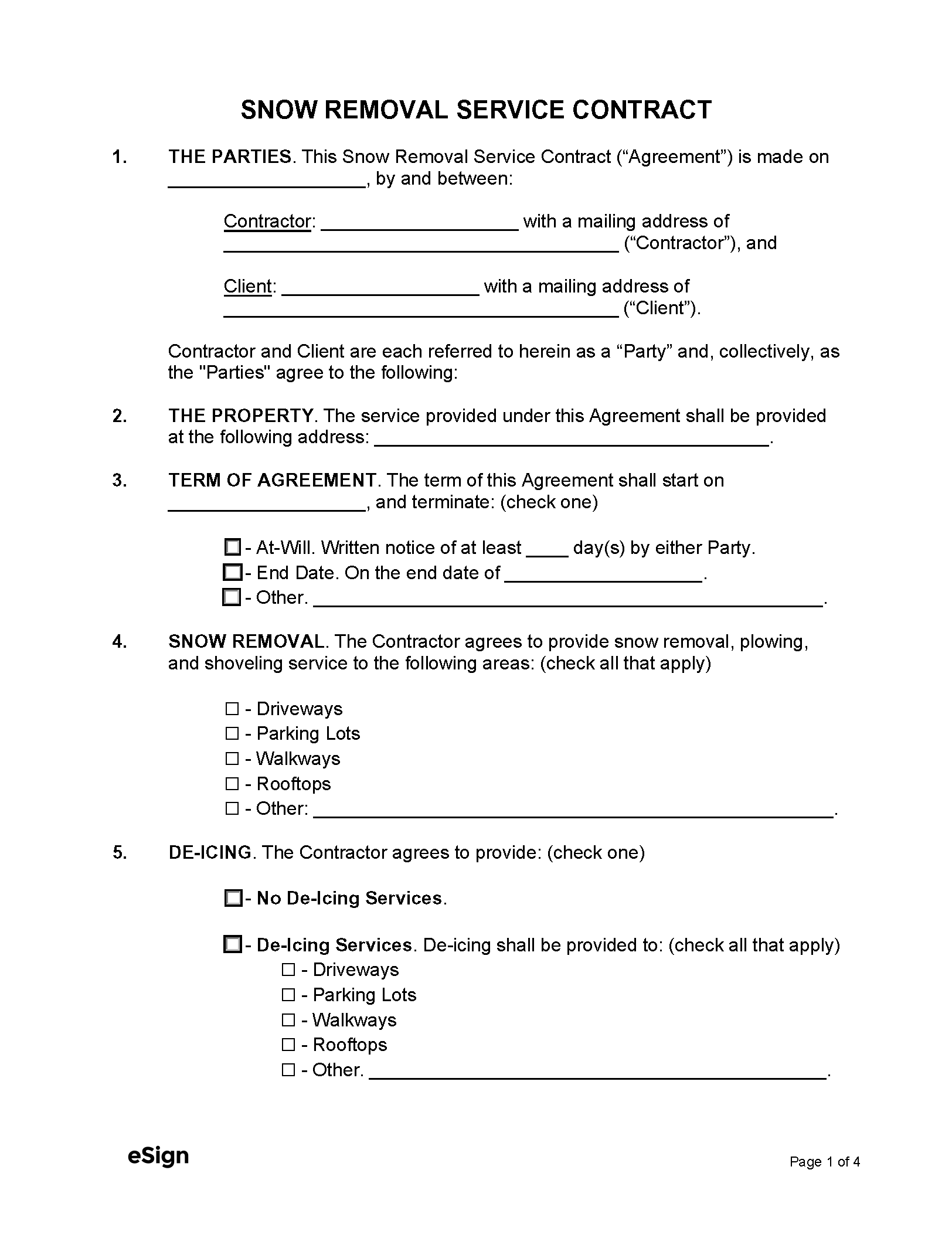
In the world of snow removal, being proactive is always better than being reactive. Setting up your paperwork during the late summer or early autumn gives you plenty of time to negotiate terms and walk the property while the ground is still visible. This level of preparation sets a professional tone for the entire season. Whether you are a homeowner looking for reliable help or a business owner managing multiple accounts, a clear contract is the most important tool in your winter kit, aside from the plow itself.
Key Elements of a Professional Snow Removal Agreement
The first thing to consider when setting up your agreement is the specific scope of work. This section should detail exactly which areas need to be cleared, such as main driveways, side walkways, or loading docks. It is often helpful to include a physical map or a clear description of the property boundaries to avoid any confusion. If there are certain areas where snow should not be piled, such as near fire hydrants or delicate landscaping, these must be explicitly mentioned to prevent property damage during the high-pressure environment of a storm.
Another critical component is the accumulation trigger. This defines exactly how much snow must fall before the contractor is required to show up. Some clients prefer a zero-tolerance policy where any amount of snow is cleared immediately, while others might wait for two or four inches to accumulate. Clearly defining this threshold ensures that the service provider knows when to mobilize and the client knows when to expect them. This section should also address what happens during a prolonged storm that lasts for multiple days and whether the contractor will make multiple visits.
Liability and insurance are topics that no one likes to think about until something goes wrong, but they are essential for any seasonal snow plow contract template. The agreement should clearly state that the contractor carries the necessary insurance to cover potential damage to the property or injuries that might occur during the process. Similarly, it should outline the responsibilities of the property owner, such as keeping the area clear of obstacles like vehicles or children’s toys that could be hidden under the snow and damaged by heavy machinery.
Understanding Different Payment Structures
Pricing is often the most discussed part of any service agreement, and snow removal offers several different models. A seasonal flat rate is popular for many because it provides a predictable cost for the client and a guaranteed income for the contractor, regardless of how much it actually snows. On the other hand, some prefer a per-push or per-event model, which means the client only pays when the plow actually hits the ground. Each method has its pros and cons depending on the local climate and the financial goals of both parties.
In addition to the primary plowing fee, you must consider the costs of de-icing agents like salt or sand. Some contracts include this in the base price, while others treat it as an additional charge per application. It is important to specify which type of melting agent will be used, especially if the property has concrete surfaces that could be damaged by certain chemicals or if there are pets nearby. Setting these expectations early prevents “sticker shock” when the monthly invoice arrives after a particularly icy stretch of weather.
Finally, the duration of the contract and the terms for termination should be outlined. Most seasonal agreements cover a specific date range, such as November through April. Including a clause that allows either party to cancel the agreement with a certain amount of notice provides a safety net if the relationship is not working out. However, most successful partnerships in this industry are built on long-term trust, so the goal should always be to create an agreement that is fair and sustainable for multiple years to come.
Customizing Your Service Plan for the Best Results
No two properties are exactly the same, which is why customization is so important. A residential driveway in a quiet neighborhood requires a different approach than a busy commercial parking lot that needs to be clear before 7:00 AM for employees. When you are filling out your paperwork, take the time to discuss the specific timing needs of the property. If a business requires the lot to be cleared before opening hours, this should be a primary term in the agreement to ensure the safety of customers and staff.
Communication protocols are often overlooked but can make or break a service relationship. Decide early on how updates will be shared during a major weather event. Will the contractor send a text message when they are on their way, or is there an online portal for tracking service? Establishing these channels ahead of time reduces the need for frantic phone calls in the middle of the night. It also helps the contractor focus on the work at hand instead of answering repetitive questions about their expected arrival time.
- Exact locations for snow piles to avoid blocking visibility or drainage.
- Specific instructions for hand-shoveling walkways and stairs.
- The use of markers or stakes to identify the edges of the pavement.
- Pre-season and post-season property inspections to document existing damage.
- Procedures for handling ice storms or freezing rain without snow.
By taking the time to refine these details, you create a much more professional experience. A good agreement is not just about the legal protection; it is about demonstrating a commitment to high-quality service. When both the contractor and the client have a copy of the same plan, the chance for conflict drops significantly. This allows everyone to focus on staying warm and safe throughout the winter months while the heavy lifting is handled by a professional who knows exactly what is expected of them.
As the winter season winds down and the snow begins to melt, the value of a solid agreement becomes even more apparent. Having a clear record of the services provided makes the final billing process straightforward and transparent. It also provides a great opportunity to review the season and decide if any changes need to be made for the following year. Many successful contractors and property owners use the end of the season to renew their agreements immediately, securing their plans while the experience is still fresh in their minds.
In the end, winter weather is unpredictable, but your business arrangements do not have to be. Taking the steps to formalize your expectations ensures that you are prepared for whatever the clouds might drop on your doorstep. With a clear plan in place, you can watch the snow fall with a sense of relief instead of stress, knowing that the details have been handled and the work will be done right. Professionalism and preparation are the best defenses against the elements, making every winter morning just a little bit easier to manage.