If you are running a business that fluctuates throughout the year, you have probably considered looking for a zero hours employment contract template to help manage your workforce. These documents are becoming incredibly popular in modern industries where the demand for labor changes from week to week. Whether you are managing a busy restaurant, a seasonal retail shop, or a growing delivery service, having a solid framework in place allows you to scale your operations up or down without the burden of fixed overheads. It provides a level of agility that traditional full time contracts simply cannot offer in a fast paced economy.
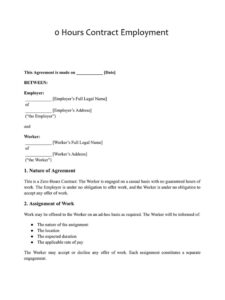
The concept of a zero hours arrangement is relatively straightforward but often misunderstood by both employers and staff. At its core, this type of agreement means that the employer is not strictly required to provide any minimum number of working hours to the individual. Conversely, the individual is usually under no obligation to accept any work that is offered to them. This creates a casual relationship that prioritizes flexibility over a rigid schedule. It is a tool designed for situations where work is available on an on call basis rather than a guaranteed daily routine.
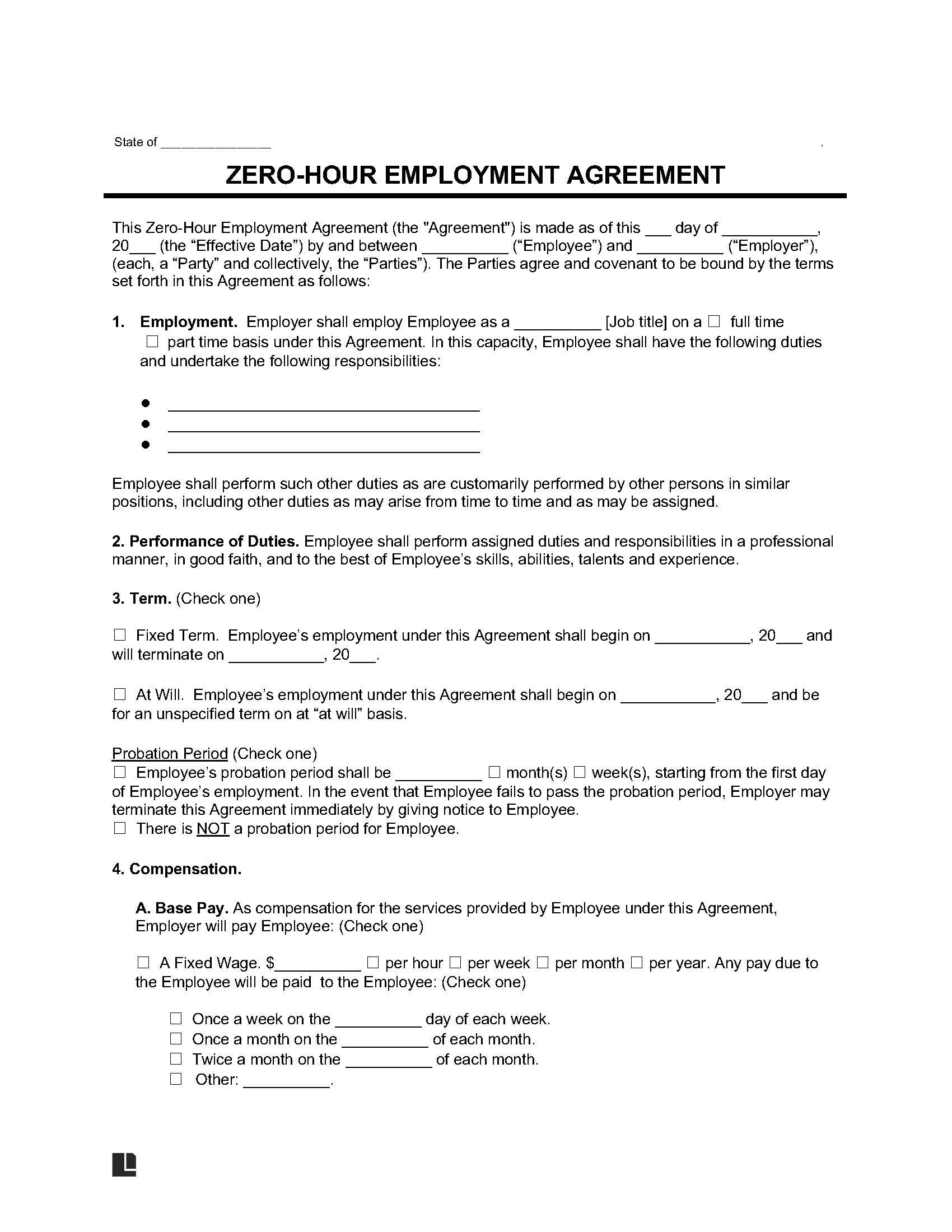
Because there is no set schedule, it is vital to communicate expectations clearly from the very beginning. Many business owners find that while the legal paperwork sets the boundaries, the actual success of the arrangement depends on mutual respect and clear channels of communication. You want your team to feel valued even if they are not working forty hours every single week. By starting with a professional document, you lay the groundwork for a professional relationship that protects everyone involved while maintaining the fluidity your business needs to thrive in a competitive market.
Understanding the Core Components of Your Document
When you sit down to draft the details of your agreement, you need to ensure that every section serves a specific purpose. A well constructed contract does more than just outline hours. It defines the nature of the relationship and ensures that both parties are on the same page regarding their rights and responsibilities. The first thing to focus on is the status of the worker. In many jurisdictions, people on these contracts are classified as workers rather than employees, which impacts their legal entitlements. Clearly stating this status helps prevent confusion later down the line if disputes over benefits arise.
Another essential element is the mechanism for offering and accepting work. You should describe how you will notify the individual when shifts become available and how much notice you will typically provide. While the nature of the work might be unpredictable, having a standard procedure for communication makes the process much smoother. For example, will you send a text message or use a dedicated scheduling app. Defining this process helps the worker plan their life around potential shifts and helps you track who is available to cover busy periods.
Handling Pay and Statutory Rights
Even though the hours are not guaranteed, the worker is still entitled to certain protections under the law. You must ensure that the rate of pay meets or exceeds the national minimum wage. The document should clearly state the hourly rate and how often payments will be made. It is also important to address how holiday pay is calculated. Since the hours vary, holiday entitlement is usually accrued based on the number of hours actually worked. Explaining this calculation in the document prevents any surprises when the individual decides to take time off or leaves the company.
Sick pay is another area that requires careful attention. In many cases, those on casual contracts may be entitled to statutory sick pay if they meet specific earnings thresholds and have been scheduled to work. Your document should outline the notification procedure for when a worker is unable to attend a shift they have already accepted. This ensures that your business can find a replacement quickly and that the worker knows exactly what is expected of them during an illness.
The Concept of Mutuality of Obligation
One of the most defining features of this type of arrangement is the lack of mutuality of obligation. This essentially means that for any period where the individual is not actually working a shift, there is no legal requirement for the employer to provide work or for the worker to perform it. This is what distinguishes the contract from a part time or full time role. It is important to explicitly state this lack of obligation to maintain the casual nature of the contract. If a court or tribunal finds that work was regularly offered and accepted over a long period, they might reclassify the relationship as a standard employment contract.
Finally, you should include a section on termination and notice periods. While the relationship is casual, either party may wish to end the agreement permanently. You might decide to include a short notice period to allow for a graceful exit, or you might choose to allow the contract to be ended immediately by either side. Including these details provides a clear exit strategy and ensures that both the business and the worker can move on without legal complications when the arrangement no longer suits their needs.
Practical Tips for Implementation
Once you have downloaded a zero hours employment contract template, the first thing you should do is tailor it to the specific needs of your business. No two companies are exactly the same, and a generic form might miss specific details that are crucial to your industry. You should take the time to review every clause and ensure it reflects how you actually intend to operate. This means looking at your internal processes and making sure the contract supports them rather than creating administrative hurdles that make your life more difficult.
To get the most out of your new documentation, consider following these steps during the onboarding process:
It is also a good idea to keep an open dialogue with your casual staff about how the arrangement is working for them. Some people prefer the total flexibility of zero hours because it allows them to balance other commitments like education or family. Others might eventually be looking for more stability. By staying in touch with your team, you can identify when it might be time to move someone onto a guaranteed hours contract, which can help you retain your best talent and reduce turnover in the long run.
Remember that while templates are an excellent starting point, they are not a substitute for professional legal advice if you have complex requirements. Laws regarding labor and employment change frequently, and staying compliant is essential for avoiding fines and protecting your reputation. Use the template as a foundation to build a transparent and fair working environment. When everyone understands the rules of the game, your business can focus on growth and productivity while your workers enjoy the flexibility they signed up for.
The transition to using formal agreements can feel like a significant administrative step for a small business, but the peace of mind it provides is well worth the effort. It moves your business away from handshake deals and into a more organized and professional sphere. This not only protects you from potential legal challenges but also demonstrates to your workers that you take their rights and your business operations seriously. A clear contract acts as a roadmap for the professional journey you are taking together.
In the end, success with flexible staffing comes down to balance. You need the freedom to manage your costs, and your workers need to know they are being treated fairly. By using a structured approach and documenting your agreements properly, you create a sustainable model for your company. Take the time to get your paperwork in order today, and you will find that managing your team becomes a much more predictable and manageable part of your daily routine.