Navigating the complexities of employment relationships can be a significant challenge for businesses of all sizes. Establishing clear expectations from the outset is crucial for a healthy and productive work environment. One fundamental tool many employers utilize is an at-will employment contract template, designed to define the terms of employment clearly and concisely.
Understanding the principles of at-will employment is essential for both employers and employees. This legal doctrine provides a framework where either party can terminate the employment relationship at any time, for any reason, provided it’s not an illegal one. Utilizing a robust employment agreement helps formalize this understanding, protecting both the business and its workforce.
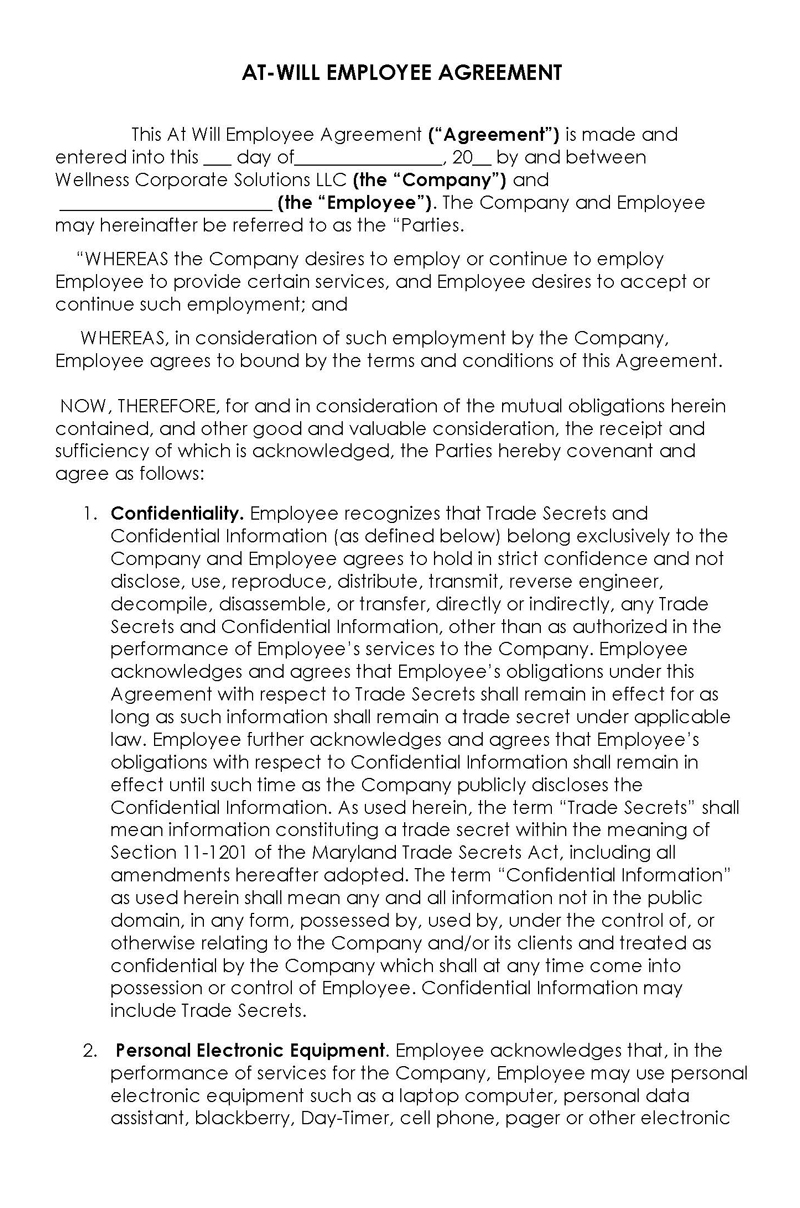
This comprehensive guide will explore the intricacies of at-will employment, the benefits of using a well-crafted template, and crucial legal considerations. You’ll gain actionable insights to help you implement or refine your employment practices effectively. Let’s dive into creating a secure and compliant workplace.
Understanding At-Will Employment and Its Implications
At-will employment is a foundational concept in U.S. labor law, governing the relationship between employers and most of their employees. It essentially means that either party can end the employment relationship at any time, with or without cause, and without notice. This principle offers flexibility for both employers and employees in various situations.
However, this flexibility is not absolute. There are important exceptions to at-will employment that employers must understand and adhere to. Ignoring these exceptions can lead to significant legal challenges and costly disputes. Compliance with state and federal laws is paramount when operating under an at-will framework.
Defining At-Will Employment for Your Business
At its core, at-will employment implies that an employee is not hired for a specified term or under a contract that dictates specific conditions for termination. This contrasts with contract employment, where termination typically requires adherence to contractually defined clauses. The flexibility of at-will status allows businesses to adapt to changing economic conditions or performance needs.
For instance, an employer might need to reduce staff due to a downturn in business. Under at-will employment, they generally have the freedom to make such decisions, provided they do not violate anti-discrimination laws or other legal protections. Similarly, an employee can leave a job without facing contractual penalties.
Key Exceptions to At-Will Employment
While at-will employment offers broad discretion, it’s not without limitations. Several legal doctrines create exceptions that protect employees from arbitrary or discriminatory termination. These exceptions are critical for employers to acknowledge when drafting an at-will employment contract template.
One major exception involves public policy. An employer cannot fire an employee for reasons that violate established public policy, such as refusing to commit an illegal act, reporting illegal activities (whistleblowing), or exercising a legal right like filing a workers’ compensation claim. Many states have specific statutes protecting these actions.
Another common exception is an implied contract. While often challenging to prove, an implied contract can arise from an employer’s statements, employee handbooks, or consistent practices that suggest a promise of continued employment or a specific termination process. Clear language in your at-will employment agreement is vital to prevent such implications.
Furthermore, the covenant of good faith and fair dealing is recognized in some states. This exception implies that employers must act in good faith and deal fairly with employees, preventing termination for malicious reasons or to deprive an employee of earned benefits. Employers must always consider the fairness and legality of their termination decisions.
Finally, federal and state anti-discrimination laws provide significant protection. Employers cannot terminate an employee based on protected characteristics like race, gender, religion, national origin, age, disability, or veteran status. All termination decisions must be free from discriminatory intent.
Crafting an Effective At-Will Employment Contract Template
A well-drafted at-will employment contract template is more than just a formality; it’s a vital legal document that sets the tone for the entire employment relationship. It clarifies expectations, outlines responsibilities, and helps protect both the employer and the employee. A comprehensive template should be clear, concise, and legally sound.
The goal is to create a document that is easily understood by all parties involved. Avoid overly legalistic jargon where plain language will suffice. This approach ensures that employees fully grasp the terms of their employment, fostering transparency and reducing potential misunderstandings down the line.
Essential Clauses for Your Employment Agreement
Every effective at-will employment contract template should include several core clauses to establish a solid foundation. These provisions address key aspects of the employment relationship, from job duties to confidential information. Properly defining these elements can prevent future disputes.
Start with a clear statement affirming the at-will nature of the employment. This is perhaps the most crucial clause, explicitly stating that either party can terminate the relationship at any time, with or without cause or notice, and that nothing in the agreement or other company policies should be construed otherwise. This helps rebut any claims of an implied contract.
Next, include details about compensation and benefits. Clearly outline the employee’s salary or hourly wage, pay schedule, and any eligibility for bonuses, commissions, or other forms of compensation. Describe the benefits package, such as health insurance, retirement plans, and paid time off, and mention any waiting periods.
Confidentiality and proprietary information clauses are also critical. These sections protect your company’s trade secrets, customer lists, and other sensitive data. Employees should agree not to disclose confidential information during or after their employment. This is especially important in competitive industries.
Finally, consider clauses related to intellectual property. If employees will be creating original works, inventions, or other intellectual property as part of their job, the agreement should specify that such creations belong to the company. This protects your business’s ownership rights and future innovations.
Customizing Your At-Will Employment Template for Specific Roles
While a general at-will employment contract template provides a strong starting point, customization is often necessary for different roles or departments. Tailoring the template ensures that specific job duties, expectations, and requirements are accurately reflected, making the document more relevant and effective.
For example, a sales position might require clauses detailing commission structures, sales territories, and non-compete agreements (where legally permissible). A role involving access to highly sensitive data might necessitate stronger confidentiality and data security provisions. Customization helps address unique operational needs.
Ensure that any customized clauses remain consistent with the overall at-will nature of the agreement and comply with all applicable labor laws. Reviewing state-specific regulations is particularly important, as certain clauses, like non-compete agreements, are heavily regulated or even prohibited in some jurisdictions. Always prioritize legal compliance when modifying your templates.
Benefits of Using an At-Will Employment Agreement
Implementing a formal at-will employment contract template offers numerous advantages for both employers and employees. It provides a clear legal framework, reduces ambiguity, and helps set appropriate expectations from the start. These benefits contribute to a more stable and legally compliant workplace environment.
The clarity provided by such an agreement can significantly reduce misunderstandings and potential disputes down the line. When everyone understands the terms of employment, there’s less room for confusion regarding job responsibilities, compensation, or termination processes. This transparency fosters trust and professional relationships.
Protecting Your Business from Legal Disputes
One of the primary benefits of using an at-will employment contract template is its ability to protect your business from costly legal challenges. A well-drafted agreement serves as a documented record of the employment terms, making it harder for former employees to claim wrongful termination or breach of contract. Explicitly stating the at-will nature of employment can be a strong defense.
The agreement can also include clauses that specify dispute resolution mechanisms, such as arbitration, which can be more cost-effective and efficient than traditional litigation. By clearly outlining these procedures, businesses can manage potential conflicts in a structured manner. This proactive approach to legal risk management is invaluable.
Setting Clear Expectations for Employees
Beyond legal protection, an at-will employment contract template is instrumental in establishing clear expectations for new hires. It provides a detailed overview of their role, responsibilities, compensation, benefits, and company policies. This clarity empowers employees to understand what is expected of them and what they can expect from their employer.
When employees have a precise understanding of their job functions and performance metrics, they are more likely to meet or exceed those expectations. This leads to increased productivity and job satisfaction. A transparent agreement helps integrate new team members effectively, setting them up for success from day one.
Legal Considerations and State-Specific Nuances
While the general concept of at-will employment is widespread, its application can vary significantly due to state-specific laws and judicial interpretations. Employers must be diligent in understanding these legal considerations to ensure their at-will employment contract template is fully compliant and enforceable in their jurisdiction. Overlooking these nuances can expose a business to unnecessary legal risks.
Regularly reviewing and updating your employment documents to reflect changes in labor law is a critical practice. Laws concerning wrongful termination, discrimination, and employee rights are constantly evolving. Staying informed helps maintain compliance and protects your business from legal challenges.
Navigating State-Specific At-Will Exceptions
Each state may have its own set of unique exceptions to the at-will employment doctrine. Some states, for example, have stronger protections for employees who report safety violations or engage in certain political activities. It’s crucial to research the specific laws in the states where your employees work.
Some states have also adopted stricter rules regarding implied contracts, making it easier for employees to argue that an employer’s actions or statements created an expectation of continued employment. This underscores the importance of precise language in your at-will employment contract template, explicitly disclaiming any such implications.
The Role of Employee Handbooks and Policies
Employee handbooks and other company policies play a significant role alongside an at-will employment contract template. While the contract outlines the primary terms of employment, the handbook typically details broader company rules, procedures, and benefits. It is essential that these documents are consistent with each other.
Any statements within the employee handbook that could be interpreted as creating a contractual right to employment or a specific termination process should be carefully reviewed. Many handbooks include a prominent disclaimer reiterating the at-will nature of employment to avoid contradicting the primary agreement. Regularly audit your handbook to ensure consistency and legal compliance.
Comparison: At-Will Employment vs. Contract Employment
Understanding the fundamental differences between at-will employment and formal contract employment is crucial for businesses. Each model carries distinct implications for employee tenure, termination procedures, and overall employer flexibility. This comparison highlights key aspects to consider when structuring your workforce.
| Feature | At-Will Employment | Contract Employment |
|---|---|---|
| Termination Reason | Any reason (non-discriminatory, non-illegal) | Only for reasons specified in the contract (e.g., breach of contract, specified performance issues) |
| Termination Notice | Generally not required (though often given as professional courtesy) | Notice period typically specified in the contract |
| Duration of Employment | Indefinite; can be terminated by either party at any time | Fixed term or until specific conditions are met, as outlined in the contract |
| Flexibility for Employer | High; easier to adjust workforce size and composition | Lower; termination subject to contractual terms, potentially leading to breach of contract claims |
| Employee Protections | Primarily federal/state anti-discrimination laws and public policy exceptions | Contractual terms, in addition to federal/state laws |
| Legal Framework | Default in most U.S. states unless specified otherwise | Requires explicit written agreement between employer and employee |
| Suitability | Common for general roles, entry-level positions, and flexible workforces | Often used for executives, specialized roles, unionized employees, or project-based work |
Expert Tips for Implementing Your At-Will Employment Contract Template
Successfully integrating an at-will employment contract template into your hiring process requires careful thought and execution. These expert tips will help ensure your documents are effective, legally compliant, and contribute positively to your company culture. A proactive approach here can save significant headaches later.
- Seek Legal Counsel for Review: Always have your at-will employment contract template reviewed by an attorney specializing in employment law in your jurisdiction. State laws vary significantly, and an attorney can ensure your template complies with all local, state, and federal regulations. This is the most crucial step for legal protection.
- Maintain Consistency Across Documents: Ensure that your at-will employment agreement is consistent with your employee handbook, offer letters, and any other company policies. Contradictory statements can weaken the at-will nature of employment and create legal vulnerabilities. Regularly audit all related documents for alignment.
- Use Clear and Unambiguous Language: Draft the template using plain language that is easy for employees to understand. Avoid overly technical legal jargon. Clarity helps prevent misunderstandings and makes the terms of employment accessible to everyone. The goal is transparency.
- Disclose the At-Will Nature Prominently: Make sure the at-will employment clause is clearly and prominently displayed within the contract. Consider bolding, capitalizing, or placing it early in the document to ensure it doesn’t get overlooked. Explicit disclosure reinforces its importance.
- Educate Hiring Managers: Train your hiring managers and HR staff on the principles of at-will employment and the specific language used in your template. They should understand what they can and cannot say during interviews or onboarding to avoid creating unintended implied contracts. Consistent communication is key.
- Review and Update Regularly: Employment laws are not static. Periodically review your at-will employment contract template (at least annually) to ensure it reflects the latest federal, state, and local legal requirements. Staying current helps maintain compliance and adapt to legislative changes.
- Obtain Written Acknowledgment: Always ensure employees sign and date the at-will employment contract, signifying their understanding and agreement to its terms. Keep a signed copy in the employee’s personnel file. This written acknowledgment is crucial evidence in case of a dispute.
Conclusion
Implementing a well-structured at-will employment contract template is an indispensable practice for any business operating under this employment model. It serves as a cornerstone for establishing transparent expectations, protecting your company from potential legal challenges, and fostering a clear understanding between employers and employees. By carefully crafting and consistently applying such a document, you can build a more secure and legally sound work environment.
Remember that while an at-will employment contract template offers significant flexibility, it must always be used in conjunction with a thorough understanding of applicable labor laws and exceptions. Regular legal review and a commitment to fair and non-discriminatory practices are paramount. Proactively managing your employment agreements ensures a compliant, productive, and stable workforce for your business’s continued success.