Landing a gig is exciting, but securing that performance with a solid agreement is crucial for any band. Without a clear understanding of expectations, payment, and responsibilities, misunderstandings can quickly sour the experience. This guide will walk you through the importance of a comprehensive live performance band contract template, helping you protect your band’s interests and ensure smooth, professional engagements.
Every band, from a local garage group to a touring act, needs proper legal documentation. A well-crafted contract template provides a framework for clear communication between the band and the venue or event organizer. It outlines critical details, preventing potential disputes before they even arise. By the end of this article, you’ll understand how to leverage a robust template to safeguard your band’s live performances.
Why a Band Performance Agreement is Non-Negotiable
Performing live is the lifeblood of many musicians, but the excitement can sometimes overshadow the business side of things. A formal band performance agreement acts as a vital safeguard, protecting all parties involved. It’s more than just a piece of paper; it’s a blueprint for a successful and mutually beneficial event.
Imagine showing up to a gig only to find the sound system isn’t what was promised, or worse, the payment structure is suddenly unclear. These scenarios are common without a written agreement. A detailed contract ensures that both the band and the client are on the same page regarding equipment, payment, schedule, and cancellation policies.
Protecting Your Band’s Interests
A professionally drafted contract is your band’s first line of defense against unforeseen issues. It legally binds the venue or client to the terms agreed upon, including performance fees and technical riders. This level of protection is invaluable, especially when dealing with new venues or organizers.
Without a formal agreement, disputes can escalate quickly, potentially costing your band time, money, and reputation. Having a signed document means you have legal recourse if a client breaches their commitments. It clearly defines what is expected from each party, leaving no room for ambiguity.
Ensuring Professional Relationships
Using a clear and concise live performance band contract template demonstrates your band’s professionalism. It shows clients that you take your craft seriously and expect the same level of commitment from them. This professional approach can foster better working relationships and lead to more bookings in the future.
Furthermore, a well-defined contract helps manage expectations from the outset. It ensures that critical elements like set times, load-in schedules, and promotion responsibilities are explicitly stated. This clarity reduces stress and allows everyone to focus on delivering a great show.
Key Elements of a Comprehensive Live Music Contract
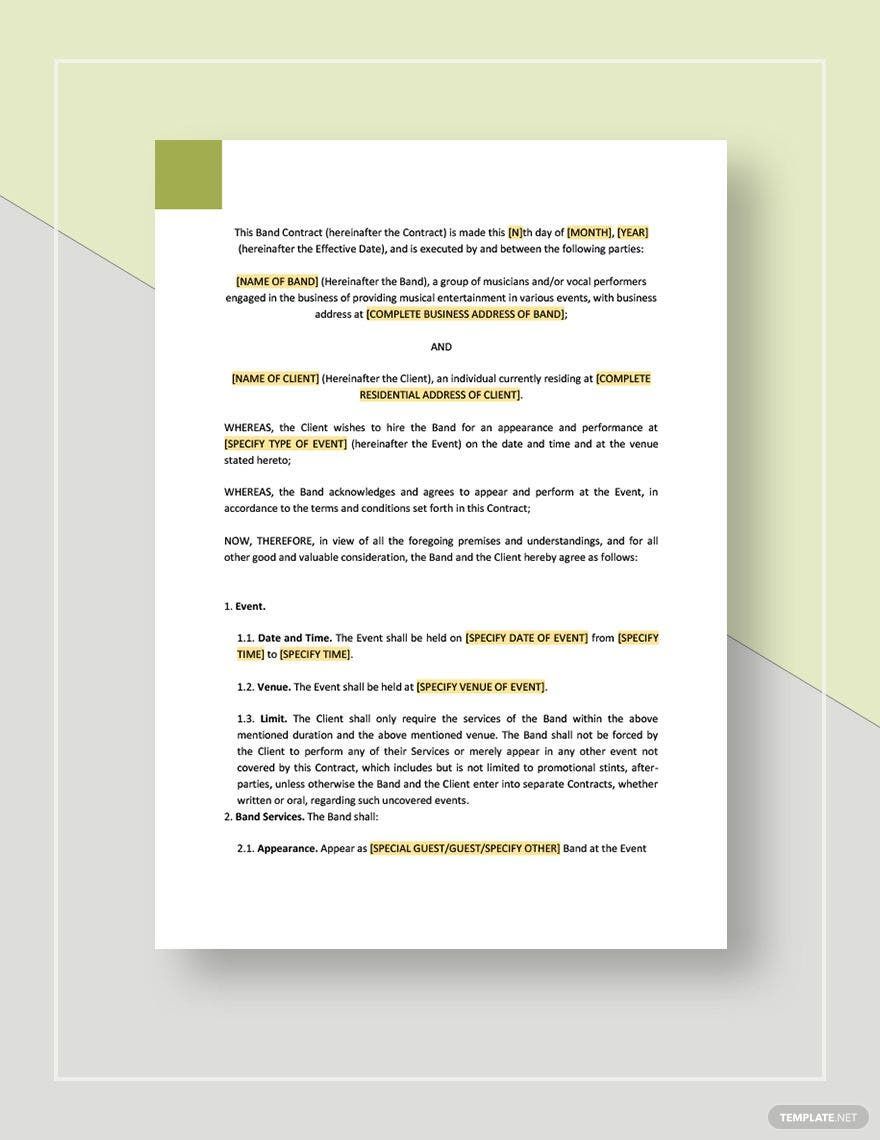
A truly effective live performance band contract template must cover all essential aspects of a gig. From the basic logistical details to financial agreements and contingency plans, every clause plays a role in creating a secure arrangement. Understanding these core components is vital for both drafting and reviewing any performance agreement.
Neglecting any of these elements can leave your band vulnerable to misunderstandings or financial losses. Each section should be carefully considered and customized to fit the specific needs of the performance. This attention to detail will save headaches down the road.
Essential Contractual Information
At the very least, a contract should clearly identify all parties involved, including the band, the individual members performing, and the client or venue representative. Full legal names and contact information are paramount. The date and location of the performance must also be explicitly stated.
Details such as the specific performance date(s) and times, including soundcheck, performance duration, and breaks, are crucial. This foundational information sets the stage for the entire agreement. It ensures everyone knows exactly when and where the band is expected to be.
Financial Terms and Payment Schedules
Perhaps one of the most critical sections, the financial terms must be unambiguous. This includes the exact performance fee, any agreed-upon deposit (and its due date), and the method and timeline for final payment. Clarity here prevents any disputes over money.
Specify any additional compensation, such as travel expenses, accommodation, or meal allowances. If merchandise sales are part of the agreement, outline the commission structure, if any, and who is responsible for setup. A robust live performance band contract template will leave no stone unturned regarding finances.
Technical Rider and Logistics
A detailed technical rider is often attached as an addendum to the main contract. This document specifies the band’s technical requirements, including stage plot, input list, power needs, and any specific audio or lighting equipment. It ensures the venue can adequately accommodate the band’s setup.
Beyond the technical rider, logistical details cover load-in and load-out times, access to parking, dressing rooms, and any security arrangements. Clearly communicate who is responsible for providing equipment such as a PA system, lighting rig, or backline. This ensures a smooth operational flow on the day of the event.
Customizing Your Band Contract Template for Specific Gigs
While a good live performance band contract template provides a strong foundation, every gig is unique. Customizing your template to fit the specific requirements of each performance is essential for comprehensive protection. A generic contract may not cover nuances specific to festivals, private parties, or corporate events.
The ability to adapt your standard contract shows a high degree of professionalism and foresight. It allows you to address potential issues that are particular to a certain type of event or venue, thereby minimizing risks. Think of your template as a living document that evolves with your band’s needs.
Adapting for Different Performance Types
A template used for a local bar gig will likely differ from one for a multi-day festival. For festivals, consider clauses regarding force majeure, inclement weather, and shared backline agreements. Private events might require clauses on guest lists, dress codes, or specific song requests.
Corporate events often have stricter professionalism clauses and require more detailed liability insurance information. Tailoring your contract means proactively addressing the unique demands and potential risks of each engagement. This prevents surprises and ensures smooth execution.
Adding Specific Clauses and Amendments
Beyond the standard sections, you might need to add specific clauses for particular situations. For example, if you’re traveling a significant distance, an expense clause for fuel, accommodation, and per diems is vital. If a recording of the performance is planned, explicitly state who owns the rights.
Amendments or riders can be added to the core template to cover these unique details without reinventing the entire document. Always ensure any additions or modifications are agreed upon by both parties and initialed or signed. This makes your live performance band contract template incredibly versatile.
Common Pitfalls to Avoid in Band Performance Agreements
Even with a comprehensive live performance band contract template, certain mistakes can undermine its effectiveness. Being aware of these common pitfalls will help you create a bulletproof agreement and prevent future headaches. The goal is to anticipate potential problems and address them proactively within the contract’s terms.
Overlooking critical details or using vague language can lead to misinterpretations and disputes. A strong contract leaves no room for doubt and explicitly outlines responsibilities and expectations for all involved parties. Avoid these common errors to ensure a smoother gig experience.
Vague Language and Ambiguity
One of the biggest pitfalls is using unclear or ambiguous language. Phrases like "reasonable efforts" or "as soon as possible" are open to interpretation and can lead to disagreements. Every clause should be specific, measurable, achievable, relevant, and time-bound (SMART).
For instance, instead of "payment will be made after the gig," specify "full payment of $X will be made via bank transfer within 7 business days following the performance on [date]." Precision in language is paramount to avoiding disputes. Ensure all technical terms are clearly defined or commonly understood within the industry.
Incomplete or Missing Clauses
Failing to include essential clauses can leave significant gaps in your protection. Common omissions include detailed cancellation policies, force majeure clauses (covering acts of God or unforeseen circumstances), and liability waivers. These can become critical in unexpected situations.
Forgetting to specify who provides equipment, who is responsible for sound engineers, or what happens if a band member is ill, can lead to last-minute scrambles and potential financial losses. Always review your live performance band contract template to ensure it covers all possible scenarios relevant to a live performance.
Key Contract Aspects for Live Performance Agreements
Understanding the various facets of a live performance agreement is crucial for musicians and venue operators alike. Different aspects of the contract serve distinct purposes, from outlining financial obligations to addressing unforeseen circumstances. This table compares several key considerations commonly found in a robust live performance band contract template.
Each element plays a vital role in creating a clear, equitable, and enforceable agreement. By comparing their functions, you can better appreciate the depth and importance of a well-structured contract.
| Contract Aspect | Primary Purpose | Key Details to Include | Potential Risks Without It |
|---|---|---|---|
| Performance Details | Defines the who, what, where, and when of the engagement. | Date, time (soundcheck, set, breaks), venue, band/performer names, duration. | Scheduling conflicts, no-shows, misunderstandings about commitment. |
| Compensation & Payment | Outlines all financial arrangements. | Performance fee, deposit amount/due date, final payment terms (method, deadline), rider expenses. | Payment disputes, delayed payment, non-payment, unexpected costs. |
| Cancellation Policy | Establishes procedures and penalties for cancellations. | Cancellation deadlines (by either party), forfeiture of deposit, cancellation fees, rebooking options. | Financial loss for cancelled gigs, uncertainty, lack of recourse. |
| Technical Rider | Specifies technical requirements for the performance. | Stage plot, input list, equipment provided by band/venue, power requirements, sound engineer needs. | Technical issues, poor sound quality, unsafe setup, unplayable conditions. |
| Liability & Indemnification | Addresses responsibility for damages, injuries, or legal claims. | Insurance requirements, responsibility for equipment damage, clauses protecting band/venue from lawsuits. | Costly lawsuits, unprotected against accidents, damage liability. |
| Force Majeure | Covers unforeseen circumstances preventing performance. | Definition of “acts of God,” pandemic clauses, natural disasters, strikes, civil unrest. | Disputes over non-performance due to uncontrollable events, financial losses. |
Expert Tips for Using Your Live Performance Band Contract Template
Having a robust live performance band contract template is only half the battle; knowing how to use it effectively is the other. Following these expert tips will help you navigate the contracting process with confidence, ensuring your band is always protected and professional. These insights go beyond simply filling in blanks.
From careful review to open communication, these strategies will enhance your contract usage. They are designed to streamline the agreement process, minimize misunderstandings, and build stronger relationships with venues and clients.
- Always Get It in Writing: Never rely on verbal agreements, no matter how trusted the client or venue. A written and signed contract is your only legal protection.
- Read Every Clause Carefully: Before signing, thoroughly review every single clause in the contract. If you don’t understand something, ask for clarification. Don’t rush this process.
- Don’t Be Afraid to Negotiate: Your template is a starting point. Feel empowered to negotiate terms that don’t quite fit your needs or preferences. A fair contract benefits everyone.
- Seek Legal Counsel for Complexities: For high-stakes gigs, international performances, or if you encounter unusual clauses, consult an entertainment lawyer. Investing in legal advice can save significant money and stress later.
- Ensure Mutual Understanding: Before signing, discuss the contract’s key points with the other party to ensure both sides have the same interpretation. Open communication prevents future disagreements.
- Keep Copies of Everything: Maintain organized digital and physical copies of all signed contracts and any related correspondence. This is crucial for record-keeping and potential reference.
- Be Prepared for Amendments: Sometimes, circumstances change. Be prepared to create and sign formal amendments to the contract if terms need to be altered after the initial signing.
- Use Clear and Concise Language: When customizing your template, ensure all added clauses are clear, specific, and easy to understand. Avoid jargon where possible.
Conclusion
Securing live performances with a comprehensive live performance band contract template is an indispensable practice for any serious musician or band. It protects your interests, clarifies expectations, and fosters professional relationships. By understanding the essential elements, customizing your agreements, and avoiding common pitfalls, you equip your band with the legal framework needed to thrive in the music industry.
Don’t leave your hard work and passion to chance. Invest the time in developing a solid contract process, and always ensure every gig is backed by a clear, written agreement. This commitment to professionalism will not only safeguard your performances but also build a reputation for reliability and excellence, paving the way for more successful engagements in the future.