Navigating the world of sales can be complex, especially when it comes to compensation structures. For businesses and sales professionals alike, a clear and legally sound agreement is paramount. This is where a robust commission only sales contract template becomes an invaluable tool, providing the framework for successful partnerships and transparent remuneration.
Establishing the terms of a commission-based relationship upfront can prevent future disputes and ensure all parties understand their roles and responsibilities. This comprehensive guide will walk you through the intricacies of crafting an effective commission-only sales agreement, highlighting essential components and offering expert advice. By the end, you’ll have a clear understanding of how to protect your interests and foster productive sales collaborations.
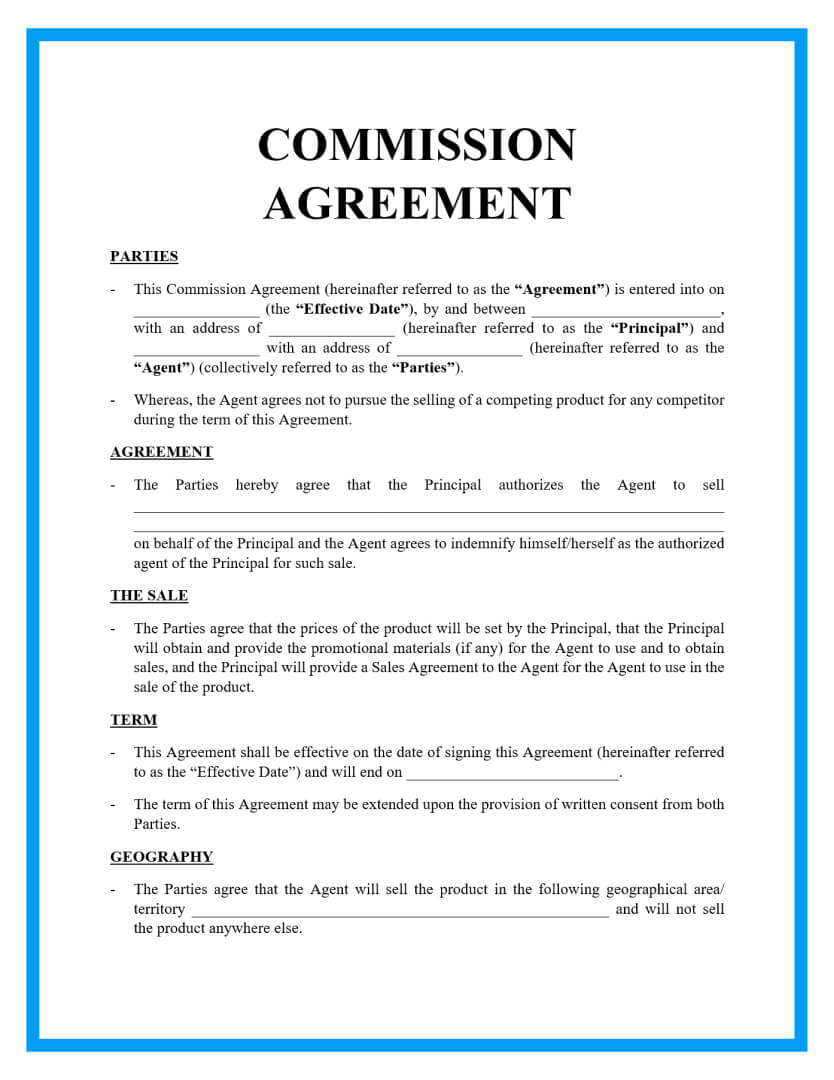
Understanding Commission Only Sales Agreements
A commission-only sales agreement is a contractual arrangement where a salesperson’s compensation is solely derived from the sales they generate. Unlike salaried positions, there is no base pay; earnings are entirely performance-driven. This model is particularly common for independent contractors and can be highly motivating for experienced sales professionals.
This compensation structure aligns the interests of the salesperson directly with the company’s success. The more sales they close, the more both parties benefit. Businesses often favor this model to manage overhead costs and incentivize aggressive sales efforts, especially in startup phases or for specialized product lines.
Defining the Independent Contractor Relationship
It is crucial to correctly classify the salesperson as an independent contractor rather than an employee. Misclassification can lead to significant legal and financial penalties for the business. A well-drafted commission only sales contract template explicitly outlines this relationship, detailing the salesperson’s autonomy.
Key indicators of an independent contractor include control over their work hours, methods, and the ability to work for multiple clients. The contract should clearly state that the salesperson is responsible for their own taxes, insurance, and expenses, further solidifying their independent status. This distinction is vital for legal compliance.
When a Commission-Only Model Makes Sense
The commission-only model is not suitable for every business or every sales role. It typically thrives in environments with high-value products or services, a clear sales cycle, and ample market opportunities. Salespeople who excel in this model often possess strong self-motivation and a proven track record.
For businesses, it can be ideal for expanding into new territories or launching new products without a substantial upfront investment in fixed salaries. For the salesperson, it offers the potential for unlimited earning potential, directly tied to their effort and skill. Carefully evaluate your specific context before implementing this structure.
Essential Components of a Sales Commission Contract
Crafting a comprehensive sales commission contract requires careful attention to detail. Each clause plays a vital role in protecting both the company and the salesperson. A solid commission only sales contract template will include these core elements, ensuring clarity and legal soundness.
These contracts must clearly define expectations regarding sales targets, reporting structures, and the process for resolving any disputes. Without these foundational components, misunderstandings can easily arise, potentially jeopardizing the business relationship. Taking the time to build a robust agreement upfront is an investment in future success.
Clear Commission Structure and Rates
The heart of any commission-only agreement is the detailed description of how commissions are earned and calculated. This section must be unambiguous, outlining the specific percentage or flat fee per sale. It should also address different commission rates for various products, services, or sales tiers.
Consider scenarios such as split commissions for team sales or adjustments for returned goods. Transparency here is key to avoiding future disagreements. For example, a contract might state, "The Sales Representative shall receive a 10% commission on the net revenue of all completed sales of Product X."
Payment Terms and Schedule
Beyond the commission rate, the contract must specify when and how commissions will be paid. This includes the payment frequency (e.g., weekly, bi-weekly, monthly) and the conditions that must be met for a sale to be considered "completed" and eligible for commission. This might mean the client has paid in full or a certain number of days have passed since the sale.
Furthermore, the method of payment should be outlined, whether it’s direct deposit, check, or another arrangement. Clearly stating these terms helps manage expectations and ensures timely compensation. For instance, "Commissions will be paid on the 15th of each month for all sales completed in the preceding calendar month."
Defining Sales Territory and Client Ownership
To prevent conflicts between sales representatives, the contract should clearly delineate territories or client ownership. This could be geographical, by industry, or based on specific named accounts. Establishing these boundaries helps ensure fair play and avoids situations where multiple salespeople claim credit for the same sale.
The agreement should also address what happens if a client moves out of a defined territory or if a salesperson initiates contact but another closes the deal. Clear rules here protect both the company’s client relationships and the salesperson’s hard-earned efforts. A robust commission only sales contract template will include clauses that protect both parties.
Termination Clauses and Post-Termination Responsibilities
Every contract needs clear termination clauses. This section should detail the conditions under which either party can end the agreement, including notice periods required. It also needs to address what happens to commissions for sales pending at the time of termination.
Furthermore, post-termination responsibilities are critical. This might include clauses around non-solicitation of clients, return of company property, and confidentiality agreements. These provisions safeguard the company’s assets and client base, even after the sales relationship concludes.
Benefits and Challenges of Commission-Based Compensation
Adopting a commission-only model presents both significant advantages and potential hurdles for businesses and sales professionals. Understanding these aspects is crucial for determining if this compensation structure aligns with your strategic goals and the capabilities of your sales force. It’s a high-reward, high-risk approach that demands careful consideration.
Businesses often seek this model to mitigate payroll risks and scale sales efforts efficiently. Conversely, salespeople are drawn to the uncapped earning potential. However, both parties must be prepared for the inherent challenges that come with a purely performance-based system.
Advantages for Businesses and Sales Professionals
For businesses, the primary advantage of a commission-only structure is cost control. There’s no fixed salary overhead, meaning businesses only pay when sales are generated, directly linking expenditure to revenue. This can be particularly beneficial for startups or companies with fluctuating sales cycles. It also incentivizes high performance, attracting ambitious sales talent.
Sales professionals, in turn, benefit from unlimited earning potential. Their income is directly proportional to their effort and success, fostering a strong sense of ownership and motivation. This model offers flexibility, often allowing independent contractors to manage their own schedules and work-life balance, appealing to entrepreneurial individuals.
Potential Risks and How to Mitigate Them
Despite the advantages, a commission-only model carries risks. For businesses, there’s the challenge of attracting and retaining top talent, as some professionals prefer the stability of a base salary. There’s also the risk of misclassification of independent contractors, leading to legal issues if not handled correctly.
For salespeople, the main risk is income instability. Without a base salary, periods of low sales can lead to financial hardship. To mitigate these risks, businesses should ensure their commission only sales contract template clearly defines the independent contractor relationship and offers competitive, transparent commission rates. Sales professionals should also have a clear understanding of the market and their potential earning capacity.
Crafting an Effective Independent Sales Representative Agreement
Developing an effective independent sales representative agreement goes beyond merely outlining commission rates. It involves creating a comprehensive document that fosters a productive partnership while protecting the interests of both the company and the sales professional. This requires thoughtful consideration of various operational and legal aspects.
A well-structured agreement serves as a roadmap for the entire sales relationship, minimizing ambiguities and potential conflicts. It ensures that both parties are aligned on expectations, responsibilities, and the framework for success. This proactive approach is key to a stable and profitable collaboration.
Legal Considerations for Your Contract
Several legal considerations must be addressed when drafting your commission only sales contract template. Ensuring compliance with labor laws, particularly regarding independent contractor classification, is paramount. Misclassifying an employee as a contractor can lead to significant penalties, including back taxes, benefits, and fines.
The contract should also comply with any specific state or federal regulations related to sales commissions. Furthermore, including clauses for dispute resolution, such as mediation or arbitration, can help avoid costly litigation. Consulting with legal counsel is highly recommended to ensure the agreement is robust and compliant.
Customizing for Specific Sales Roles or Products
A generic commission only sales contract template may not fully capture the nuances of every sales role or product. Customizing the agreement to fit your specific context is crucial. For instance, the commission structure might differ significantly for selling software as a service compared to selling real estate.
Consider unique aspects such as lead generation responsibilities, training requirements, access to company resources, and specific reporting obligations. Tailoring the agreement ensures it accurately reflects the operational realities of the sales position and the products being sold. This level of detail promotes clarity and effectiveness.
Incorporating Performance Metrics and Reviews
While commission-only implies performance-driven compensation, it’s still beneficial to incorporate performance metrics beyond just closed sales. This could include activities like lead generation targets, demonstration quotas, or client engagement metrics. These provide a more holistic view of the salesperson’s contribution.
Regular performance reviews, even for independent contractors, can be valuable for providing feedback and identifying areas for improvement. While the company cannot dictate how an independent contractor works, discussions around best practices and support resources can still be productive. This helps foster a collaborative environment focused on mutual success.
Comparing Commission Structures for Sales Teams
Understanding different commission structures is vital for businesses designing their compensation plans and for salespeople evaluating potential opportunities. The "commission only" model is just one approach, and it’s helpful to see it in context with other common sales compensation methods. Each structure has its own implications for motivation, risk, and stability.
The choice of commission structure significantly impacts a sales team’s behavior, company culture, and financial outcomes. Businesses must weigh the benefits of reduced fixed costs against the need for stable talent and comprehensive sales coverage. This comparative analysis aids in making informed strategic decisions.
| Feature | Commission-Only | Base Salary + Commission | Salary-Only |
|---|---|---|---|
| Income Stability for Salesperson | Low (High Risk) | Medium (Some Security) | High (Most Secure) |
| Cost Control for Business | High (Pay per performance) | Medium (Fixed + Variable) | Low (High fixed cost) |
| Salesperson Motivation (Quota Attainment) | Very High (Directly linked to income) | High (Motivated by bonus potential) | Low to Medium (Less direct financial incentive) |
| Suitability for New/Complex Sales | Less Ideal (High ramp-up risk) | Good (Stability during learning curve) | Very Good (Focus on relationship building) |
| Typical Use Case | Independent contractors, high-volume/value sales, startups | Most common for experienced sales reps | Account management, complex enterprise sales |
| Administrative Burden | Lower (Less payroll management for benefits, etc.) | Medium (Managing salary and variable pay) | Higher (Full employee payroll, benefits) |
Expert Advice for Your Commission Only Agreement
Creating a strong commission only sales contract template requires more than just filling in the blanks. These expert tips will help you avoid common pitfalls and ensure your agreement is both effective and fair. Following these guidelines will strengthen your sales partnerships and protect your business interests.
Proactive planning and clear communication are the cornerstones of successful commission-based relationships. Implementing these strategies will not only enhance the legality of your document but also foster trust and productivity within your sales team.
- Be Hyper-Specific with Definitions: Clearly define terms like "sale," "net revenue," "chargeback," and "qualified lead." Ambiguity in definitions is a leading cause of disputes. Ensure there’s no room for misinterpretation regarding what constitutes an earnable event.
- Include a Non-Compete/Non-Solicitation Clause: Protect your business interests by including reasonable clauses that prevent the salesperson from competing directly or poaching clients after the agreement ends. Ensure these clauses are enforceable under local laws and are not overly broad.
- Outline Dispute Resolution Procedures: Specify how disagreements will be handled. Mediation or arbitration clauses can provide a more cost-effective and efficient alternative to litigation. This pre-agreed process helps maintain professional relationships even when conflicts arise.
- Regularly Review and Update: Laws change, and business models evolve. Periodically review your commission only sales contract template to ensure it remains compliant and reflects your current operational needs. An outdated contract can be a liability.
- Consult Legal Counsel: Always have a qualified attorney review your commission only sales contract template before implementation. Legal professionals can identify potential issues, ensure compliance with all relevant laws, and customize the contract to your specific business needs. This is an investment that pays off by preventing costly future problems.
- Maintain Detailed Records: Both parties should maintain meticulous records of sales, commissions earned, and payments made. This documentation is invaluable in the event of any discrepancies or audits, providing clear evidence of transactions.
Crafting an effective commission only sales contract template is a critical step for any business employing a performance-based sales force. It establishes clear expectations, protects both parties, and lays the groundwork for a successful partnership. By focusing on clarity, legal compliance, and comprehensive detail, you can create a document that supports your sales goals and minimizes potential conflicts.
Remember that a well-written contract is an investment in your business’s future. It provides the necessary structure for ambitious sales professionals to thrive while offering businesses the flexibility and cost control they seek. Take the time to build a robust agreement, and you’ll pave the way for a prosperous and productive sales environment.