Embarking on a nursing career is an exciting journey, filled with profound learning experiences and hands-on practice. For student nurses, navigating the complexities of clinical placements, academic expectations, and personal growth can be a significant challenge. This is where a well-structured learning contract becomes an invaluable tool, providing clarity and a roadmap for success.
A comprehensive student nurse learning contract template helps students define their objectives, outline their strategies, and track their progress throughout their clinical rotations, ensuring a more focused and productive educational experience.
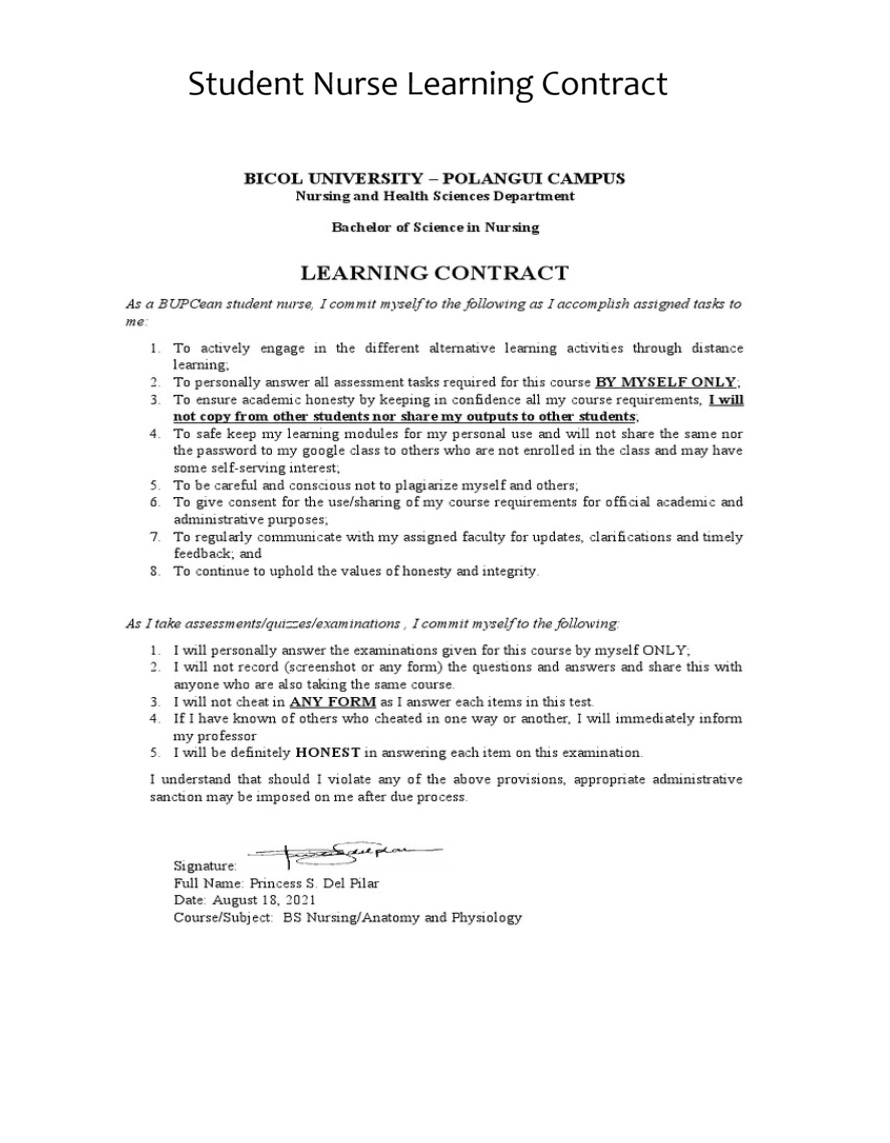
Such a contract isn’t just a formal document; it’s a dynamic agreement that fosters accountability and self-direction. It empowers student nurses to take ownership of their learning, bridging the gap between theoretical knowledge and practical application. Understanding how to effectively utilize and customize a student nurse learning contract template can significantly enhance a student’s confidence and performance in diverse healthcare settings.
Benefits of a Learning Contract for Nursing Students
A learning contract serves as a cornerstone for effective clinical education, offering numerous advantages for both the student and the educational institution. It provides a clear framework, helping students articulate their learning needs and expectations within specific clinical environments. This proactive approach ensures that learning is intentional and aligned with program objectives and professional standards.
One major benefit is the promotion of self-directed learning. Student nurses are encouraged to identify their strengths, weaknesses, and areas for development, then devise strategies to address them. This autonomy fosters critical thinking and problem-solving skills, essential qualities for future registered nurses. Moreover, it facilitates more meaningful discussions with clinical instructors and preceptors, allowing for targeted feedback and support.
Learning contracts also act as a valuable communication tool. They clarify roles and responsibilities, outlining what is expected of the student, the instructor, and the preceptor. This reduces misunderstandings and creates a collaborative learning environment. By documenting specific goals and planned activities, it becomes easier to track progress and evaluate the achievement of learning outcomes throughout the placement.
Here are some key benefits:
- Encourages self-assessment and goal setting.
- Fosters a proactive approach to learning.
- Improves communication between student, instructor, and preceptor.
- Provides a structured plan for clinical skill development.
- Enhances accountability and ownership of one’s education.
- Serves as a formal record of learning objectives and achievements.
- Helps identify and address specific learning gaps effectively.
Crafting Your Ideal Student Nurse Learning Contract Template
Developing an effective learning contract involves thoughtful consideration of individual learning styles, clinical environment specifics, and program requirements. The goal is to create a personalized, actionable plan that supports your growth as a future nurse. A good student nurse learning contract template will typically include sections that guide you through this process step-by-step. It ensures all critical aspects of your clinical development are covered.
Begin by identifying your personal learning goals. These should be specific, measurable, achievable, relevant, and time-bound (SMART). For instance, instead of “get better at patient assessment,” aim for “independently complete a comprehensive head-to-toe assessment on two patients per shift by week three, accurately documenting findings.” This level of detail makes progress much easier to track and evaluate.
Next, outline the specific learning activities you will undertake to achieve these goals. This could include practicing certain skills, observing experienced nurses, researching patient conditions, or participating in care planning meetings. Think about the resources available to you, such as textbooks, online modules, clinical simulation labs, and, most importantly, your clinical instructor and preceptor.
Consider how your learning will be evaluated. This section often includes criteria for success, methods of demonstration (e.g., direct observation, written reflection, case study presentation), and timelines for review. Regular check-ins with your instructor are crucial for feedback and adjustments. A well-designed student nurse learning contract template will make sure these evaluation methods are clearly defined from the outset.
Sample Student Nurse Learning Contract Template
A practical example can illuminate how a learning contract structures the educational experience. Below is a sample student nurse learning contract template, designed to provide a clear and actionable framework for clinical rotations. This example demonstrates how various components come together to form a comprehensive plan for skill development and academic success in nursing.
Student Nurse Learning Contract
Student Name: [Your Name]
Student ID: [Your ID Number]
Clinical Placement Area: [e.g., Medical-Surgical Unit, Pediatric Ward]
Clinical Instructor: [Instructor’s Name]
Placement Dates: [Start Date] to [End Date]
Section 1: Personal Learning Goals
In this section, specify 3-5 measurable learning objectives for your clinical placement.
- Goal 1: By the end of week 2, I will confidently administer oral medications to at least three assigned patients per shift, following the 5 rights of medication administration without direct supervision, and accurately document within the EHR.
- Goal 2: Within the first three shifts, I will independently perform a complete focused respiratory assessment on patients experiencing respiratory distress and identify abnormal findings, reporting them effectively to the primary nurse.
- Goal 3: By the final week, I will effectively educate at least one patient and their family per shift on discharge instructions related to medication management and wound care, utilizing teach-back methods to ensure understanding.
Section 2: Planned Learning Activities/Strategies
Outline how you will achieve each of your stated goals. Be specific about actions and resources.
- For Goal 1 (Medication Administration): Review medication administration policies and procedures. Practice dosage calculations. Administer medications under direct supervision for the first week, then gradually increase independence. Ask clarifying questions to primary nurses.
- For Goal 2 (Respiratory Assessment): Review respiratory assessment techniques and normal/abnormal findings. Observe experienced nurses performing assessments. Practice on simulated patients or during downtime. Utilize assessment checklists.
- For Goal 3 (Patient Education): Review common discharge instructions for the patient population. Observe nurses providing education. Prepare educational materials or handouts. Role-play scenarios with peers or instructor.
Section 3: Resources Required/Available
List any specific resources or support needed to meet your goals.
- Clinical Instructor/Preceptor guidance and feedback.
- Access to hospital policies and procedures manual.
- Electronic Health Record (EHR) system access and training.
- Nursing textbooks and online learning modules.
- Opportunity to observe skilled nurses in practice.
Section 4: Evidence of Goal Achievement/Evaluation Methods
Describe how your learning will be demonstrated and evaluated.
- Direct observation of medication administration and assessment skills by instructor/preceptor.
- Verbal debriefing and critical reflection with instructor after each shift.
- Accurate and timely documentation in the patient’s EHR.
- Successful completion of a patient teaching assignment or care plan.
- Mid-point and final performance evaluations by the clinical instructor.
Section 5: Signatures
By signing below, all parties agree to the terms outlined in this learning contract.
_________________________
Student Nurse Signature & Date
_________________________
Clinical Instructor Signature & Date
_________________________
Preceptor Signature & Date (if applicable)
This sample illustrates the structured approach necessary for effective learning. An editable student nurse learning contract template allows for easy customization to fit diverse clinical settings and individual learning needs.
In conclusion, utilizing a well-designed learning contract is a strategic move for any student nurse aiming for excellence in their clinical placements. It transforms abstract educational goals into concrete, actionable steps, fostering a sense of purpose and direction. By clearly outlining objectives, strategies, and evaluation methods, student nurses can maximize their learning opportunities and build a strong foundation for their professional careers.
Taking the initiative to develop and adhere to such a contract demonstrates professionalism and a commitment to continuous improvement. It not only enhances individual learning outcomes but also prepares students for the lifelong learning required in the dynamic field of nursing. Embrace the power of a personalized learning plan to confidently navigate your path to becoming a compassionate and competent registered nurse.