Navigating the complexities of a breach of contract lawsuit can be daunting, especially when you find yourself on the defensive. When facing allegations of failing to uphold contractual obligations, it’s crucial to understand that simply denying the claims might not be enough. Instead, you often need to present affirmative defenses – legal arguments that, if proven, excuse your alleged breach or invalidate the plaintiff’s claim entirely, even if the basic facts of the breach are true. This comprehensive guide will illuminate the landscape of these critical legal strategies and provide an invaluable affirmative defenses to breach of contract claim template to help you prepare your response.
Understanding the proper way to assert these defenses is paramount. A poorly constructed defense can lead to significant legal setbacks, while a well-articulated argument can be the cornerstone of a successful defense strategy. We will explore what constitutes an affirmative defense, delve into common examples you might encounter, and then walk through a practical affirmative defenses to breach of contract claim template. This article aims to empower you with the knowledge needed to approach a breach of contract claim with greater confidence and strategic insight.
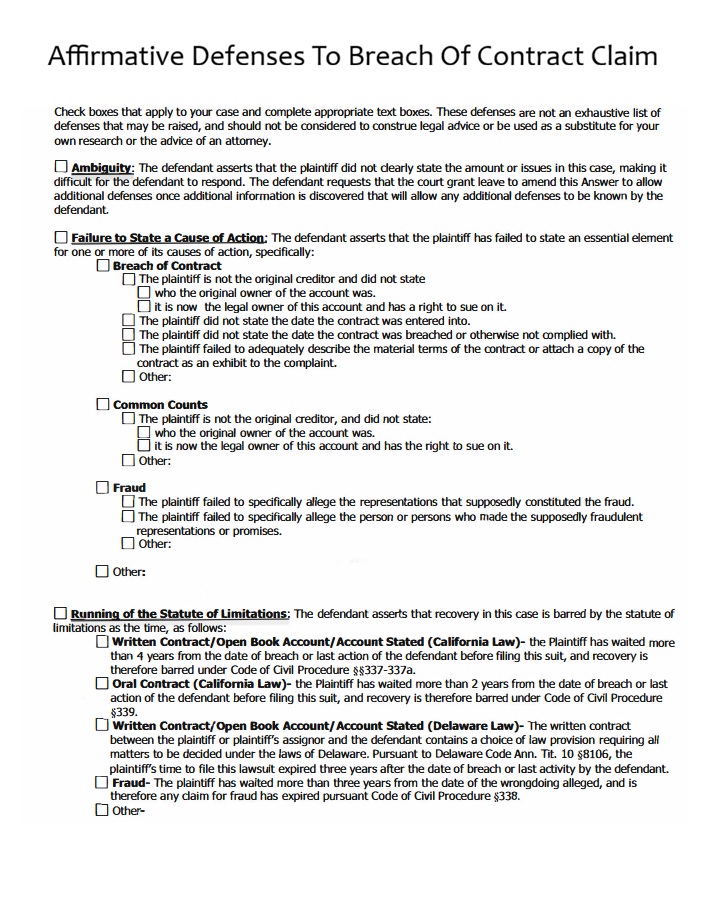
Understanding The Strategic Role Of Affirmative Defenses
When a plaintiff files a lawsuit alleging breach of contract, they carry the initial burden of proving that a contract existed, that it was breached, and that they suffered damages as a result. However, the defendant has the opportunity to introduce a new set of facts or legal arguments known as affirmative defenses. These defenses do not merely deny the plaintiff’s allegations; rather, they introduce new reasons why the plaintiff should not win the case, even if the plaintiff’s core allegations are true.
What Constitutes An Affirmative Defense?
An affirmative defense is a legal argument that, if successful, defeats or reduces the plaintiff’s claim, regardless of whether the plaintiff can prove the elements of their case. The burden of proving an affirmative defense rests entirely with the defendant. For instance, if a plaintiff claims you didn’t pay for goods, an affirmative defense might be that the goods were defective, excusing your payment.
Unlike a simple denial, which states “I didn’t breach the contract,” an affirmative defense asserts “Yes, I might have done X, but here’s why that was legally permissible or why the plaintiff isn’t entitled to a remedy.” This distinction is vital for court proceedings, as failure to properly plead an affirmative defense can result in its waiver. This means you might lose the chance to use that argument later in the trial.
Common Affirmative Defenses To Contract Disputes
Many different affirmative defenses can be raised in response to a breach of contract claim, depending on the specific facts and applicable law. These defenses often challenge the contract’s formation, its enforceability, or the circumstances surrounding the alleged breach. Familiarity with these common defenses is a cornerstone of effective legal strategy.
Here are some frequently used affirmative defenses:
- Statute of Frauds: Requires certain contracts (e.g., contracts for the sale of land, contracts that cannot be performed within one year) to be in writing to be enforceable.
- Statute of Limitations: Sets a time limit within which a lawsuit must be filed. If the plaintiff files after this period, the claim is barred.
- Duress: The contract was entered into under unlawful threats or coercion, making it involuntary.
- Impossibility or Impracticability: Performance of the contract became objectively impossible or commercially impracticable due to unforeseen events.
- Waiver: The plaintiff knowingly and voluntarily gave up a right they had under the contract.
- Unconscionability: The terms of the contract are so oppressively unfair to one party that it should not be enforced.
- Mistake: A mutual mistake of fact by both parties regarding a fundamental aspect of the contract, rendering it voidable.
- Prior Material Breach: The plaintiff committed a serious breach of the contract first, excusing the defendant’s subsequent non-performance.
- Accord and Satisfaction: The parties agreed to accept a different performance in satisfaction of the original contractual obligations.
- Fraud: The plaintiff induced the defendant to enter the contract through intentional misrepresentation.
Each of these defenses requires specific elements to be proven by the defendant. They can significantly alter the outcome of a contract dispute, highlighting the importance of thorough legal analysis.
Strategic Pleading And Potential Outcomes
The decision of which affirmative defenses to raise should be a strategic one, based on a careful review of the contract, the alleged breach, and all surrounding circumstances. Legal professionals meticulously analyze the facts to determine which defenses are most likely to succeed. Raising too many unsupported defenses can dilute strong arguments, while failing to raise a valid defense can mean waiving it forever.
Statistics show that a significant percentage of breach of contract claims involve complex defense strategies. For example, some jurisdictions report that over 30% of contract disputes see defendants asserting multiple affirmative defenses. Successfully arguing an affirmative defense can lead to a dismissal of the claim, a reduction in damages, or a favorable settlement for the defendant, demonstrating their critical impact on litigation outcomes.
Crafting Your Response With An Affirmative Defenses To Breach Of Contract Claim Template
When preparing to respond to a breach of contract complaint, a well-structured pleading is essential. This document serves as your official answer to the plaintiff’s allegations and is where you formally assert any affirmative defenses. Using an effective affirmative defenses to breach of contract claim template can streamline this process and ensure all necessary elements are included.
Essential Elements Of A Defense Pleading
A typical answer to a complaint, including affirmative defenses, follows a standard legal format. It generally begins with identifying the court, the parties involved, and the case number. The body of the answer addresses each paragraph of the plaintiff’s complaint, either admitting, denying, or stating insufficient knowledge to admit or deny each allegation. Following these responses, a separate section is dedicated to listing the affirmative defenses.
Each affirmative defense should be stated clearly and concisely, usually in numbered paragraphs. It should articulate the legal basis for the defense and briefly explain how it applies to the specific facts of the case. While some jurisdictions require detailed factual allegations for each defense, others allow for more general statements. Always verify the specific pleading rules in your jurisdiction.
Sample Affirmative Defenses To Breach Of Contract Claim Template
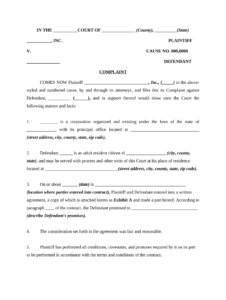
Below is a general affirmative defenses to breach of contract claim template. Remember, this is a sample and should always be adapted by a qualified legal professional to fit the unique facts and jurisdictional requirements of your specific case.
                  IN THE [NAME OF COURT]
              FOR THE [NAME OF JUDICIAL DISTRICT/CIRCUIT]

Plaintiff,
[Plaintiff's Full Legal Name]
                                  Case No. [Case Number]
        v.

Defendant,
[Defendant's Full Legal Name]

           DEFENDANT'S ANSWER TO COMPLAINT AND AFFIRMATIVE DEFENSES

Defendant, [Defendant's Full Legal Name], for their Answer to the Complaint filed by Plaintiff, [Plaintiff's Full Legal Name], states as follows:

(Each numbered paragraph below corresponds to the numbered paragraphs in the Plaintiff's Complaint. Respond to each allegation individually.)

1.  Defendant admits the allegations contained in Paragraph 1 of the Complaint.
2.  Defendant denies the allegations contained in Paragraph 2 of the Complaint.
3.  Defendant is without knowledge or information sufficient to form a belief as to the truth of the allegations contained in Paragraph 3 of the Complaint and, therefore, denies the same.
... (Continue for all paragraphs of the Complaint)

                 AFFIRMATIVE DEFENSES

Defendant hereby asserts the following Affirmative Defenses to Plaintiff's Complaint:

FIRST AFFIRMATIVE DEFENSE (Statute of Limitations)
The Plaintiff's claim is barred, in whole or in part, by the applicable statute of limitations, specifically [cite relevant statute and code section, e.g., Cal. Civ. Proc. Code § 337]. The alleged breach occurred on [date or period], which is beyond the statutory period for filing such an action.

SECOND AFFIRMATIVE DEFENSE (Failure of Condition Precedent)
Plaintiff's claim is barred because Plaintiff failed to satisfy a condition precedent to Defendant's performance under the contract. Specifically, [describe the unfulfilled condition, e.g., Plaintiff failed to provide the necessary specifications by the agreed-upon date].

THIRD AFFIRMATIVE DEFENSE (Waiver)
Plaintiff has waived its right to enforce the specific contractual provision(s) upon which its claim is based. Specifically, Plaintiff, through its actions and statements, knowingly and voluntarily relinquished its right to [describe the right waived, e.g., timely delivery of materials].

FOURTH AFFIRMATIVE DEFENSE (Lack of Consideration)
The alleged contract is unenforceable due to a lack of valid consideration. There was no bargained-for exchange of legal value between the parties, or the consideration offered by the Plaintiff was illusory.

FIFTH AFFIRMATIVE DEFENSE (Duress)
The alleged contract is voidable and unenforceable because Defendant entered into it under duress, specifically [describe the coercive circumstances, e.g., Plaintiff threatened to terminate a critical existing business relationship unless Defendant signed the new agreement].

... (Add additional affirmative defenses as applicable)

WHEREFORE, Defendant prays that the Court:
a)  Dismiss Plaintiff's Complaint with prejudice;
b)  Award Defendant its costs and reasonable attorneys' fees incurred in this action; and
c)  Grant such other and further relief as the Court deems just and proper.

Dated: [Date]

                                    [Defendant's Attorney's Signature]
                                    [Defendant's Attorney's Printed Name]
                                    [Bar Number]
                                    [Attorney's Firm Name]
                                    [Attorney's Address]
                                    [Attorney's Phone Number]
This affirmative defenses to breach of contract claim template provides a structured starting point. Each defense must be carefully chosen and supported by the specific facts and legal precedents applicable to your case.
Customizing The Template For Your Specific Case
While a general affirmative defenses to breach of contract claim template is helpful, it’s crucial to understand that every legal situation is unique. The defenses you assert must directly relate to the specific allegations in the plaintiff’s complaint and the factual circumstances surrounding your contract. Legal research will be necessary to identify the most applicable statutes and case law that support your chosen defenses in your jurisdiction.
Consulting with an experienced attorney is highly recommended to ensure that your affirmative defenses are correctly identified, properly pleaded, and strategically aligned with your overall litigation goals. An attorney can help you navigate the nuances of contract law, tailor the template to your situation, and avoid common pitfalls that could jeopardize your defense. Proper customization is not merely a formality; it is a critical step in building a robust defense against a breach of contract claim.
Successfully defending a breach of contract claim requires more than just denying the plaintiff’s allegations. It demands a proactive approach, leveraging well-researched and properly pleaded affirmative defenses. By understanding the core principles behind these legal strategies and utilizing a robust affirmative defenses to breach of contract claim template, defendants can build a strong foundation for their case. Remember, the goal is not merely to react, but to assert compelling legal reasons why the plaintiff’s claim should not prevail.
Navigating the legal landscape of contract disputes can be complex, and the specifics of jurisdiction, contract type, and factual circumstances will always dictate the most effective approach. Therefore, while templates and general information are invaluable resources, they are best used in conjunction with personalized legal advice. Engaging with a qualified attorney ensures that your defense is both legally sound and strategically optimized for your unique situation, safeguarding your interests and guiding you toward the best possible outcome.