Navigating the end of a contractual agreement can often be complex, fraught with potential disputes and legal headaches. However, when both parties agree to conclude their obligations early, a smoother, more amicable path emerges. This is where a well-crafted mutual termination of contract letter template becomes an indispensable tool, ensuring clarity and legal protection for everyone involved.
Whether it’s an employment agreement, a service contract, or a lease, understanding how to formally end a contract by mutual consent is crucial for maintaining good business relationships and avoiding future complications. This guide will walk you through the essential elements, benefits, and practical steps to effectively utilize a mutual termination of contract letter template, empowering you to manage these transitions with confidence.
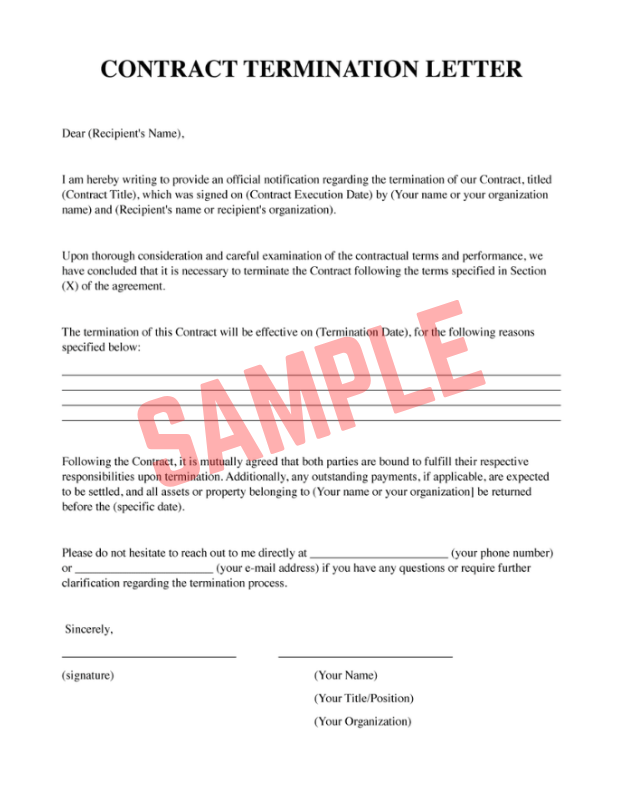
Understanding Mutual Contract Termination
Ending a contract doesn’t always have to be a contentious affair. When both parties recognize that an agreement no longer serves their best interests, or circumstances have changed, they can agree to terminate it mutually. This consensual approach provides a clear and respectful way to dissolve obligations without resorting to breach of contract claims or lengthy legal battles.
A mutual termination signifies that both parties willingly consent to end the agreement before its stipulated term or completion of all defined duties. It’s a proactive decision that reflects a shared understanding and a desire to move forward without lingering ties. This method contrasts sharply with unilateral termination, which typically occurs due to a breach or specific contractual clauses allowing one party to end the agreement.
What Is Mutual Contract Termination?
Mutual contract termination, often referred to as a mutual release or rescission, is a legal process where all parties involved in a contract agree to cancel it. This cancellation happens before the contract’s natural expiration date or before all terms have been fully performed. It essentially nullifies the existing agreement, releasing both sides from their remaining obligations.
The key to this process is the explicit consent of every party. Without unanimous agreement, a contract cannot be mutually terminated. This shared understanding is typically documented in a formal letter or agreement, such as a mutual termination of contract letter template, to provide a clear record of the decision and its terms.
Benefits Of Mutual Termination
Opting for a mutual termination of contract offers several significant advantages over other methods of ending an agreement. Firstly, it preserves professional relationships. When parties agree to part ways amicably, it fosters goodwill, which can be beneficial for future collaborations or industry reputation.
Secondly, it helps to avoid costly and time-consuming litigation. Disputed contract endings can lead to expensive legal fees, court appearances, and significant stress. A mutual agreement bypasses these potential struggles, saving both time and money for all involved. Approximately 95% of civil cases, including contract disputes, are settled out of court, highlighting the benefit of consensual resolution.
Lastly, it provides certainty and clarity. A formal mutual termination agreement clearly outlines the effective date of termination, any remaining obligations, and releases from liability. This clear documentation prevents misunderstandings and offers a definite end to the contractual relationship.
Key Components Of A Mutual Termination Letter
A successful mutual termination relies heavily on a precisely worded and comprehensive letter. This document serves as the official record of the agreement to end the contract, detailing all the crucial terms and conditions. Missing key elements can lead to ambiguities, potentially undermining the purpose of the mutual agreement.
The structure and content of your letter are paramount to ensuring its effectiveness and legal soundness. It’s not merely about stating an intention to terminate; it’s about formalizing the agreement, specifying responsibilities, and protecting both parties from future claims. A robust mutual termination of contract letter template addresses these concerns systematically.
Essential Information To Include
Every mutual termination letter should clearly identify the parties involved and the specific contract being terminated. Include the full legal names of all parties, their addresses, and the date the original contract was signed. Reference the original contract by its title and any unique identification numbers.
The letter must explicitly state that all parties agree to terminate the contract by mutual consent. Specify the exact effective date of termination. This date is critical as it marks when all obligations under the original agreement cease, except for any specified survival clauses.
Furthermore, include a clause stating that both parties release each other from any further claims, liabilities, or obligations arising from the original contract, effective from the termination date. This broad release is a cornerstone of mutual termination, preventing future legal actions related to the agreement.
Addressing Legal And Financial Aspects
Beyond the basic identification and consent, a mutual termination letter should meticulously address any outstanding legal or financial matters. This includes detailing how any payments, refunds, or outstanding invoices will be handled. If partial payments were made for services not yet rendered, clarify the refund process.
Consider any confidentiality clauses, intellectual property rights, or non-compete agreements from the original contract. The termination letter should specify whether these provisions will survive the termination or if they are also being dissolved. It is common for confidentiality clauses, for instance, to remain in effect even after contract termination.
If there are any return of property clauses, such as company equipment or leased assets, clearly outline the timeline and method for their return. Failure to address these practical aspects can lead to complications, even after the formal agreement to terminate has been made.
Sample Mutual Termination Of Contract Letter Template
Having a clear, customizable sample is incredibly valuable when you need to formalize a mutual agreement to end a contract. This provides a solid foundation, ensuring you cover all necessary legal and practical points without starting from scratch. Remember to adapt the specifics to your unique situation.
Using a mutual termination of contract letter template helps standardize the process and ensures that no critical information is overlooked. It streamlines the creation of this important document, making it easier for both parties to review and sign, thereby expediting the resolution.
How To Customize Your Template
When tailoring this sample, pay close attention to the bracketed placeholders, filling them with accurate information specific to your agreement. Ensure all party names, contract dates, and any financial figures are precisely stated. The more specific you are, the less room there is for future ambiguity.
If your original contract had unique clauses like non-disclosure agreements, non-solicitation, or specific intellectual property rights, add a paragraph explicitly stating whether these provisions survive the termination or are also mutually dissolved. This level of detail provides comprehensive legal protection for both parties.
“`html
[Your Company Letterhead or Your Full Name and Address]

[Date]

[Recipient's Full Name]
[Recipient's Company Name (if applicable)]
[Recipient's Address]

Subject: Mutual Termination of [Original Contract Name/Type] dated [Date of Original Contract]

Dear [Recipient's Name],

This letter serves as a formal notification and agreement to mutually terminate the contract entered into by and between [Your Company Name/Your Full Name] ("Party A") and [Recipient's Company Name/Recipient's Full Name] ("Party B"), dated [Date of Original Contract] (the "Original Contract").

Both Party A and Party B hereby agree to mutually terminate the Original Contract, effective immediately upon the full execution of this Mutual Termination Agreement, or on [Specific Termination Date, e.g., October 31, 2023], whichever is later.

Upon the effective date of termination, both Party A and Party B shall be fully released and discharged from any and all further obligations, duties, and liabilities under the Original Contract, with the exception of any provisions specifically stated herein to survive termination.

It is hereby agreed that [describe any outstanding financial matters, e.g., "Party B will pay Party A the sum of $X by [Date] for services rendered up to the termination date," or "All outstanding invoices under the Original Contract have been settled."].

[Optional: Add clauses about surviving provisions, e.g., "The confidentiality provisions outlined in Section [Number] of the Original Contract shall survive the termination of this Agreement and remain in full force and effect."]

[Optional: Add clauses about return of property, e.g., "Party B agrees to return all equipment belonging to Party A, specifically [list equipment], by [Date]."]

Both parties acknowledge that they have read and understood the terms of this Mutual Termination Agreement and voluntarily agree to its contents. This Agreement may be executed in counterparts, each of which shall be deemed an original, but all of which together shall constitute one and the same instrument.

Please indicate your agreement to these terms by signing and dating in the spaces provided below.

Sincerely,

_________________________
[Your Full Name]
[Your Title (if applicable)]
[Your Company Name (if applicable)]
Date:

_________________________
[Recipient's Full Name]
[Recipient's Title (if applicable)]
[Recipient's Company Name (if applicable)]
Date:
“`
Navigating The Termination Process
Successfully terminating a contract by mutual agreement involves more than just drafting a letter; it requires a thoughtful approach to ensure a smooth transition. Both parties should engage in open communication and adhere to a clear process to avoid any misunderstandings or disputes. A well-managed exit can preserve valuable professional relationships and reputations.
The steps involved typically include initial discussions, drafting the formal agreement, and executing any final obligations. By systematically following these stages, you can ensure that the termination is effective and that all loose ends are tied up appropriately, leading to a clean break for everyone involved.
Steps To A Smooth Contract Exit
The first step towards a smooth contract exit is initiating a discussion with the other party. Clearly articulate your reasons for seeking a mutual termination, focusing on shared benefits or changing circumstances rather than blame. Open and honest dialogue sets a cooperative tone for the entire process.
Once both parties agree in principle, draft the mutual termination of contract letter template. Ensure it thoroughly covers all the essential components discussed earlier, including the effective date, release of liability, and any financial or logistical arrangements. Share the draft with the other party for review and negotiation.
After both parties have reviewed and agreed upon the terms, sign the document. It’s often advisable to have the signatures witnessed or notarized, especially for high-value contracts, to add an extra layer of legal validity. Retain a signed copy for your records and ensure all agreed-upon post-termination actions, like final payments or property returns, are completed promptly.
Potential Pitfalls To Avoid
One common pitfall in mutual terminations is failing to address all aspects of the original contract. Overlooking minor clauses, such as non-solicitation or intellectual property assignments, can lead to future disputes despite the intention of a clean break. Carefully review the entire original agreement to ensure comprehensive coverage in your termination letter.
Another mistake is the lack of clarity regarding financial settlements. Ambiguous language about outstanding payments, refunds, or compensations can quickly turn an amicable separation into a contentious one. Always specify exact amounts, payment methods, and deadlines to prevent any confusion.
Lastly, not obtaining proper legal review, especially for complex or significant contracts, can be a serious oversight. While a template provides a strong start, a legal professional can offer tailored advice, ensuring the document fully protects your interests and complies with relevant laws in your jurisdiction. Consulting an attorney can prevent costly errors down the line.
Utilizing a comprehensive mutual termination of contract letter template is a proactive and strategic way to conclude business relationships amicably and efficiently. It not only safeguards your interests but also fosters goodwill, preventing potential legal conflicts and preserving professional reputations. Remember that clear communication and thorough documentation are the pillars of a successful contract exit.
By following the guidelines and adapting the provided sample, you can navigate the complexities of contract termination with confidence. Taking the time to properly document your mutual agreement ensures that both parties can move forward with clarity, leaving no room for future disputes. Ensure every detail is covered to achieve a smooth and legally sound separation.