When organizing an event, setting up a public display, or conducting any activity where media might be captured, clear communication is essential. Ensuring participants are aware that filming and photography will occur is not just good practice; it’s often a legal necessity. This is precisely where a well-crafted notice of filming and photography template becomes indispensable.
Having a robust template on hand simplifies the process significantly. It helps you quickly and effectively inform individuals about your media capture activities, obtain implied consent, and protect your organization from potential disputes. Understanding how to create and deploy such a notice correctly is crucial for smooth operations and maintaining trust with your audience.
This article will guide you through the intricacies of developing and utilizing an effective notice of filming and photography template. We’ll explore its critical components, provide a practical example, and discuss how to implement it to ensure legal compliance and transparency at your next gathering or project.
Understanding The Importance Of A Filming Notice
In today’s visually driven world, capturing moments through photos and videos is common practice. However, individuals have a right to privacy, and respecting this right is paramount. A properly displayed filming notice serves as a proactive measure, informing people that their images might be recorded and used.
Without such a notice, you could face unexpected challenges, including complaints, demands for image removal, or even legal action. Transparency from the outset helps build trust with your audience, attendees, or the public in general. It shows you respect their privacy and are operating responsibly.
Protecting Privacy Rights With Clear Communication
A filming and photography notice is a direct way to communicate your intentions regarding media capture. It acts as a blanket consent for public spaces or large gatherings where individual consent forms are impractical. By clearly posting a sign, you establish a reasonable expectation that individuals entering the area may be recorded.
This transparency is particularly important in an era where data privacy and image rights are increasingly scrutinized. It allows individuals who do not wish to be filmed or photographed the opportunity to avoid the area or take steps to obscure their identity. This respect for personal choice can significantly enhance your event’s reputation.
Legal Considerations For Media Capture
The legal landscape surrounding filming and photography varies depending on jurisdiction and the specific context (public vs. private property, commercial vs. non-commercial use). Generally, in public spaces, there’s a lower expectation of privacy, but this doesn’t grant unlimited rights to capture and use images. A notice helps mitigate risks.
Many regulations, such as GDPR in Europe or various state laws in the U.S., emphasize the need for explicit consent when personal data, including images, is collected. While a general notice may serve as implied consent for some uses in public areas, specific uses like commercial advertising might require more explicit written consent, often obtained through a separate photo release form. Always consult with legal counsel to ensure your notice of filming and photography template meets local requirements.
Key Elements Of A Photography Consent Form
When preparing your own notice, several vital components must be included to make it effective and legally sound. Missing even one element can weaken its purpose. A comprehensive notice ensures clarity and minimizes misunderstandings.
Tailoring your notice to the specific context of your event or location is also crucial. Whether it’s a concert, a conference, or a construction site, the language should reflect the nature of the media capture. Consistency in messaging across all your communication channels reinforces the notice’s intent.
Essential Information To Include In Your Notice
The core of any effective notice is the information it conveys. It should be concise but thorough, ensuring no ambiguity. Here are the must-have elements:
- Clear Statement of Filming/Photography: Explicitly state that filming and photography are taking place.
- Purpose of Media Capture: Briefly explain why you are recording (e.g., promotional materials, archival purposes, security).
- Intended Use of Media: Specify how the captured images/videos might be used (e.g., website, social media, print, broadcast).
- Implied Consent Clause: State that by entering or remaining in the area, individuals grant their implied consent to be recorded and for their likeness to be used.
- Contact Information: Provide a way for individuals to reach out with questions or concerns.
- Date/Duration: If applicable, state the dates or duration of the filming.
- Opt-Out Information (if applicable): While not always required, offering a way for individuals to avoid being captured or to request image removal can be a good practice for certain events.
Where To Display Your Filming And Photography Notice
Visibility is key to the effectiveness of your notice. A template is only useful if it’s prominently displayed. Place signs in high-traffic areas where people are likely to see them before fully entering the recorded zone.
Consider entrance points, registration desks, and key gathering areas. Use large, clear fonts and a contrasting color scheme to ensure readability. Posting multiple notices throughout a venue reinforces the message and increases the likelihood that everyone sees it.
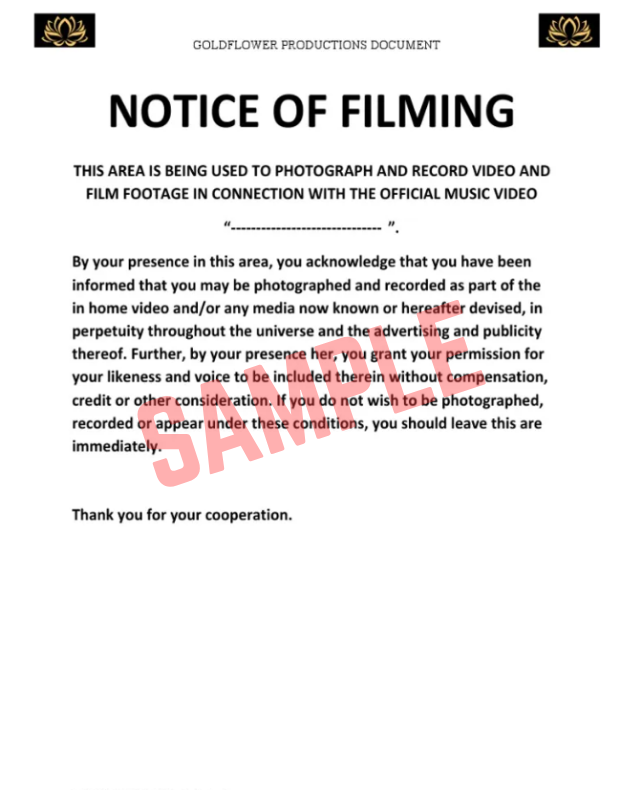
Sample Notice Of Filming And Photography Template
Crafting a concise yet comprehensive notice can seem challenging, but a well-structured template simplifies the process. This example provides a solid foundation that you can adapt to your specific needs. Remember to customize the details to accurately reflect your event or project.
This sample notice is designed for a general event or public gathering. Its language is direct and aims to secure implied consent while clearly stating the purpose and use of any captured media. Always ensure the size and placement make it easily readable for attendees.
NOTICE OF FILMING AND PHOTOGRAPHY
Please be aware that by entering and participating in this event/location, you consent to be photographed, filmed, and/or otherwise recorded.
Your entry constitutes your agreement to allow [Your Organization Name] to use your likeness, image, and voice in any media, worldwide, for any purpose whatsoever. This includes, but is not limited to, promotional materials, advertising, marketing, public relations, educational content, and archival purposes.
We reserve the right to use such photographs and/or recordings without further compensation or notice to you. If you do not wish to be subject to the foregoing, please do not enter the event/location.
For any questions or concerns regarding this notice, please contact [Email Address or Phone Number].
Thank you for your understanding and cooperation.
[Event Name / Location Name] [Date(s) of Event / Notice Effective Date]
How To Use Your Filming And Photography Template Effectively
Simply having a notice of filming and photography template isn’t enough; its proper deployment is crucial for its legal and communicative success. Effective use involves strategic placement, clear signage, and sometimes, additional communication methods. This ensures maximum awareness among your audience.
Beyond physical signs, consider integrating this information into other communication channels. This could include event registration forms, tickets, websites, or social media announcements. Consistent messaging across platforms reinforces your policy and manages expectations proactively.
Best Practices For Signage And Display
When implementing your notice, prioritize visibility and clarity. Use a professional printer for durable signs, especially for outdoor events. Laminate paper notices to protect them from weather and wear, ensuring they remain legible throughout the event’s duration.
Consider the size and font of your signage. A good rule of thumb is to use a font large enough to be read comfortably from a distance of at least 10-15 feet. Place signs at eye level and in well-lit areas. For larger venues, place signs at regular intervals, not just at entrances.
Beyond The Template: Additional Steps For Compliance
While a notice of filming and photography template covers many scenarios, some situations might require more. For instance, if you plan to conduct interviews or close-up photography of specific individuals for commercial purposes, obtaining explicit written consent through a dedicated media release form is highly advisable. This layered approach offers greater protection.
Furthermore, ensure your staff or event personnel are aware of the filming policy and can direct inquiries to the appropriate contact. Training them on how to handle requests from individuals who do not wish to be recorded is also beneficial. This proactive approach helps manage expectations and maintain a positive experience for everyone involved.
Establishing clear communication about media capture is a cornerstone of responsible event management and public engagement. A well-designed notice of filming and photography template provides a vital tool for ensuring transparency, respecting privacy, and upholding legal standards. By understanding its key components and implementing it thoughtfully, organizations can confidently manage media consent.
Utilizing a comprehensive template, clearly displaying your notices, and considering additional consent measures ensures a respectful and legally compliant environment for everyone. This proactive approach not only protects your organization but also fosters a positive relationship with your audience, built on trust and clear communication.