Real estate wholesaling offers an exhilarating pathway for investors to profit without needing significant capital or traditional financing. This dynamic strategy involves identifying distressed properties, securing them under contract, and then assigning that contract to an end buyer for a fee. The bedrock of this entire process, ensuring legality and smooth transactions, is a meticulously crafted contract. A robust wholesaling real estate contract template is not just a formality; it’s your shield and your blueprint for success in every deal.
Navigating the intricacies of property acquisition and assignment requires clear, legally sound documentation. Without a proper agreement, wholesalers expose themselves to unnecessary risks, potential disputes, and even legal complications that can derail an otherwise lucrative investment. Understanding the components of this vital document empowers you to act confidently and professionally.
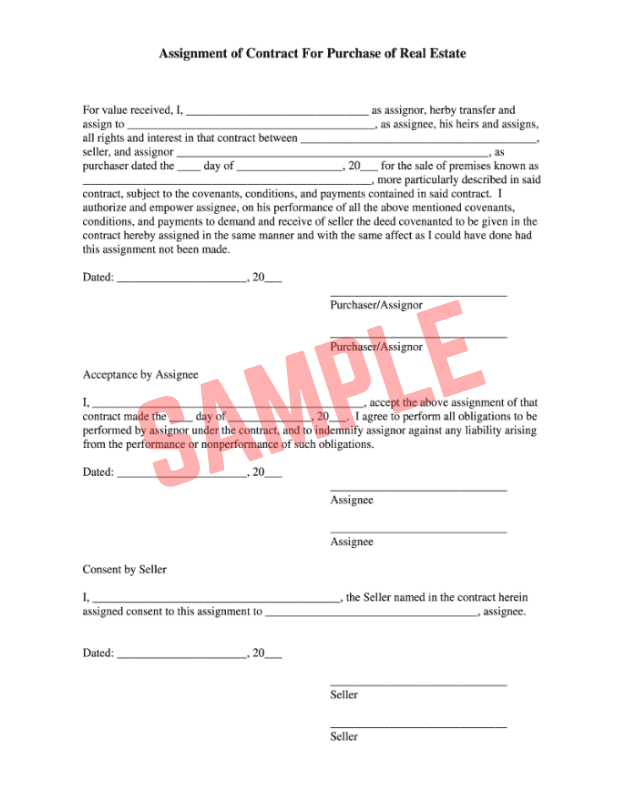
This article will delve into the essential elements of a successful wholesaling agreement, explore critical legal considerations, and provide a structural blueprint for a comprehensive wholesaling real estate contract template. By the end, you will have a clearer understanding of how to protect your interests and streamline your real estate transactions.
Deconstructing The Essential Wholesaling Agreement
A wholesale real estate agreement, at its core, is a legally binding document that outlines the terms of a property transaction between a seller and a wholesaler (as the initial buyer). For wholesalers, the unique aspect is the intention to assign this contract to a new buyer before closing. Therefore, the agreement must explicitly permit this assignment.
Core Components Of The Purchase And Sale Agreement
Every effective real estate contract begins with fundamental details that clearly define the transaction. This includes the full legal names and contact information for all parties involved: the seller(s) and the initial buyer(s) (the wholesaler). Precise identification prevents ambiguity and ensures accountability.
The agreement must also contain a thorough legal description of the property, including its address, parcel number, and any other identifying characteristics. The agreed-upon purchase price, along with the earnest money deposit amount and how it will be held, are crucial financial details. These figures form the basis of the deal.
Furthermore, a specific closing date and location must be established, outlining the timeline for the transaction. For wholesalers, it is absolutely critical that the contract contains an explicit clause stating the buyer’s right to assign the contract to a third party. This “and/or assigns” language is non-negotiable for a successful wholesale deal.
Critical Contingencies And Clauses For Wholesalers
Beyond the basic terms, specific clauses and contingencies are vital for a wholesaler’s protection and operational flexibility. An inspection contingency, for example, grants the wholesaler a specified period to conduct due diligence on the property. This allows for assessing necessary repairs and confirming the property’s potential value.
While many traditional real estate deals include a financing contingency, wholesalers often aim for all-cash offers from their end buyers, making this less common in the assigned contract. However, any applicable financing terms or the explicit lack thereof should be clearly stated. A well-defined assignment clause is paramount, allowing the wholesaler to transfer their rights and obligations to a new buyer.
This clause should explicitly state that the contract is assignable without requiring further consent from the original seller, or at least outline the conditions under which assignment is permissible. The contract should also clearly define default provisions for both buyer and seller, outlining consequences if either party fails to uphold their end of the agreement. Ensuring the title is clear of liens and encumbrances is also a standard yet critical component.
Legalities And Best Practices For Your Wholesaling Contract
While a robust wholesaling real estate contract template provides the framework, understanding the legal landscape in which you operate is equally critical. Real estate laws vary significantly from state to state, and even between municipalities. Adhering to these regulations safeguards your business and reputation.
Understanding State-Specific Wholesaling Regulations
The legality of wholesaling real estate, and the specific requirements for contracts, can differ widely across jurisdictions. Some states have stricter rules regarding who can market a property for sale, blurring the lines between a wholesaler and a licensed real estate agent. It’s imperative to research and understand your state’s particular licensing laws.
Engaging in activities that could be construed as brokering real estate without a license is illegal and can lead to severe penalties. For instance, some states require specific disclosures or may have limits on how many properties an unlicensed individual can wholesale within a certain timeframe. Always consult with a local real estate attorney to ensure your practices and your wholesaling real estate contract template comply with all applicable laws.
Safeguarding Your Assignment Process
A successful assignment is the cornerstone of wholesaling, and your contract should facilitate this process transparently and legally. The assignment fee, which is the wholesaler’s profit, should be clearly structured and disclosed within the assignment agreement between the wholesaler and the end buyer. While not always directly in the original purchase agreement, its existence is implied by the assignment clause.
Effective timeline management is essential; the contract’s closing date dictates the window you have to find an end buyer and complete the assignment. Maintaining open and honest communication with the original seller throughout this process is a best practice. Though the seller may not directly interact with the end buyer, they should be kept informed of the transaction’s progress through the wholesaler.
The involvement of a reputable title company or real estate attorney is crucial for coordinating both the original purchase and the assignment, ensuring all legal requirements are met and funds are distributed correctly at closing. This professional oversight helps prevent misunderstandings and legal issues.
Blueprint For A Wholesaling Real Estate Contract Template
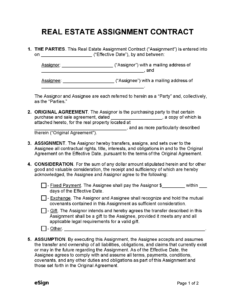
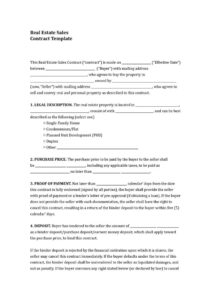
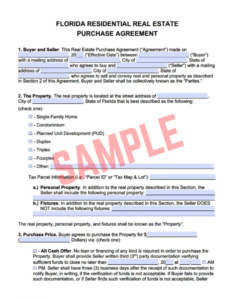
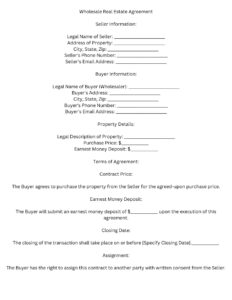
Having a well-organized wholesaling real estate contract template is incredibly valuable. It provides a standardized approach to your deals, ensuring consistency and minimizing the risk of overlooking crucial details. While specific legal language will vary, here’s a structural blueprint outlining the key sections you’d expect to find in such a template:
- Date of Agreement: Clearly states when the contract was entered into.
- Parties Involved:
- Seller(s): Full legal names, current mailing addresses, and contact information.
- Buyer(s) (Assignor): Full legal names of the wholesaler(s) or their entity, current mailing addresses, and contact information. This section often includes the phrase “and/or assigns” after the buyer’s name.
- Property Description:
- Full street address, city, state, zip code.
- Legal description (e.g., lot, block, subdivision, county, state).
- Parcel ID number.
- Any included personal property (e.g., appliances, fixtures).
- Purchase Price:
- The total amount the Buyer agrees to pay the Seller for the property.
- Breakdown of how the purchase price will be paid (e.g., earnest money, cash at closing).
- Earnest Money Deposit:
- Amount of earnest money.
- Who will hold the earnest money (e.g., title company, attorney, escrow agent).
- Conditions for forfeiture or return of the earnest money.
- Contingencies:
- Inspection Contingency: Specifies a period for the buyer to inspect the property and potentially withdraw or renegotiate based on findings.
- Financing Contingency: (Often “none” for wholesale deals, but should be explicitly stated if applicable).
- Due Diligence Period: A general period for the buyer to investigate the property and transaction.
- Assignment Clause:
- Explicitly states the Buyer’s right to assign the contract to a third party.
- May include language such as “Buyer reserves the right to assign this contract to a third party.”
- Clarifies if seller consent is required for assignment (ideally, it isn’t).
- Closing Date & Costs:
- The specific date by which the transaction must close.
- Identification of the closing agent (title company or attorney).
- Allocation of closing costs between buyer and seller (e.g., title insurance, escrow fees, transfer taxes).
- Possession: When the buyer takes possession of the property.
- Title and Deed:
- Type of deed to be conveyed (e.g., general warranty deed, special warranty deed).
- Requirement for marketable title.
- Default Provisions:
- What constitutes a default by either party.
- Remedies available to the non-defaulting party.
- Governing Law: The state whose laws will govern the interpretation and enforcement of the contract.
- Entire Agreement: A clause stating the contract constitutes the entire agreement between the parties.
- Signatures: Spaces for all Sellers and Buyers (or their authorized representatives) to sign, along with dates. Witness signatures may also be required depending on state law.
Having this blueprint in mind will help you critically review any wholesaling real estate contract template you consider using, ensuring it covers all necessary bases for a secure transaction.
Utilizing a well-structured contract template can significantly streamline your wholesaling operations. It provides a consistent, professional foundation for every deal, helping to prevent misunderstandings and costly errors. However, remember that even the best template serves as a starting point; it must be adapted to each unique transaction and reviewed for legal compliance.
Always seek counsel from a qualified real estate attorney in your specific jurisdiction before finalizing any contract. Their expertise ensures your agreements are enforceable and protect your interests. With the right legal framework in place, you can confidently pursue your wholesaling ventures, securing profitable deals and building a successful real estate business.