Starting a sound rental business or even just renting out your personal gear for local events can be a rewarding way to make some extra income. However, the excitement of booking a new client often comes with a bit of anxiety regarding the safety and maintenance of your expensive audio gear. This is why having a solid sound equipment rental contract template is absolutely essential for anyone looking to professionalize their services. It acts as a roadmap for the transaction, ensuring that both the equipment owner and the person renting the gear understand their rights and responsibilities from the moment the gear leaves the warehouse until it is safely returned.
Many people make the mistake of relying on a handshake or a simple email exchange to finalize a rental agreement. While this might work for a close friend or a long-time colleague, it offers very little protection when things go wrong. Unexpected accidents happen all the time, such as a speaker getting blown out at a high-volume concert or a mixer getting a drink spilled on it during a wedding reception. Without a formal document, resolving these issues can become a nightmare of “he said, she said” arguments that could lead to financial loss or even legal disputes.
A well-drafted agreement serves as a professional boundary that builds trust between you and your clients. When a client sees that you have a detailed process for documentation, they are more likely to take better care of the equipment. It signals that you are a serious professional who values your inventory and expects it to be treated with respect. By laying everything out on paper, you eliminate ambiguity and provide a clear reference point for any questions that might arise regarding timing, pricing, or technical support.
Essential Components of a Reliable Sound Agreement
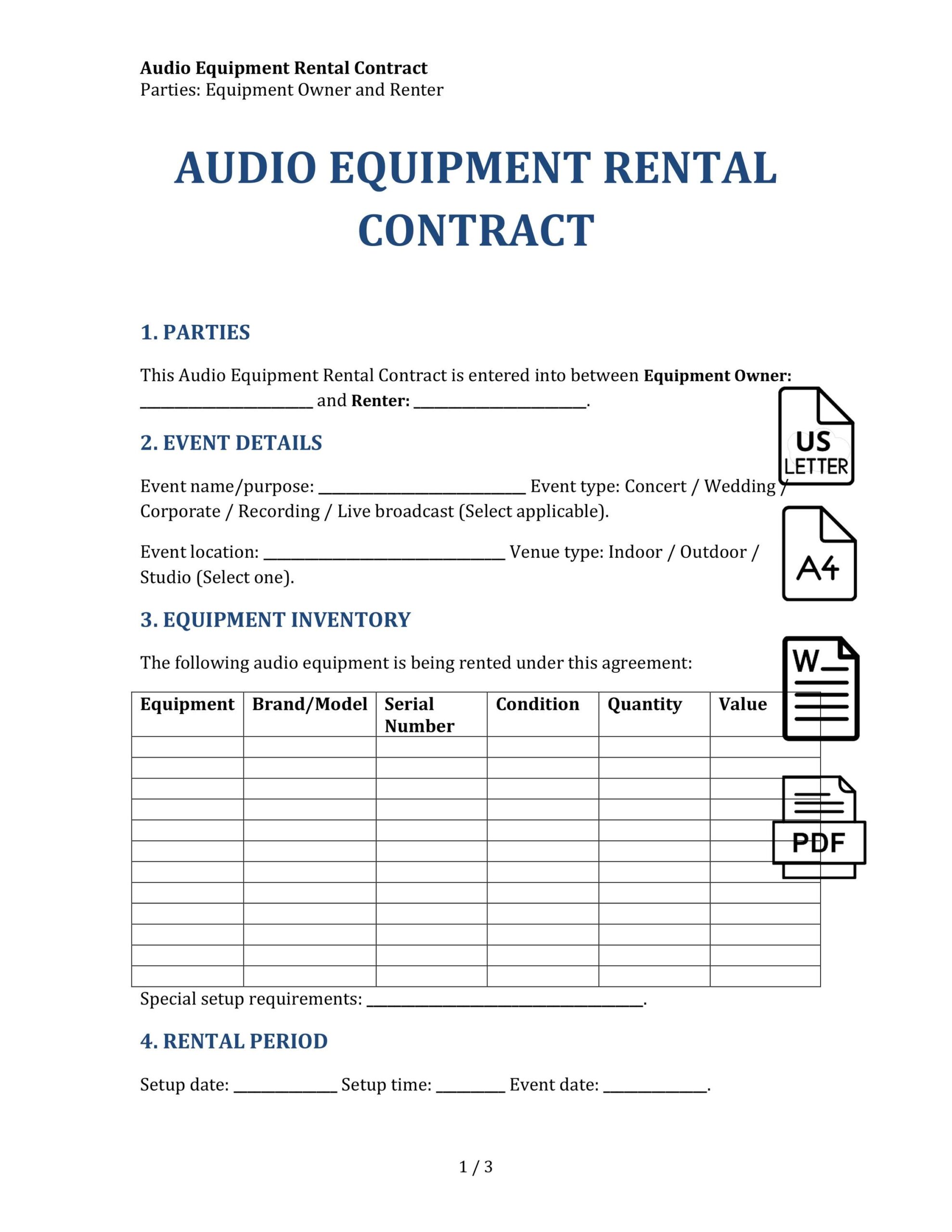
The foundation of any good rental document is clarity. You want to start by identifying exactly who is involved in the deal. This includes the full legal names of both the rental company and the client, along with their contact information and physical addresses. It might seem like a small detail, but having the correct contact information is vital if you need to reach someone urgently during an event or if there is a delay in returning the equipment after the rental period has ended.
Defining the Gear and the Timeline
The next section should focus on the inventory itself. You should provide a detailed list of every single item being rented, including serial numbers, cables, stands, and any specific accessories like road cases or adapters. When you use a sound equipment rental contract template, make sure it includes a space for an outgoing inspection where both parties acknowledge that the gear is in good working order at the time of pickup. This prevents a renter from claiming that a piece of equipment was already broken before they even touched it.
Timeline management is another critical area. You need to specify exactly when the rental period begins and ends. Does the clock start when the gear leaves your door, or when it arrives at the venue? You should also clearly define the “return by” time and date. This prevents the awkward situation where a client thinks they have the gear for the entire weekend while you have it booked for another event on Sunday morning. Clarity here ensures your inventory turnover remains smooth and predictable.
Financial Obligations and Liability
Payment terms need to be explicit. This includes the total rental fee, the required deposit amount, and the deadline for final payment. It is also wise to include information about cancellation policies. If a client cancels a day before a major festival, you have lost the opportunity to rent that gear to someone else, so a non-refundable deposit or a late cancellation fee is a standard industry practice to protect your revenue stream.
Liability is perhaps the most important part of the entire document. You must state clearly that the renter is responsible for any damage, loss, or theft of the equipment while it is in their possession. This should cover everything from minor scratches to total gear failure. You might even require the renter to provide proof of insurance for high-value items. By outlining these risks, you shift the burden of care to the client and provide yourself with a legal path to seek reimbursement if the gear returns in poor condition.
Finally, consider adding a section on technical support and proper usage. You should state that the renter is responsible for having the technical knowledge to operate the equipment or for hiring a qualified sound engineer. If they blow a sub-woofer because they pushed the levels too hard, your contract should state that this is considered misuse and is not covered by normal wear and tear. This helps protect you from costs associated with operator error.
Optimizing Your Rental Process for Success
Once you have your template ready, the way you implement it can make a huge difference in your daily operations. It is a good idea to keep your document digital so that it can be signed electronically. This makes the process much faster for clients and allows you to store the records in the cloud for easy access. Digital signatures are widely accepted and save you the hassle of filing physical stacks of paper that can easily get lost or damaged.
Communication is the key to making any contract work. When you send the document to a client, take a moment to highlight the most important sections, such as the return time and the damage policy. This ensures they actually read the critical parts instead of just scrolling to the signature line. A quick conversation can prevent a lot of confusion later on and shows that you care about the success of their event just as much as they do.
To make sure your rental experience goes as smoothly as possible, here are a few things to double-check before handing over the keys to your gear:
- Ensure all cables and small accessories are accounted for and listed on the inventory sheet.
- Verify the identity of the person picking up the equipment to make sure they match the contract.
- Take photos of the gear in its current condition right before it leaves your shop.
- Include a basic troubleshooting guide or a contact number for emergency technical assistance.
- Confirm the drop-off location and the person who will be responsible for receiving the gear upon return.
Having a structured approach to your rentals doesn’t just protect your wallet; it builds your reputation as a reliable vendor in the event industry. When clients see that you have your logistics and paperwork organized, they feel more confident in the quality of the gear you are providing. It creates a professional atmosphere that encourages repeat business and positive word-of-mouth referrals from event planners and venue managers who appreciate working with organized professionals.
At the end of the day, your sound gear is your livelihood, and protecting it should be your top priority. By taking the time to set up a comprehensive agreement, you are investing in the long-term health of your business. You will spend less time worrying about potential accidents and more time focusing on delivering the best possible audio experience for your clients. A little bit of preparation goes a long way in ensuring that every rental is a successful one for everyone involved.