A robust commission based employment contract template is not just a document; it’s the bedrock of a successful, performance-driven workforce. For businesses relying on sales, recruitment, or other performance-driven roles, clearly defined compensation structures are paramount. This type of employment agreement incentivizes top performers, directly linking their efforts to their earnings and, ultimately, your company’s growth.
Navigating the complexities of drafting a legally sound and motivating commission contract can be challenging. Without a precise framework, ambiguities can lead to disputes, demotivation, and costly legal battles. This comprehensive guide will equip you with the knowledge and tools to create an effective commission based employment contract template, ensuring clarity, fairness, and legal compliance for both employers and employees.

Throughout this article, we will explore the critical components of these contracts, discuss legal considerations, and provide expert tips to help you tailor an agreement that fosters a productive and transparent work environment. Whether you’re hiring your first salesperson or refining existing agreements, understanding the nuances of a commission based employment contract template is vital for sustained success.
Understanding Commission-Based Pay Structures
Commission-based pay structures are a popular compensation model, particularly in roles where individual performance directly impacts revenue. This approach motivates employees by tying a portion, or sometimes all, of their earnings to their productivity. It creates a direct link between effort and reward, driving sales and overall business objectives.
This compensation method can foster a highly competitive and driven sales force. When employees know their hard work directly translates into higher income, they are often more engaged and dedicated. It also allows businesses to manage payroll costs more effectively, as a significant portion of compensation is contingent on achieving specific goals.
Types of Commission Models
There are several types of commission structures businesses can implement, each with unique advantages. A common model is straight commission, where an employee’s entire salary is based on their sales or performance. This offers the highest incentive but can also create income instability for the employee if sales are slow.
Another popular option is a base salary plus commission. This hybrid model provides employees with a stable income foundation while still offering the incentive of additional earnings through commission. This structure is often preferred as it reduces financial risk for the employee, potentially attracting a wider range of talent.
Tiered commission structures are also frequently used, where the commission rate increases as sales targets are met or exceeded. For example, an employee might earn 5% on sales up to $50,000 and 7% on sales above $50,000. This model powerfully encourages employees to surpass initial targets and maximize their output.
Benefits for Employers and Employees
For employers, commission-based pay can significantly reduce fixed payroll expenses. Companies only pay out higher compensation when sales or performance targets are achieved, aligning costs directly with revenue generation. This can be especially beneficial for startups or businesses with fluctuating sales cycles.
Employees often benefit from the potential for unlimited earning potential. High-performing individuals can earn substantially more than a fixed salary, providing a strong financial incentive for excellence. This freedom to control one’s income through effort is a major draw for many professionals in sales and similar fields.
This compensation model also promotes a culture of accountability and results. Employees are more likely to take ownership of their performance when their income is directly tied to their success. This focus on outcomes can lead to a more productive and goal-oriented workforce overall.
Key Elements of a Robust Commission Agreement
A well-drafted commission based employment contract template is crucial for setting clear expectations and preventing disputes. It must explicitly detail all aspects of the compensation structure, the employee’s responsibilities, and the terms of employment. Clarity in these documents protects both the employer and the employee.
Neglecting specific details in a commission agreement can lead to misunderstandings, potential legal challenges, and decreased employee morale. Therefore, dedicating time and resources to creating a thorough and legally compliant contract is an investment in your company’s future stability and success.
Defining Commission Structure and Calculation
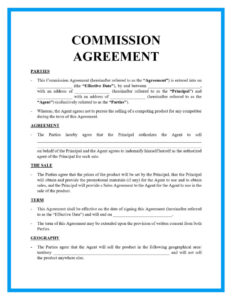
The heart of any commission agreement lies in its clear definition of the commission structure. This section must specify the commission rate, whether it’s a percentage of sales, a flat fee per unit, or based on profit margins. It’s essential to outline how commissions are calculated, including any caps or accelerators.
Furthermore, the contract should explicitly state what constitutes a "sale" or "achievement" for commission purposes. Are commissions paid only on closed deals, or on delivered and paid-for orders? What happens with returns or chargebacks? Precision here avoids future ambiguity and ensures fair payment practices.
The timing of commission payments is another critical detail. Will commissions be paid weekly, bi-weekly, or monthly? Is there a waiting period after a sale is finalized before the commission is disbursed? Transparently outlining the payment schedule manages employee expectations effectively.
Terms of Employment and Termination
Beyond compensation, a comprehensive commission based employment contract template must also clearly outline the general terms of employment. This includes the employee’s job title, reporting structure, and primary responsibilities. Detailing these aspects provides a complete picture of the employment relationship.
Crucially, the contract needs to address the conditions under which commissions are paid upon termination of employment. What happens to commissions on sales that are in progress but not yet finalized when an employee leaves the company? Is there a cut-off date for earning commissions after notice of termination? These clauses are often points of contention if not clearly defined.
The agreement should also specify the notice period required for termination by either party. It should outline any severance pay, if applicable, and conditions for forfeiture of unpaid commissions. Addressing these sensitive topics upfront protects both parties during a transition.
Tailoring Your Commission Contract to Specific Roles
Not all commission-based roles are alike, and a one-size-fits-all approach to employment contracts rarely works effectively. Tailoring your **commission based employment contract template** to the specific demands and responsibilities of each position is vital. This ensures the agreement accurately reflects the job function and incentivizes the right behaviors.
A customized contract demonstrates a clear understanding of the employee’s role and how their performance contributes to the company. This level of detail can improve job satisfaction and clarity, leading to better overall performance and reduced turnover.
Sales Representatives vs. Independent Contractors
When drafting a commission agreement, it’s crucial to distinguish between an employee and an independent contractor. The legal implications for each are significantly different, particularly regarding taxes, benefits, and labor laws. Misclassifying workers can lead to severe penalties for businesses.
A sales representative, typically an employee, usually has their work directed by the company, uses company resources, and adheres to set hours or procedures. Their commission agreement will include details on payroll deductions, benefits eligibility, and adherence to company policies.
An independent contractor, on the other hand, operates their own business, controls their work methods, and often works for multiple clients. Their agreement, often called a "contractor agreement" or "service agreement," focuses on deliverables, project timelines, and payment for services rendered, without employer-employee obligations like payroll taxes or benefits.
Performance Metrics and Quotas
For any commission role, clearly defined performance metrics and quotas are indispensable. These quantifiable targets provide employees with clear goals to strive for, directly linking their efforts to their potential earnings. The commission based employment contract template should articulate these expectations in detail.
The contract should specify what metrics will be used to measure performance. This could include sales volume, number of new clients acquired, revenue generated, or specific project milestones. Each metric should be measurable and clearly understood by the employee.
Additionally, the agreement must outline the sales quotas or performance targets that must be met to earn commission. Will these quotas be monthly, quarterly, or annual? What happens if quotas are not met? Are there provisions for review or adjustment of these targets? Providing a transparent framework for performance evaluation is key to employee motivation and fairness.
Legal Considerations for Commission Employment
Adhering to legal requirements is paramount when creating a **commission based employment contract template**. Employment laws vary by jurisdiction, and non-compliance can result in significant fines, back pay liabilities, and damage to a company’s reputation. It’s essential to understand and incorporate all relevant federal, state, and local regulations.
Seeking legal counsel is highly recommended to ensure your commission agreements are fully compliant. An attorney specializing in employment law can review your templates and advise on specific clauses relevant to your business and location, mitigating potential risks.
Compliance with Wage and Hour Laws
Commission-based employees are subject to various wage and hour laws, including minimum wage and overtime regulations. Even if an employee earns substantial commission, their regular rate of pay, when calculated, must meet or exceed the federal and state minimum wage for all hours worked.
For non-exempt employees (those eligible for overtime), the calculation of overtime pay can be complex. Overtime must generally be paid at 1.5 times the employee’s regular rate of pay, which includes commissions earned. The contract should clearly state how commissions will be factored into overtime calculations to avoid legal issues.
Employers must also ensure that all commissions are paid promptly and in accordance with state laws regarding final paychecks upon termination. Some states have specific timelines for when final wages, including earned commissions, must be disbursed to a departing employee.
Non-Compete and Confidentiality Clauses
Many commission-based employment contracts include clauses for non-compete agreements and confidentiality. A non-compete clause aims to prevent an employee from working for a competitor or starting a competing business for a specified period after leaving the company. However, the enforceability of these clauses varies significantly by state and can be difficult to uphold.
Confidentiality clauses are designed to protect proprietary company information, trade secrets, and client lists. These are typically more enforceable than non-competes and are critical for businesses that share sensitive data with their sales or commissioned staff. The contract should clearly define what information is considered confidential and the obligations of the employee to protect it.
When drafting these clauses, it is important to make them reasonable in scope, duration, and geographic area to increase their likelihood of enforceability. Overly broad or restrictive clauses may be deemed unenforceable by courts. Legal advice is particularly important for these sensitive provisions.
Comparison of Commission Structures
| Feature | Straight Commission | Base Salary + Commission | Tiered Commission |
|---|---|---|---|
| Base Pay | None (100% commission) | Fixed, consistent salary | None or Fixed Base Salary |
| Earning Potential | Highest, directly tied to sales | Moderate to High, stable income + incentive | High, with accelerating rates for higher performance |
| Risk for Employee | High (income instability) | Low (stable base income) | Moderate (base provides stability, tiers encourage risk-taking) |
| Motivation Focus | Maximum sales volume | Consistent effort with performance upside | Exceeding targets and pushing limits |
| Employer Cost Control | Highest (only pay for results) | Moderate (fixed costs + variable costs) | Moderate (fixed or low base + variable costs that grow with revenue) |
| Best For Roles Like | Experienced, high-performing sales pros | Entry-level to mid-level sales, account managers | Senior sales, strategic accounts, highly competitive markets |
Expert Tips for Drafting Your Commission Contract
Crafting an effective commission based employment contract template goes beyond legal compliance; it involves strategic planning and clear communication. These practical tips will help you create a document that not only protects your business but also motivates your team.
- Be Excessively Clear and Specific: Ambiguity is the enemy of any contract. Define every term, metric, and scenario precisely. Clearly state how commissions are earned, calculated, and paid, including edge cases like returns, chargebacks, or team sales.
- Regularly Review and Update: Business environments and legal landscapes change. Review your commission based employment contract template annually or whenever there are significant changes in your business model or compensation philosophy. Ensure it remains relevant and compliant.
- Incorporate Performance Review Triggers: Include clauses for regular performance reviews tied to commission structure. This allows for adjustments to quotas or rates based on market changes, individual performance trends, or company strategy.
- Define Draw Against Commission Clearly: If offering a draw (advance payment against future commissions), explicitly state if it’s recoverable, for how long, and how it will be recouped. This is a frequent source of misunderstanding.
- Address Clawback Provisions: Consider including “clawback” clauses for situations where commissions might need to be returned, such as canceled orders or customer non-payment after a commission has been disbursed. Ensure these are legally sound and clearly communicated.
- Provide a Comprehensive Training: Once the contract is in place, thoroughly train your employees on how the commission structure works. Ensure they understand every component and have opportunities to ask questions.
- Seek Legal Counsel: Always have an employment law attorney review your commission based employment contract template before implementation. This ensures compliance with all local, state, and federal laws and protects your business from potential liabilities.
Conclusion
A meticulously crafted commission based employment contract template is more than just a legal formality; it’s a vital tool for business growth and employee motivation. By clearly outlining compensation structures, performance expectations, and employment terms, you foster an environment of transparency and accountability. This foundational document empowers your team to thrive while safeguarding your company’s interests.
Investing time and effort into creating a robust, legally compliant, and clear commission agreement will pay dividends by reducing disputes, increasing employee retention, and ultimately driving better business outcomes. Leverage the insights and tips provided to build a system that rewards success and fuels your company’s future growth.