Developing a mobile application is a significant investment, but launching it is only the first step. To ensure your app remains relevant, secure, and performs optimally for its users, ongoing care is absolutely crucial. Neglecting post-launch support can quickly lead to bugs, security vulnerabilities, and a declining user experience, ultimately jeopardizing your initial investment. This is precisely why having a robust mobile app maintenance contract template is not just a good idea, but an essential business tool.
A well-defined maintenance agreement provides a clear framework for the continued support and evolution of your digital product. It outlines responsibilities, expectations, and service levels, preventing misunderstandings and ensuring your app receives the attention it needs to thrive in a competitive market. Throughout this article, we will explore the critical aspects of app maintenance, dissect the essential components of a maintenance contract, and provide a sample structure to guide you in safeguarding your mobile app’s future.
Why a Mobile App Maintenance Contract is Essential for Longevity
Just like a car needs regular servicing, a mobile application requires continuous maintenance to operate smoothly and efficiently. Many businesses underestimate the ongoing commitment required, leading to performance issues and user dissatisfaction down the line. A dedicated app maintenance agreement serves as a proactive measure against these common pitfalls.
Protecting Your Investment and User Experience
Your mobile app represents a substantial financial and strategic investment. Without proper maintenance, this investment can quickly depreciate. Regular updates, bug fixes, and performance optimizations are vital for protecting your app’s functionality and extending its lifespan. This proactive approach prevents major outages or critical failures that could severely impact your user base and brand reputation.
Consider the user experience; even minor bugs or slow loading times can drive users away. A well-maintained app ensures a smooth, reliable, and engaging experience, which is paramount for user retention and positive reviews. Furthermore, addressing issues promptly through a defined maintenance plan shows your commitment to quality and user satisfaction.
Defining Clear Scope and Responsibilities
One of the primary benefits of a detailed mobile app maintenance contract template is the clarity it brings to all parties involved. It explicitly outlines what services will be provided, how often, and by whom. This eliminates ambiguity regarding whose responsibility it is to handle specific tasks, such as bug resolution, security patching, or feature enhancements.
The contract will detail the specific tasks covered, distinguishing between routine maintenance and new feature development. This level of detail ensures that both the app owner and the service provider have a shared understanding of the scope of work. Clear responsibilities prevent disputes and ensure that necessary actions are taken in a timely manner, benefiting the app’s overall health.
Ensuring Performance, Security, and Compatibility
The mobile technology landscape evolves rapidly, with new operating system versions, device models, and security threats emerging constantly. Your app needs to keep pace with these changes to remain functional and secure. Regular maintenance includes ensuring compatibility with the latest OS updates (iOS, Android) and various device screen sizes.
Security patches are non-negotiable in an age of increasing cyber threats. An app maintenance agreement typically includes provisions for timely security updates to protect user data and prevent malicious attacks. Moreover, ongoing performance monitoring and optimization help identify and resolve bottlenecks, ensuring your app remains fast and responsive, which are key factors for user satisfaction and app store rankings.
Key Components of an Effective Mobile App Maintenance Agreement
A robust mobile app maintenance contract is more than just a list of services; it’s a comprehensive document that safeguards your digital asset. Understanding its core components is crucial for drafting or reviewing such an agreement. Each section plays a vital role in setting expectations and mitigating risks for both parties.
Scope of Services and Service Level Agreements (SLAs)
This section is the heart of any mobile app maintenance contract template. It precisely defines the services the provider will render. Typical services include bug fixing, performance monitoring, security updates, database management, and minor feature enhancements. It’s important to clearly delineate what constitutes "maintenance" versus new "development" to avoid scope creep and unexpected costs.
Crucially, this section also incorporates Service Level Agreements (SLAs). SLAs specify measurable metrics such as response times for support inquiries, resolution times for critical bugs, and uptime guarantees. These metrics provide a clear benchmark for the service provider’s performance and ensure the app owner receives the expected level of support. Different tiers of service, like basic or premium support, can also be outlined here.
Payment Terms, Duration, and Termination Clauses
Financial arrangements are critical and must be explicitly detailed. This part of the contract outlines the fees for maintenance services, whether they are a fixed monthly retainer, hourly rates, or a combination. Payment schedules, due dates, and acceptable payment methods should also be clearly stated to prevent any financial misunderstandings.
The contract’s duration specifies how long the agreement will be in effect, whether it’s for a fixed term (e.g., 12 months) with options for renewal, or an evergreen agreement with specific notice periods for termination. Termination clauses cover the conditions under which either party can end the contract, such as breach of terms, non-payment, or mutual agreement, including any required notice periods and final deliverables.
Intellectual Property, Confidentiality, and Indemnification
Protecting sensitive information and ownership rights is paramount. The intellectual property clause will reconfirm that the app owner retains full ownership of the mobile application and all its components, even as the service provider performs maintenance. Any new code or modifications made during maintenance should also be explicitly assigned to the app owner.
Confidentiality clauses, often incorporating a Non-Disclosure Agreement (NDA), ensure that any proprietary information shared between parties remains private. This protects trade secrets, user data, and business strategies. Indemnification clauses provide protection against legal claims or damages that might arise from either party’s actions or negligence, clarifying who is responsible in such scenarios.
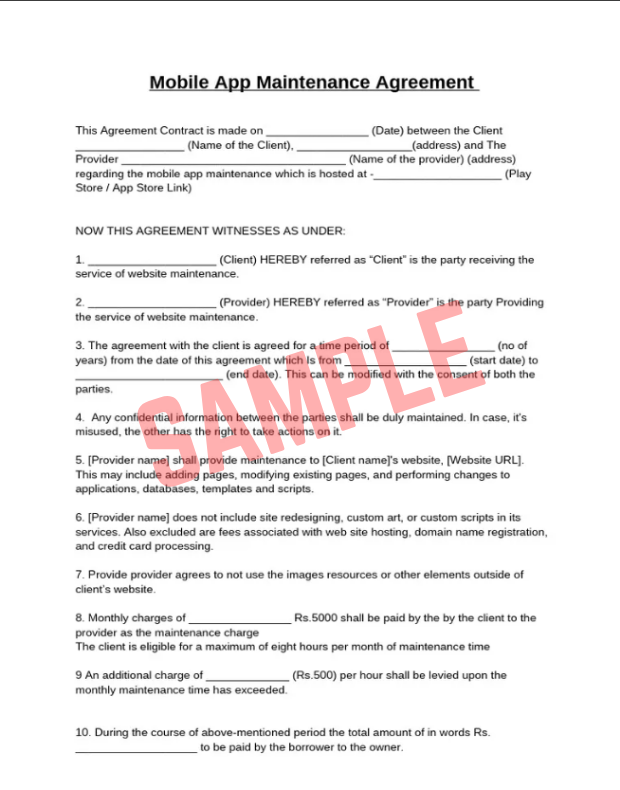
Sample Structure of a Mobile App Maintenance Contract Template
Having a clear structure for your app maintenance agreement can significantly streamline the process of drafting and negotiation. While legal advice should always be sought for a complete document, understanding the typical sections helps you ensure all critical aspects are covered. Here’s a typical outline you might find in a comprehensive mobile app maintenance contract template:
- Parties: Clearly identifies the app owner and the service provider, including their legal names and addresses.
- Definitions: Explains key terms used throughout the contract (e.g., "Mobile Application," "Maintenance Services," "Critical Bug," "SLA").
- Purpose: States the objective of the agreement – to provide ongoing maintenance and support for the specified mobile application.
- Scope of Services:
- Detailed list of maintenance tasks (bug fixing, security updates, performance monitoring, database maintenance).
- Distinction between included maintenance and out-of-scope development work.
- Specific modules or features covered by the agreement.
- Service Level Agreement (SLA):
- Response times for support requests (e.g., critical, high, medium, low priority).
- Resolution times for different types of issues.
- Guaranteed uptime percentages.
- Channels for support requests (e.g., email, dedicated portal).
- Fees and Payment Terms:
- Pricing structure (e.g., monthly retainer, hourly rates, tiered packages).
- Payment schedule and methods.
- Terms for additional services outside the scope.
- Term and Termination:
- Start date and duration of the agreement.
- Renewal options.
- Conditions for termination by either party, including notice periods.
- Provisions for data handover upon termination.
- Intellectual Property Rights:
- Confirmation of app owner’s full IP ownership.
- Ownership of new code or modifications made during maintenance.
- Confidentiality:
- Obligations of both parties to protect confidential information.
- Duration of confidentiality obligations.
- Warranties and Disclaimers:
- Service provider’s warranties regarding the quality of services.
- Disclaimers regarding specific performance outcomes or unforeseen issues.
- Limitation of Liability:
- Caps on financial liability for damages incurred by either party.
- Exclusions for indirect or consequential damages.
- Indemnification:
- Provisions for protecting each party against third-party claims.
- Governing Law and Dispute Resolution:
- Jurisdiction and applicable laws for the contract.
- Methods for resolving disputes (e.g., mediation, arbitration).
- Force Majeure:
- Conditions under which parties are excused from performance due to unforeseeable events.
- Entire Agreement:
- States that the contract constitutes the entire agreement between the parties.
- Signatures:
- Spaces for authorized representatives of both parties to sign and date the agreement.
Ensuring your mobile app remains successful in the long run hinges on consistent care and strategic planning. A comprehensive maintenance contract is the bedrock of this strategy, providing clarity, protection, and a pathway for your app’s continued evolution. By outlining clear expectations, responsibilities, and service levels, you safeguard your investment and ensure a seamless experience for your users.
Prioritizing a well-drafted app maintenance agreement is not an overhead expense; it’s a strategic investment in the longevity and profitability of your mobile application. Utilize a reliable template as a starting point, and remember to tailor it specifically to your app’s unique needs and the nature of your service provider relationship. This proactive approach will undoubtedly contribute to your app’s sustained success and growth.