Crafting a robust employment contract is a cornerstone of effective human resources management. A well-drafted agreement protects both employers and employees, setting clear expectations from day one. In Australia, compliance with the Fair Work Act is paramount, making a reliable fair work employment contract template an indispensable tool for any business owner or HR professional. This guide will walk you through the essential components of such a template, ensuring your contracts are legally sound and comprehensive.
Understanding the intricacies of employment law can be complex, but having a solid foundation in your contractual agreements minimizes potential disputes and fosters a positive workplace environment. From defining roles and responsibilities to outlining terms of employment, a professionally prepared employment contract acts as the blueprint for the employment relationship. It serves as a vital document that clearly communicates rights, obligations, and the agreed framework for engagement.
This article will delve into why a compliant contract is non-negotiable, what key elements it must contain, and how to effectively utilise a fair work employment contract template. We’ll also provide a sample structure to illustrate how these components come together. Equipping yourself with the right knowledge and tools ensures your business operates smoothly and ethically within the Australian legal framework.
Why a Fair Work Compliant Employment Contract is Essential
A legally sound employment contract is more than just a formality; it’s a critical legal document that underpins the entire employer-employee relationship. It provides clarity and certainty, which can prevent misunderstandings and costly disputes down the line. For employers in Australia, adhering to the Fair Work Act 2009 is a non-negotiable requirement.
Protecting Your Business and Employees
An employment contract clarifies the terms and conditions of employment, thereby protecting both parties. For the employer, it defines the scope of work, intellectual property rights, confidentiality clauses, and grounds for termination, safeguarding business interests. Without a clear contract, an employer could face significant challenges in managing expectations or resolving disagreements.
For employees, a contract ensures they understand their rights, remuneration, working hours, leave entitlements, and other benefits. It provides job security and transparency, fostering trust and a positive working environment. A fair work employment contract template helps ensure all mandatory entitlements are included, preventing breaches of workplace law. Many workplace disputes arise from a lack of clear documentation.
Navigating Australian Employment Law Requirements
The Australian employment landscape is governed by the Fair Work Act, National Employment Standards (NES), and various awards or enterprise agreements. An effective contract must reflect these legal requirements. For instance, the NES covers 11 minimum entitlements that apply to all employees, such as annual leave, personal/carer’s leave, and notice of termination.
Failing to comply with these minimum standards can result in significant penalties, back-pay claims, and reputational damage for businesses. Therefore, using a current and compliant fair work employment contract template is crucial. It acts as a comprehensive checklist to ensure all legal bases are covered, from standard working hours to superannuation obligations.
Key Elements of a Robust Employment Contract
A comprehensive employment contract details all the essential aspects of the working relationship. Beyond the basic identification of parties, several critical components must be included to ensure legal compliance and operational clarity. These elements form the backbone of a reliable fair work employment contract template.
Defining the Scope of Employment
Clearly outlining the job role, responsibilities, and reporting structure is fundamental. This section should specify the employee’s title, a brief description of their duties, and who they report to within the organisation. Ambiguity here can lead to disagreements about performance expectations and job scope.
It’s also important to specify whether the employment is full-time, part-time, casual, or fixed-term. Each employment type carries different entitlements and obligations under the Fair Work Act. For instance, casual employees have different rights regarding notice of termination compared to permanent staff.
Remuneration, Hours, and Leave Entitlements
This section details the employee’s pay rate, how and when they will be paid, and any allowances or superannuation contributions. It must also specify the ordinary hours of work, any roster arrangements, and provisions for overtime. These details are often dictated by modern awards or enterprise agreements.
All leave entitlements, including annual leave, personal/carer’s leave, compassionate leave, and parental leave, must be explicitly stated in accordance with the National Employment Standards. Including these details in your fair work employment contract template ensures transparency and compliance with legal minimums. It provides employees with a clear understanding of their time off and pay.
Confidentiality, Intellectual Property, and Termination Clauses
Protecting business information is vital. Confidentiality clauses prevent employees from disclosing sensitive company data during and after their employment. Similarly, intellectual property clauses assign ownership of any inventions, creative works, or discoveries made by the employee during their tenure to the employer.
The contract must also clearly outline the conditions under which employment can be terminated by either party, including notice periods and grounds for dismissal. This section should align with the Fair Work Act’s provisions on unfair dismissal and general protections. A clear termination clause reduces the risk of disputes and provides a framework for managing separation from employment.
Sample Structure of a Fair Work Employment Contract Template
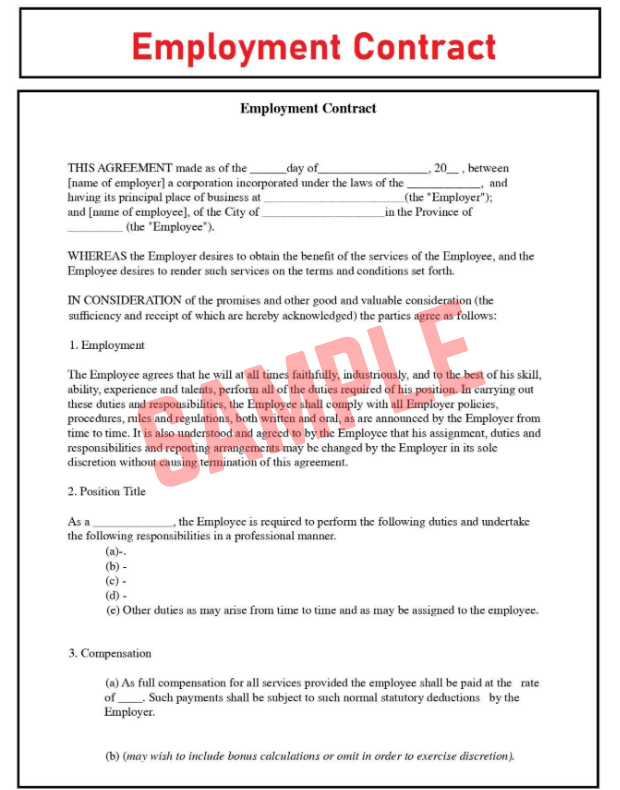
Creating an effective employment contract requires a clear and logical structure that is easy to understand and legally sound. This sample outlines the typical sections you would find in a comprehensive fair work employment contract template, designed to meet Australian standards. Each part plays a crucial role in establishing a fair and compliant employment relationship.
This template is a guide only and should be adapted to suit specific roles and organisational needs. Always consider seeking legal advice to ensure your final contract meets all current legal requirements for your industry and business.
Party Details and Commencement
This initial section identifies the employer and the employee, including their full legal names and addresses. It also specifies the commencement date of employment. Clearly stating these details ensures there is no ambiguity about who the contract applies to and when the employment relationship officially begins.
- Employer Details: Full legal name of the company/business, ABN, and registered address.
- Employee Details: Full legal name, residential address, date of birth.
- Commencement Date: The official start date of the employee’s tenure.
- Position Title: The formal title of the role the employee is being engaged for.
Terms of Employment and Remuneration
This core section defines the employment type, the specific duties, and the financial arrangements. It covers everything from how the employee will be paid to their working hours and overall compensation package. This helps ensure both parties have a clear understanding of the job’s financial and structural aspects.
- Employment Type: Specify Full-time, Part-time, Casual, or Fixed-term.
- Job Description: A detailed outline of key duties, responsibilities, and reporting lines.
- Location of Employment: Primary workplace address.
- Award/Agreement Coverage: Reference to the applicable Modern Award or Enterprise Agreement (if any).
- Remuneration:
- Annual salary or hourly rate.
- Method and frequency of payment (e.g., weekly, fortnightly, monthly).
- Superannuation details and contributions.
- Any applicable allowances (e.g., car allowance, mobile phone allowance).
- Hours of Work:
- Ordinary working hours per week.
- Start and finish times.
- Provisions for overtime and penalty rates (if applicable).
Leave, Confidentiality, and Termination
These clauses cover critical aspects related to employee entitlements, protection of business interests, and the procedures for ending the employment relationship. They are vital for compliance with the National Employment Standards and for safeguarding sensitive company information.
- Leave Entitlements:
- Annual Leave (4 weeks per year for permanent employees).
- Personal/Carer’s Leave (10 days per year for permanent employees).
- Compassionate Leave.
- Parental Leave.
- Community Service Leave.
- Long Service Leave (where applicable).
- Confidentiality: Clause protecting proprietary information, trade secrets, and client data.
- Intellectual Property: Assigning ownership of work created during employment to the employer.
- Workplace Policies: Statement that the employee agrees to adhere to company policies (e.g., WHS, social media, code of conduct).
- Termination:
- Notice periods for both employer and employee.
- Grounds for summary dismissal (e.g., serious misconduct).
- Redundancy provisions (if applicable).
- Governing Law: Stating that the contract is governed by the laws of a specific Australian state/territory and the Commonwealth of Australia.
A well-crafted fair work employment contract template is an invaluable asset for any organisation in Australia. It clarifies expectations, protects both parties, and ensures adherence to the complex landscape of employment law. By investing time in creating or adapting a comprehensive template, you build a stronger, more compliant, and more harmonious workplace.
Ultimately, having clear contractual agreements in place minimises disputes, enhances employee satisfaction, and provides a solid legal foundation for your business operations. Reviewing and updating your contracts regularly, especially as legislation changes, is also a best practice for ongoing compliance.