Unexpected events can disrupt even the most meticulously planned business operations, throwing contractual obligations into disarray. From natural disasters to global pandemics, unforeseen circumstances often make it impossible to fulfill agreements as originally intended. When such an event strikes, a formal communication is not just good practice; it’s often a contractual necessity.
Understanding how to properly inform your partners or clients about these disruptions is crucial for protecting your business and maintaining relationships. This is where a well-crafted force majeure notification comes into play. It provides a formal declaration that an unforeseen event is preventing you from meeting your contractual commitments.
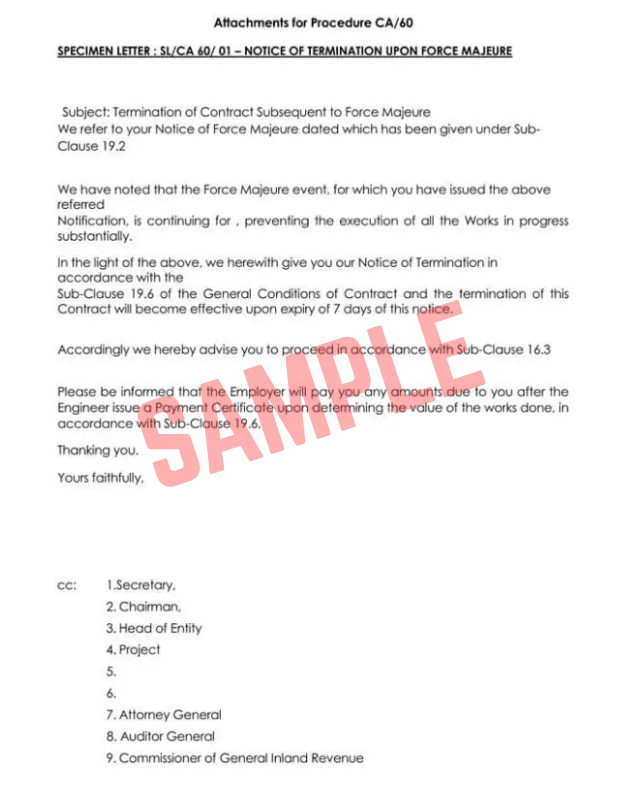
This comprehensive guide will walk you through the intricacies of force majeure, explaining its importance and what constitutes a valid claim. More importantly, we’ll provide a robust notice of force majeure letter template that you can adapt to your specific situation, ensuring clarity and compliance in challenging times.
Understanding Force Majeure Clauses And Their Importance
Force majeure clauses are standard provisions found in many commercial contracts, designed to protect parties from liability when extraordinary events prevent them from fulfilling their contractual duties. These events must be beyond a party’s reasonable control and largely unforeseeable. Without such a clause, a party failing to perform might be found in breach of contract, incurring significant penalties.
What Constitutes a Force Majeure Event?
A force majeure event is typically defined within the contract itself, but generally includes circumstances like acts of God (e.g., earthquakes, floods, severe storms), war, terrorism, strikes, government actions (e.g., embargos, lockdowns), or epidemics/pandemics. The key is that the event must be outside the control of the affected party and directly impact their ability to perform. For instance, a minor disruption would not qualify.
The event must be truly unforeseeable at the time the contract was signed or, if foreseeable, unavoidable in its impact. Simply experiencing increased costs or minor delays due to an event typically does not trigger a force majeure clause. It must make performance impossible or impracticable. For example, a global supply chain disruption due to a major port closure could be a valid event.
Why a Formal Notice Is Crucial
Issuing a formal force majeure notice is not merely a courtesy; it’s often a strict contractual requirement. Many contracts stipulate that written notice must be provided within a specific timeframe after the event occurs or becomes known. Failure to provide timely notice could invalidate your claim to force majeure protection, leaving you vulnerable to breach of contract actions.
This formal notification serves several critical purposes. It alerts the other party to the situation, allowing them to understand the disruption and potentially adjust their own plans. It also creates a legal record of your compliance with the contract’s notification provisions, which can be vital in any future disputes. Moreover, it demonstrates good faith and a proactive approach to managing contractual challenges.
Key Elements of a Valid Force Majeure Claim
For a force majeure claim to be valid, several conditions must generally be met. First, the event must be truly beyond the reasonable control of the party seeking relief and could not have been prevented or mitigated through reasonable efforts. This means you couldn’t have planned for it or taken steps to lessen its impact.
Second, the event must directly prevent or significantly hinder your ability to perform your contractual obligations, not merely make performance more expensive or difficult. There must be a clear causal link between the event and your inability to perform. Finally, you must demonstrate that you have taken all reasonable steps to mitigate the impact of the event and resume performance as soon as possible. Documentation of these efforts is essential.
Crafting An Effective Force Majeure Notification
Writing a force majeure letter requires precision and adherence to contractual terms. The goal is to clearly communicate the situation, its impact, and the relief you are seeking, all while complying with the specific requirements of your agreement. A well-structured notice protects your interests and fosters clear communication.
Essential Information to Include
Your force majeure notice should clearly identify the parties involved and specifically reference the contract or agreement that is being impacted. State the effective date of the contract and any relevant project numbers or descriptions. This ensures there’s no ambiguity about which agreement is being discussed.
Next, explicitly name the force majeure event that has occurred and the date it began. Describe in detail how this event directly prevents or delays your performance of specific contractual obligations. Be precise about which clauses or deliverables are affected. It’s also wise to provide an estimated duration of the impact, if possible, along with a commitment to update the recipient as the situation evolves.
Crucially, outline the steps you are taking to mitigate the impact of the force majeure event and your plan to resume performance. Clearly state the relief you are requesting, such as an extension of time or temporary suspension of obligations, citing the specific force majeure clause in your contract. Request an acknowledgment of receipt of your notice to establish a clear timeline.
Legal Considerations and Best Practices
Before drafting any notice, thoroughly review the force majeure clause in your contract. Pay close attention to definitions of force majeure events, notice requirements (e.g., delivery method, timeframe), and any specific procedures for invoking the clause. Strict adherence to these terms is paramount for the validity of your claim.
Timeliness is often a critical factor; many contracts specify a very short window for providing notice. Delaying notification could lead to your claim being rejected. Always retain clear documentation of the force majeure event, including official declarations, news reports, government orders, or expert assessments. This evidence will support your claim if it is ever challenged.
While this guide provides a helpful notice of force majeure letter template, it is essential to remember that legal advice should always be sought. Consult with an attorney to ensure your notice is legally sound, specifically tailored to your contract, and compliant with all applicable laws. This proactive step can prevent costly disputes down the line.
Sample Notice Of Force Majeure Letter Template
Below is a comprehensive notice of force majeure letter template designed to cover all the essential elements discussed. Remember to customize this template with your specific details, contractual references, and the exact nature of the force majeure event affecting your operations. Placeholders indicated by [brackets] should be replaced with your information.
This template helps structure your communication effectively. It ensures you include all necessary contractual and factual details. The clear format makes it easy for the recipient to understand your situation and the specific relief you are requesting.
[Your Company Letterhead]
[Date]
[Recipient Name] [Recipient Title] [Recipient Company Name] [Recipient Company Address]
Subject: Notice of Force Majeure Event Affecting Contract No. [Contract Number] – [Contract Title]
Dear [Recipient Name],
This letter serves as formal written notification in accordance with the force majeure clause, Article [Article Number], of our agreement, Contract No. [Contract Number] for [Contract Title], dated [Date of Contract]. We regret to inform you that we are currently experiencing an unforeseen event of force majeure. This event significantly impacts our ability to fulfill certain obligations under the aforementioned contract.
The force majeure event in question is [Clearly describe the specific force majeure event, e.g., “a severe regional flood,” “government-mandated lockdown due to a pandemic,” “unforeseen supply chain disruption caused by a port strike”]. This event commenced on or about [Date the event began] and continues to impact our operations. We have determined that this event is beyond our reasonable control and could not have been prevented or mitigated through reasonable commercial efforts.
Specifically, the event is preventing us from [Detail the specific obligations affected, e.g., “delivering raw materials by the agreed-upon date,” “accessing our manufacturing facility,” “deploying personnel as scheduled”]. As a direct result, we anticipate delays in [Specific deliverables or milestones, e.g., “the completion of Phase 2,” “shipment of 500 units of Product X”]. We estimate that this disruption will last for approximately [Estimated duration, e.g., “four to six weeks,” “until government restrictions are lifted”].
We are taking all reasonable and diligent steps to mitigate the impact of this force majeure event. Our current mitigation efforts include [Describe mitigation actions, e.g., “seeking alternative suppliers,” “implementing remote work solutions,” “diverting shipments through alternative routes”]. We will continue to monitor the situation closely and will provide you with updated information as it becomes available. Our priority is to resume full performance as swiftly as circumstances allow.
Therefore, pursuant to Article [Article Number] of our contract, we formally request [Specify the requested relief, e.g., “an extension of [Number] weeks for all affected deadlines,” “a temporary suspension of our delivery obligations until [Date],” “a renegotiation of the delivery schedule”]. We propose to discuss an amended schedule and any other necessary adjustments once the full extent and duration of this force majeure event become clearer.
We appreciate your understanding and cooperation during this challenging period. Please acknowledge receipt of this notice. We are available to discuss this matter further and explore mutually agreeable solutions.
Sincerely,
[Your Name] [Your Title] [Your Company Name] [Your Contact Information]
This robust notice of force majeure letter template serves as a vital tool for formal communication during times of unforeseen disruption. It helps you articulate the nature of the event, its impact on your contractual obligations, and the necessary relief. By clearly outlining these details, you protect your business interests and maintain transparent relationships with your partners.
Remember, the timely and accurate issuance of such a notice is paramount. Always review your specific contract’s force majeure clause and, when in doubt, seek professional legal counsel to ensure full compliance. Adapting this template diligently to your unique circumstances will facilitate smoother navigation through challenging periods, allowing all parties to manage expectations and plan accordingly.