The process of employee separation, while often challenging, demands clarity and professionalism from employers. Properly handling an employee’s departure is crucial not only for maintaining a positive company image but also for legal compliance. A well-structured separation notice from employer template serves as an indispensable tool, ensuring that all necessary information is conveyed accurately and respectfully. This article will guide you through understanding the importance of these notices, the key elements they should contain, and provide a practical template to streamline your offboarding procedures.
Navigating the complexities of employee termination or resignation requires more than just verbal communication. A formal, written document provides a clear record for both the employer and the departing employee, detailing important aspects like the last day of employment, final compensation, and benefits information. Without a standardized approach, companies risk misunderstandings, legal disputes, and damage to their professional reputation.
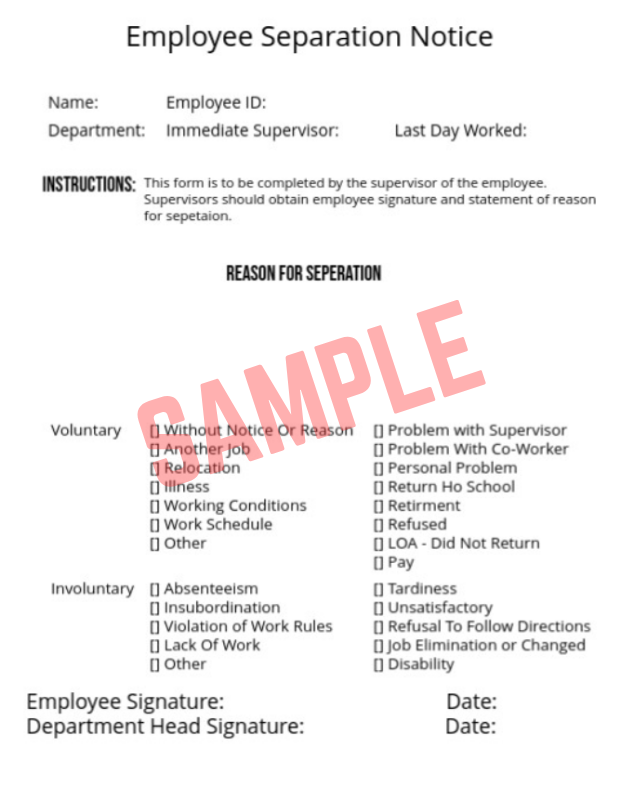
Understanding how to effectively prepare and utilize a separation notice is vital for any business owner or HR professional. We will delve into the critical components of these notices, discuss the legal framework surrounding them, and then present a comprehensive sample. By the end, you will have a robust understanding of how to manage employee separations with confidence and compliance.
Understanding The Purpose of an Employee Separation Notice
An employee separation notice, also commonly referred to as an employee termination letter or a work separation letter, is a formal document issued by an employer to an employee upon the cessation of their employment. This notice acts as an official record, confirming the end of the employment relationship and outlining the terms and conditions related to the departure. Its primary purpose is to provide clear, unambiguous information, preventing future disputes or misunderstandings.
Moreover, this official dismissal letter protects the employer by documenting the reasons for termination (if applicable) and ensuring adherence to company policies and legal obligations. It’s a foundational piece of the employee offboarding process, guiding both parties through the next steps. For employees, it offers clarity on their final pay, benefits, and next steps regarding unemployment claims or other post-employment entitlements.
Key Elements of a Standard Separation Document
A robust separation document should contain several critical pieces of information to ensure comprehensive communication. Accuracy and completeness are paramount when drafting these notices. Omitting vital details can lead to confusion or legal repercussions down the line.
Here are the essential components that every notice should include:
- Employee Information: Full name, job title, and employee ID.
- Company Information: Official company name and address.
- Date of Notice: The date the letter is officially issued.
- Effective Date of Separation: The employee’s last day of employment.
- Reason for Separation: A clear, concise statement regarding the cause of departure (e.g., resignation, termination for cause, layoff, mutual agreement).
- Final Pay Details: Information about the final paycheck, including accumulated vacation pay, severance (if applicable), and method of payment.
- Benefits Information: Details regarding continuation or cessation of health insurance, retirement plans, and other benefits. This often includes COBRA information.
- Return of Company Property: Instructions for returning company assets like laptops, phones, and ID badges.
- Confidentiality and Non-Disclosure Agreements: A reminder of any existing agreements that remain in effect.
- Contact Person: Information for who the employee can contact for questions regarding benefits, payroll, or other post-employment queries.
- Employer Signature: An authorized signature from an HR representative or manager.
Legal Considerations and Compliance for Employers
Issuing an employment separation agreement or termination paperwork involves navigating various legal requirements. Employers must be diligent in adhering to federal, state, and local labor laws to avoid potential lawsuits or penalties. These laws often dictate specifics such as the timing of final paychecks, continuation of benefits, and the permissible reasons for termination.
For instance, federal laws like COBRA require employers to offer continued health coverage under certain conditions. State laws may also mandate specific notice periods for layoffs or provide guidelines for severance pay. Consulting with legal counsel or an HR expert is always recommended to ensure full compliance with all applicable regulations. Documenting the process thoroughly, including the separation notice, is a critical step in demonstrating legal due diligence.
Why Clear Communication Matters During Offboarding
The manner in which an employer communicates an employee separation can significantly impact the departing employee, remaining staff, and the company’s reputation. Clear, respectful, and transparent communication helps to mitigate negativity and confusion. It reinforces a perception of professionalism and fairness, even in difficult circumstances.
Poor communication, on the other hand, can breed resentment, rumors, and potential legal challenges. Providing a comprehensive notice helps employees understand their rights and obligations, facilitating a smoother transition. This professional approach to offboarding also helps maintain morale among current employees, showing them that the company handles even challenging situations with integrity.
Crafting an Effective Separation Notice From Employer Template
Developing a standardized separation notice from employer template is a smart strategy for any business. A template ensures consistency, reduces administrative burden, and minimizes the risk of overlooking crucial information. It acts as a reliable framework that can be adapted to various separation scenarios, from voluntary resignations to involuntary terminations. This structured approach simplifies the process for HR teams and managers, ensuring that every employee separation is handled uniformly and legally.
When building your template, consider the different types of separations your company might encounter. While the core elements remain the same, the tone and specific details might vary slightly. For example, a notice for a layoff might emphasize support services, whereas a termination for cause would be more direct about the performance issues. Having a adaptable template ensures you’re prepared for any situation.
Essential Sections to Include in Your Template
Beyond the basic elements, a well-rounded template should also consider practical and empathetic sections. These can enhance clarity and demonstrate the employer’s commitment to a respectful process. Think about what questions an employee might have upon receiving such a notice and aim to answer them proactively within the document.
Consider including these additional sections:
- Unemployment Information: General information on how to apply for unemployment benefits.
- Reference Policy: Clarification on the company’s policy for providing employment references.
- Final Reminders: Any final tasks the employee needs to complete (e.g., submitting expense reports).
- Acknowledgement of Receipt: A space for the employee to sign, acknowledging they received and understood the notice.
- COBRA Notice: Detailed information about COBRA election periods and costs, if applicable.
- Severance Agreement: If severance is offered, clearly outline the terms, conditions, and any required release of claims.
Sample: Separation Notice From Employer Template
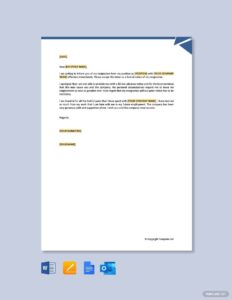
Here is a comprehensive sample that can be adapted as your company’s separation notice from employer template. This structure covers common scenarios and ensures essential information is communicated clearly. Remember to customize the bracketed sections with your specific details.
[Company Letterhead]
[Date]
[Employee Name]
[Employee Address]
Subject: Notice of Employment Separation
Dear [Employee Name],
This letter serves as official notification that your employment with [Company Name] will conclude on [Effective Date of Separation], [Year]. Your last day of active employment will be [Last Day of Active Work, if different from Effective Date of Separation].
The reason for this separation is [State the reason clearly and concisely, e.g., “company restructuring,” “position elimination,” “mutual agreement,” or “termination for performance reasons as discussed on [Date]”]. We understand this news may be difficult, and we want to ensure a clear understanding of the next steps.
Your final paycheck, which will include all accrued and unused vacation time (if applicable and in accordance with state law) and any outstanding commissions or bonuses, will be issued on [Date of Final Paycheck] by [Method of Payment, e.g., direct deposit or mailed check].
Regarding your benefits, your health insurance coverage through [Company Name]’s plan will cease on [Date]. Information regarding your eligibility for COBRA (Consolidated Omnibus Budget Reconciliation Act) continuation coverage will be mailed to your home address by [Date], typically within 14 days of your benefits termination. Please review this information carefully and contact [HR Contact Person/Department] at [HR Phone Number] or [HR Email] with any questions about your benefits.
You are required to return all company property in your possession, including but not limited to, your laptop, mobile phone, company keys, ID badge, and any confidential documents, by [Date for Return of Property]. Please coordinate the return of these items with [Name of Manager/HR] at [Location or Method].
We remind you of your ongoing obligations regarding confidentiality and any non-disclosure agreements, non-compete agreements, or intellectual property agreements you may have signed during your employment. These agreements remain in full force and effect after your separation.
Information regarding unemployment compensation can be obtained through your state’s Department of Labor. [Company Name] will accurately respond to any requests for information from the appropriate state agencies.
We wish you the best in your future endeavors.
Sincerely,
[Authorized HR Representative/Manager Name]
[Title]
[Company Name]
Customizing Your Notice for Specific Situations
While a template provides a solid foundation, tailoring each notice to the specific circumstances of the separation is crucial. A resignation will require a different tone than a layoff, and a termination for cause demands precise and documented language. Always ensure the language is professional, factual, and consistent with company policy.
For voluntary resignations, the notice can be a confirmation of their decision, expressing appreciation for their service. In cases of involuntary termination, ensure all previous warnings or performance reviews are referenced and that the reasons are legally sound and well-documented. An effective separation notice from employer template should be flexible enough to handle these nuances, ensuring clarity and compliance in every unique situation.
Issuing a clear and legally sound separation notice is a fundamental aspect of responsible human resource management. Utilizing a comprehensive separation notice from employer template ensures consistency, reduces potential legal risks, and provides clarity for both the employer and the departing employee. This structured approach helps maintain professionalism, even during challenging transitions, and safeguards the company’s reputation.
By thoughtfully preparing and delivering these crucial documents, employers can navigate the complexities of employee offboarding with greater confidence and compliance. Remember, the goal is to provide a clean, respectful, and legally defensible conclusion to the employment relationship, paving the way for a smooth transition for all parties involved.