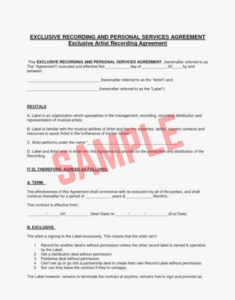
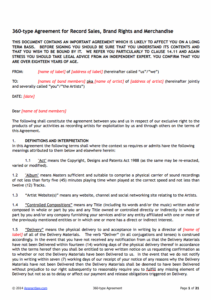
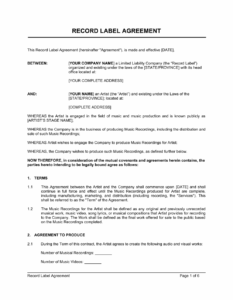
Stepping into the professional music world often means confronting a stack of legal documents. For aspiring artists, understanding the core of a record deal is paramount, and having access to a reliable music artist recording contract template can be a crucial first step. This guide aims to demystify these complex agreements, preparing you for the journey ahead in the music industry. We’ll explore the vital components, offer a sample outline, and highlight common pitfalls to avoid, ensuring you’re well-equipped to navigate your potential record deal.
Many artists dream of signing with a major label, but the excitement can quickly turn to apprehension when faced with a lengthy legal document. A well-structured music artist recording contract template can provide a foundational understanding of what to expect. It helps you recognize key clauses and terms before you even sit down at the negotiating table, empowering you to make informed decisions about your career.
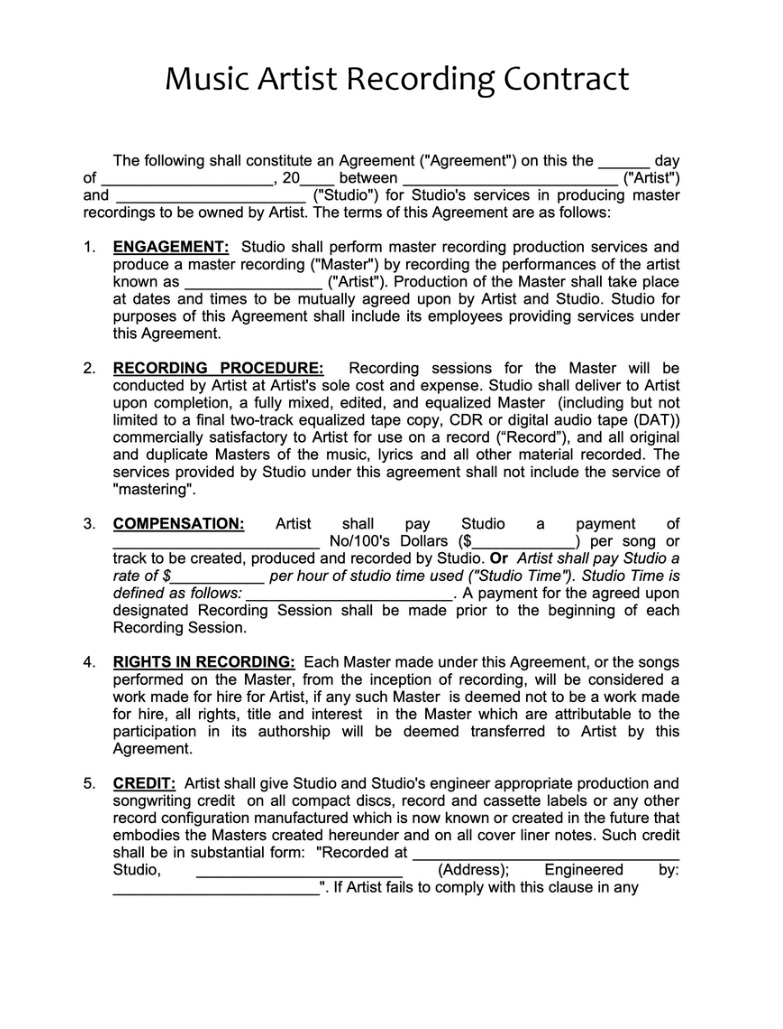
Understanding The Essentials Of A Record Deal Agreement
A record deal agreement is a legally binding document between a musical artist and a record label. This contract outlines the terms under which the artist will create and deliver musical recordings to the label, and how the label will market, distribute, and exploit those recordings. Understanding its core components is essential for any artist considering a professional career. It often covers everything from exclusivity and royalties to publishing rights and the duration of the agreement.
Key Components Of An Artist Recording Agreement
When reviewing an artist recording agreement, several key sections demand your attention. These clauses dictate the financial, creative, and legal aspects of your relationship with the label. It’s important to grasp what each section means for your career trajectory.
- Term and Exclusivity: This defines how long the contract lasts and whether you can record for other labels during that period. Many contracts stipulate a primary term plus several option periods.
- Recording Commitment: This specifies the number of albums or master recordings you are obligated to deliver to the label. It also often includes deadlines for delivery and approval processes.
- Advances and Royalties: An advance is an upfront payment, recoupable from your future royalties. Royalties are your share of the income generated from sales and other uses of your music. The percentage split is a critical negotiation point.
- Publishing Rights: This section addresses who owns or controls the copyright to your musical compositions. Often, labels seek a share of publishing, which can be a significant revenue stream.
- Controlled Composition Clause: This clause limits the mechanical royalties a label will pay for songs you write and record yourself. It’s a common, yet often contentious, part of many agreements.
- Marketing and Promotion: While labels handle marketing, the contract may outline expectations for promotional activities, touring, and public appearances. Your participation is often mandatory.
- Distribution and Licensing: This details how your music will be distributed globally, across various formats, and how it can be licensed for film, TV, or commercials.
- Accounting and Audits: This specifies how and when the label will provide statements of earnings and your right to audit their books to verify accuracy. Transparency is key here.
Why Legal Review Is Crucial For Your Music Contract
Even with a comprehensive music artist recording contract template, professional legal advice is indispensable. An entertainment lawyer specializing in music law can interpret complex jargon and identify potential disadvantages. They can also negotiate more favorable terms on your behalf, protecting your long-term interests and intellectual property. Investing in legal counsel now can save you significant headaches and financial losses in the future.
Sample Music Artist Recording Contract Template Outline
A standard music artist recording contract template typically follows a predictable structure. While specific clauses will vary, this outline provides a general idea of the sections you would expect to see in a professional recording agreement. Understanding this format will help you navigate any document presented to you.
**RECORDING AGREEMENT**

This Recording Agreement ("Agreement") is made and entered into as of [Date] (the "Effective Date"), by and between:

[Label Name], a [State/Country] corporation, with its principal place of business at [Label Address] ("Label");

AND

[Artist Name/Band Name], an individual/group, with a principal address at [Artist Address] ("Artist").

**WITNESSETH:**

WHEREAS, Artist is a musical performer and composer, possessing unique artistic talents and abilities;
WHEREAS, Label is engaged in the business of recording, manufacturing, marketing, distributing, and exploiting musical sound recordings;
WHEREAS, Artist desires to exclusively render services to Label for the purpose of creating and exploiting master recordings, and Label desires to engage Artist for such purposes;

NOW, THEREFORE, in consideration of the mutual covenants and promises herein contained, the parties agree as follows:

**1. TERM**
   a. Initial Term: The initial term of this Agreement shall commence on the Effective Date and continue for a period of [Number] years/months.
   b. Option Periods: Artist grants Label [Number] separate, consecutive options to extend the Term. Each option period shall be for a period of [Number] years/months. Label may exercise each option by giving Artist written notice at least [Number] days prior to the expiration of the then-current Term.

**2. EXCLUSIVITY**
   Artist's services as a recording artist shall be exclusive to Label during the Term of this Agreement. Artist shall not record or produce for any other entity without Label's prior written consent.

**3. RECORDING COMMITMENT**
   Artist agrees to record and deliver to Label [Number] master recordings suitable for commercial release. These master recordings shall be delivered according to a schedule mutually agreed upon by both parties.

**4. ADVANCES AND ROYALTIES**
   a. Advance: Label agrees to pay Artist an advance of [Amount] USD, recoupable from all sums otherwise payable to Artist.
   b. Royalties: Label agrees to pay Artist a royalty of [Percentage]% of the Net Sales Price for all records sold and distributed by Label. Detailed royalty calculation methods and definitions are provided in Schedule A.

**5. PUBLISHING RIGHTS**
   [Specify terms regarding publishing, e.g., "Artist retains 100% of publishing rights," or "Label shall administer 50% of Artist's publishing rights during the Term."].

**6. ARTIST WARRANTIES AND REPRESENTATIONS**
   Artist warrants that they have the full right and power to enter into this Agreement and that the recordings will not infringe upon the rights of any third party.

**7. MARKETING AND PROMOTION**
   Label shall undertake good faith efforts to market and promote the recordings. Artist agrees to reasonably cooperate with all promotional activities.

**8. ACCOUNTING AND AUDITS**
   Label shall render royalty statements to Artist semi-annually within [Number] days following [Specific Dates]. Artist shall have the right to audit Label's books and records upon reasonable notice.

**9. GOVERNING LAW**
   This Agreement shall be governed by and construed in accordance with the laws of the State of [State/Country].

**10. ENTIRE AGREEMENT**
   This Agreement constitutes the entire understanding between the parties and supersedes all prior agreements.

IN WITNESS WHEREOF, the parties have executed this Agreement as of the Effective Date.

**LABEL:**
By: ____________________________
Name: [Authorized Signatory Name]
Title: [Title]

**ARTIST:**
By: ____________________________
Name: [Artist Name/Legal Representative]
Common Pitfalls To Avoid In Your Entertainment Contract
Navigating an entertainment contract requires careful attention to detail to protect your artistic and financial future. Several common pitfalls can arise, potentially leading to unfavorable terms or disputes down the line. Awareness of these issues can help artists and their legal counsel approach negotiations with greater confidence and foresight.
One significant area of concern is the "360 deal." This type of music agreement grants the label a share of all the artist’s revenue streams, not just recorded music. This can include touring income, merchandise sales, and publishing. While it offers a comprehensive partnership, artists must ensure the label truly provides value across all these areas to justify their cut.
Another common pitfall involves the recoupment of expenses. Labels often front costs for recording, marketing, and video production. These expenses are typically recoupable from the artist’s royalties. It’s crucial to understand which expenses are recoupable, how they are accounted for, and if there are any caps on these costs. Uncontrolled recoupment can mean years before an artist sees royalty payments.
Furthermore, pay close attention to the term and options clauses within any music legal document. Long contract terms with numerous option periods can tie an artist to a label for many years, even if their career progression stalls or if they become dissatisfied with the label’s support. Negotiating reasonable terms and clear release clauses is vital for an artist’s long-term flexibility and control over their career.
Understanding the definitions of "net sales," "advances," and "royalties" is also critical. Labels often have specific, sometimes complex, ways of calculating these figures. Artists should ensure they fully comprehend how their earnings are calculated and have the right to audit the label’s books. This transparency helps prevent disagreements and ensures fair compensation for their creative work.
Embarking on a music career involves more than just talent; it requires shrewd business acumen. Accessing a good music artist recording contract template is an excellent starting point for understanding the landscape. However, it’s imperative to combine this knowledge with expert legal counsel to tailor any agreement to your specific needs and goals.
By thoroughly reviewing each clause and seeking professional advice, you can ensure that your recording agreement serves as a foundation for a successful and equitable partnership. Protecting your artistic vision and financial future should always be your top priority.